Religions
Select a religion
Access different religions, leaders and sects to ask questions, create sermons or debates.
Disclaimer: This wellness support tool is currently in beta testing and is intended for informational purposes only.
The responses provided are generated by AI and are not a substitute for professional medical, psychological, legal, or other certified advice.
Always consult a qualified professional for your specific situation. By continuing to use this tool, you acknowledge that you understand these
limitations and accept that the creators and operators are not liable for any actions taken based on its output.
Your Wellness Support Team, Available 24/7
Ask our team of trusted health and lifestyle professionals anything – from fitness advice to emergency prep. It’s fast, private, and tailored to your needs.
Login with Google to recieve more tokens and purchase more tokens.
Pick a health category to find the professional for you
Bahá’í
Voices promoting unity, justice, and spiritual awakening through Bahá’í teachings of global harmony, progressive revelation, and the oneness of humanity.
http://sneakyhelpers.com/religions/bahai/?thought=1
Buddhism
Teachers guiding with mindfulness, compassion, and insight, drawing from centuries of Buddhist wisdom across traditions to help others overcome suffering and find peace.
http://sneakyhelpers.com/religions/buddhism/?thought=1
Christianity
Experts sharing faith-based support, biblical principles, and pastoral care drawn from Christian theology and moral traditions.
http://sneakyhelpers.com/religions/christianity/?thought=1
Gnostism
Mystics and philosophers offering hidden knowledge, soul awakening, and divine understanding rooted in Gnostic cosmology and spiritual liberation.
http://sneakyhelpers.com/religions/gnostism/?thought=1
Hinduism
Spiritual guides sharing diverse Hindu paths — from Vedanta to Bhakti — to inspire wisdom, devotion, self-realization, and connection with the divine.
http://sneakyhelpers.com/religions/hinduism/?thought=1
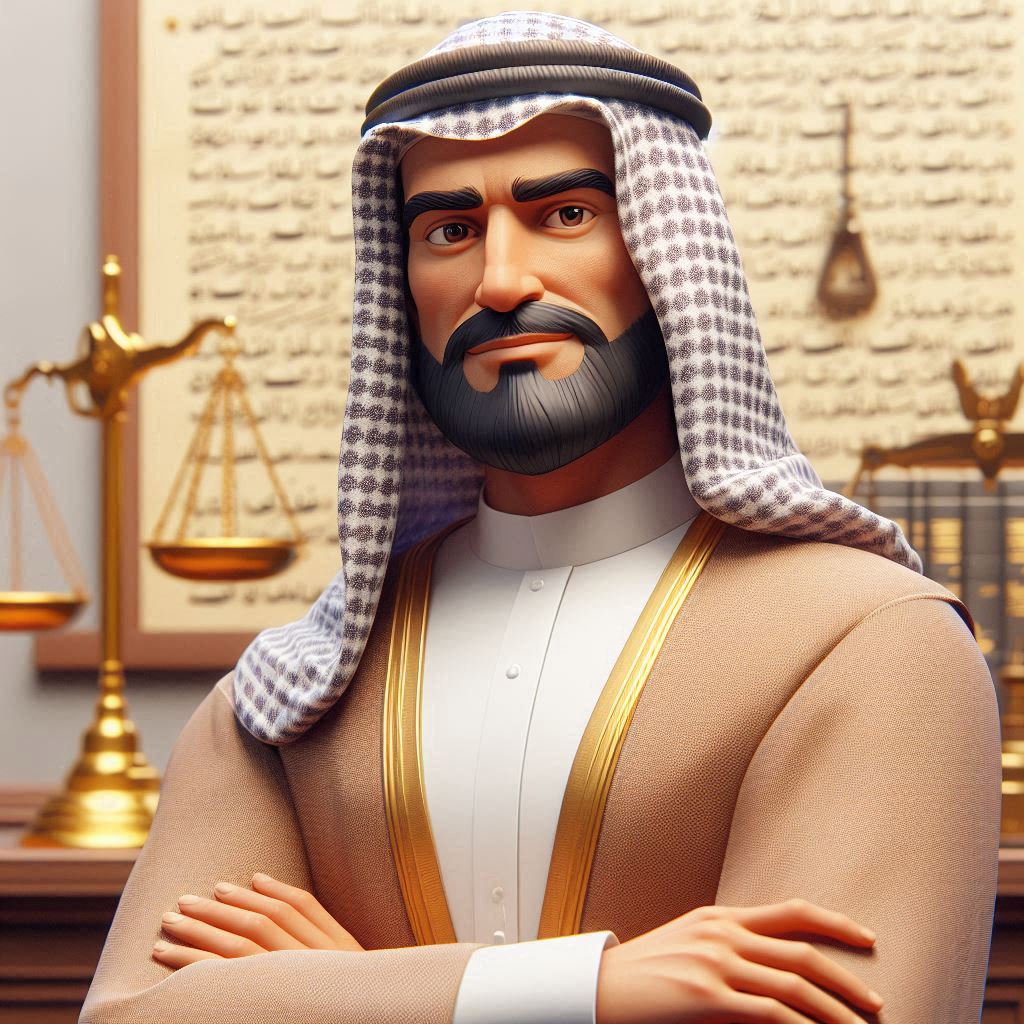
Islam
Experts providing insight grounded in Islamic scholarship, spiritual development, and everyday guidance through Qur’anic and Hadith-based wisdom.
http://sneakyhelpers.com/religions/islam/?thought=1
Judaism
Experts offering guidance rooted in Jewish tradition, spirituality, and teachings — including Torah wisdom, community insight, and life-cycle counsel.
http://sneakyhelpers.com/religions/judaism/?thought=1
Sikhism
Voices grounded in Sikh values of equality, devotion, and service, offering guidance through the teachings of the Gurus and the spirit of the Khalsa.
http://sneakyhelpers.com/religions/sikhism/?thought=1
Taoism
Philosophers and sages offering harmony, inner peace, and natural balance through the flowing wisdom of the Tao and ancient Chinese spiritual practice.
http://sneakyhelpers.com/religions/taoism/?thought=1
Yoruba
Elders and spiritual leaders channeling the rich traditions of Yoruba religion, offering guidance through Orisha worship, ancestral wisdom, and sacred ritual.
http://sneakyhelpers.com/religions/yoruba/?thought=1
Zulu
Zulu spiritual guides preserving ancestral teachings, sacred practices, and deep cultural insight rooted in Ubuntu, nature, and the spirit world.
http://sneakyhelpers.com/religions/zulu/?thought=1
Start Chat
Team Consult
Debate
Sneaky Credits
10
Hourly refresh
10
0
1 Sneaky Credit once-off for this chat
Log In
Log in to save conversations, build your library of ideas, and continue discussions later.
Search Contact Ask a Thinker
Log In
X
Meet your AI Helpers
Choose a specialist for focused guidance, select a few for a team consult, or compare different viewpoints in a debate.
Chat: one helper gives focused guidanceTeam Consult: multiple helpers build an answer togetherDebate: helpers compare viewpoints and tradeoffs
Pick one helper to chat, or choose more than one for a team consult or debate.
Bahá’í
Buddhism
Christianity
Gnostism
Hinduism
Islam
Judaism
Sikhism
Taoism
Yoruba
Zulu
↓ Scroll to see more religions
Abdolkarim Soroush
Argued that religious understanding is historical, fallible, plural, and accountable to freedom.
Abraham Joshua Heschel
Brought Jewish prophetic ethics into modern civil rights, prayer, wonder, and moral responsibility.
Ada Lovelace
Saw that machines could manipulate symbols beyond arithmetic, anticipating the creative scope of computation.
Adam Smith
Moral philosopher of sympathy, markets, and political economy.
Ahad Haam
Argued that Jewish national renewal required ethical and cultural depth, not only political sovereignty.
Aimé Césaire
Poet-politician of Négritude, colonial critique, and humanist revolt.
Al-Farabi
Islamic philosopher of virtue, reason, music, and the ideal city.
Al-Ghazali
Theologian-philosopher of skepticism, spirituality, and limits of reason.
Alan Turing
Defined computation, advanced logic and codebreaking, and framed the modern question of machine intelligence.
Alasdair MacIntyre
Philosopher of virtue, tradition, practices, and moral fragmentation.
Albert Camus
Explored how to live with courage, beauty, revolt, and solidarity in a world without final certainty.
Albert Einstein
Reimagined space, time, energy, gravity, and scientific intuition for the modern age.
Albert Luthuli
Showed how disciplined moral authority can confront racist state power without surrendering dignity.
Ali Mazrui
Scholar of Africa, Islam, modernity, and global power.
Ali Shariati
Turned religion into a language of anti-colonial awakening, social responsibility, and revolutionary identity.
Amartya Sen
Economist-philosopher of capability, freedom, and justice.
Amilcar Cabral
Made culture and class analysis central to disciplined anti-colonial liberation.
Amy Ashwood Garvey
Pan-African feminist organizer and cultural institution builder.
Angela Davis
Reframed freedom through prisons, race, gender, capitalism, abolition, and collective struggle.
Aristotle
Mapped philosophy, biology, logic, politics, rhetoric, and ethics into durable frameworks of practical reasoning.
Arthur Schopenhauer
Philosopher of will, suffering, art, and compassion.
Audre Lorde
Poet-theorist of difference, anger, care, and survival.
B. R. Ambedkar
Made democracy inseparable from annihilating caste, social equality, law, and human dignity.
Baruch Spinoza
Reimagined freedom, emotion, ethics, God, and necessity through a rigorous monist metaphysics.
bell hooks
Made love, education, feminism, race, and class central to liberation as daily practice.
Benoit Mandelbrot
Mathematician of fractals, roughness, and hidden pattern.
Bernhard Riemann
Mathematician of geometry, analysis, and space itself.
Bertrand Russell
Helped found analytic philosophy and clarified logic, mathematics, skepticism, ethics, and public debate.
Blaise Pascal
Joined probability, decision, religious reflection, human fragility, and the limits of rational pride.
Buddha
Founded a transformative path centered on suffering, impermanence, compassion, mindfulness, and release from craving.
Byung-Chul Han
Gives modern exhaustion, digital exposure, self-optimization, and loss of ritual a sharp philosophical vocabulary.
Carl Friedrich Gauss
Mathematician of number, geometry, statistics, and rigor.
Carl Jung
Developed archetypes, the collective unconscious, shadow work, symbols, and individuation as a path of integration.
Carl Sagan
Scientist of cosmic perspective, skepticism, and public wonder.
Charles Darwin
Explained adaptation and biodiversity through natural selection, variation, descent, and patient observation.
Charles Sanders Peirce
Connected logic, signs, scientific inquiry, fallibilism, and truth as a communal process of investigation.
Charles Taylor
Philosopher of identity, recognition, secularity, and modern selfhood.
Cheikh Anta Diop
Challenged Eurocentric history by arguing for Africa as an active maker of civilization.
Chinua Achebe
Reclaimed African narrative complexity against colonial caricature and simplistic modernity.
Clara Zetkin
Socialist feminist of women’s labor, rights, and internationalism.
Claude Shannon
Mathematician of information, communication, and uncertainty.
Claudia Jones
Black communist feminist of diaspora, labor, and carnival culture.
Confucius
Shaped East Asian ethics through ritual, learning, family responsibility, political virtue, and humane conduct.
D.T. Suzuki
Interpreter of Zen Buddhism to the modern world.
David Hilbert
Mathematician of formalism, problems, and axiomatic ambition.
David Hume
Exposed the role of habit, sentiment, and human nature beneath claims of reason and certainty.
Desmond Tutu
Made ubuntu, truth, forgiveness, and justice central to the moral repair of a wounded society.
Dōgen
Zen philosopher of practice, time, and being.
Edmund Husserl
Founder of phenomenology and rigorous attention to experience.
Eduardo Galeano
Made Latin America’s wounds, humor, beauty, and exploitation visible through unforgettable storytelling.
Edward Said
Critic of Orientalism, exile, empire, and representation.
Elinor Ostrom
Economist of commons, cooperation, and institutional diversity.
Émile Durkheim
Sociologist of solidarity, ritual, norms, and collective life.
Emma Goldman
Anarchist feminist of freedom, speech, sexuality, and state critique.
Emmanuel Levinas
Made responsibility to the face of the Other more fundamental than freedom, knowledge, or system.
Emmy Noether
Mathematician of symmetry, abstraction, and conservation laws.
Enrique Dussel
Recentered philosophy from the perspective of colonized, excluded, and exploited peoples.
Erwin Schrödinger
Physicist of wave mechanics, life, and philosophical reflection.
Esther Duflo
Economist of evidence, poverty, and practical development policy.
Euclid
Made mathematical proof a model of clarity through definitions, postulates, propositions, and demonstrations.
Fazlur Rahman
Offered a rigorous way to connect revelation, historical context, ethics, and modern intellectual life.
Frances Ellen Watkins Harper
Abolitionist feminist poet of freedom, temperance, and moral reform.
Frantz Fanon
Analyzed colonial domination through psychology, race, violence, identity, and the struggle for decolonization.
Frederick Douglass
Abolitionist thinker of freedom, literacy, citizenship, and moral courage.
Friedrich Hayek
Thinker of spontaneous order, knowledge, and liberty.
Friedrich Nietzsche
Challenged inherited morality, nihilism, truth, religion, resentment, and herd thinking with unmatched literary force.
Fyodor Dostoevsky
Novelist of freedom, guilt, faith, and the underground self.
Galileo Galilei
Advanced observation, experiment, telescopic astronomy, mechanics, and the mathematical study of nature.
Georg Cantor
Mathematician of infinity, sets, and transfinite numbers.
Georg Wilhelm Friedrich Hegel
Made contradiction, recognition, freedom, and historical development central to modern philosophy.
Gloria Anzaldua
Gave border existence philosophical force as a site of pain, creativity, language, and new consciousness.
Gottfried Wilhelm Leibniz
Co-created calculus and imagined symbolic reasoning, monads, possible worlds, and a rationally intelligible universe.
Hafez
Persian poet of ambiguity, love, wine-symbolism, and spiritual irony.
Han Feizi
Legalist thinker of law, power, incentives, and statecraft.
Hannah Arendt
Analyzed totalitarianism, plurality, judgment, public action, and the fragile conditions of political freedom.
Hans-Georg Gadamer
Philosopher of dialogue, tradition, and hermeneutic understanding.
Henri Poincaré
Mathematician of intuition, topology, chaos, and scientific creativity.
Hypatia
Symbolizes late antique scholarship, mathematical teaching, astronomy, Neoplatonism, and intellectual courage.
Ibn Arabi
Mystic-philosopher of unity, imagination, and divine presence.
Ibn Khaldun
Historian of society, power, solidarity, and civilizational cycles.
Ibn Rushd
Reconciled philosophical inquiry with religious law and transmitted Aristotle to Islamic and European traditions.
Ibn Sina
Advanced metaphysics, medicine, logic, psychology, and the distinction between essence and existence.
Immanuel Kant
Reframed knowledge, morality, beauty, and autonomy by asking what the mind contributes to experience.
Isaac Newton
Unified terrestrial and celestial motion through mathematics, gravity, optics, and laws of nature.
Isaiah Berlin
Liberal thinker of value pluralism and liberty.
Jacques Derrida
Revealed how texts depend on difference, absence, traces, and exclusions that unsettle fixed meanings.
James Baldwin
Writer of race, love, exile, religion, and American self-deception.
Jan Christiaan Smuts
Philosopher of Holism and Prominent Statesman
Jane Addams
Social reformer of democracy, peace, and settlement ethics.
Jane Jacobs
Urban thinker of cities, complexity, streets, and local knowledge.
Jaron Lanier
Technologist and critic of digital manipulation and platform culture.
Jean-Paul Sartre
Made radical freedom, bad faith, and responsibility central to 20th-century philosophy and literature.
Jiddu Krishnamurti
Insisted that freedom requires seeing conditioning directly rather than replacing one authority with another.
John Dewey
Pragmatist of democracy, education, inquiry, and experience.
John Langalibalele Dube
Built institutions that made African political modernity practical, literate, and organized.
John Locke
Shaped modern liberalism, empiricism, education, toleration, and theories of government by consent.
John Maynard Keynes
Economist of uncertainty, demand, and statecraft in crisis.
John Nash
Mathematician of equilibrium, bargaining, and strategic choice.
John Rawls
Philosopher of justice, fairness, and public reason.
John Stuart Mill
Defended individual freedom, harm prevention, women’s equality, democracy, and refined utilitarian ethics.
John von Neumann
Mathematician of computation, game theory, and strategic systems.
Jose Marti
Gave Latin American independence a language of dignity, anti-imperial warning, and moral republicanism.
Judah Magnes
Pressed Zionism to answer the ethical challenge of shared land and equal dignity.
Judith Butler
Changed global debates about gender, identity, language, power, vulnerability, and recognition.
Julius Nyerere
Made postcolonial nation-building a moral argument about education, equality, language, and community.
Jyotirao Phule
Anti-caste educator and critic of Brahminical hierarchy.
Karl Marx
Changed social theory by analyzing labor, capital, ideology, class struggle, and historical material conditions.
Kenneth Kaunda
Linked liberation politics with African humanism, dignity, reconciliation, and postcolonial responsibility.
Kimberlé Crenshaw
Legal theorist of intersectionality, race, gender, and law.
Kitaro Nishida
Japanese philosopher of pure experience, nothingness, and place.
Kurt Gödel
Showed that sufficiently powerful formal systems have deep internal limits of proof and completeness.
Kwame Nkrumah
Made African unity, independence, and neocolonial critique central to global political thought.
Laozi
Gave the world a paradoxical philosophy of simplicity, humility, non-forcing, and alignment with the Dao.
Leanne Betasamosake Simpson
Articulates Indigenous resurgence as lived relation to land, story, gender, refusal, and community.
Leo Tolstoy
Novelist of conscience, nonviolence, and moral Christianity.
Leonhard Euler
Mathematician of analysis, notation, mechanics, and prolific clarity.
Léopold Sédar Senghor
Poet-statesman of Négritude, culture, and African humanism.
Lewis Mumford
Critic of technology, cities, civilization, and the megamachine.
Linda Tuhiwai Smith
Changed how scholars think about research ethics, colonial knowledge extraction, and Indigenous self-determination.
Ludwig Wittgenstein
Changed philosophy twice: first through logical form, then through language-games and ordinary use.
Mahatma Gandhi
Thinker of satyagraha and disciplined nonviolence.
Maimonides
Integrated Jewish law, Aristotelian philosophy, medicine, ethics, and disciplined negative theology.
Malcolm X
Thinker of Black dignity, self-defense, Islam, and transformation.
Marcus Garvey
Pan-African organizer of Black pride, self-reliance, and return.
Marshall McLuhan
Media theorist of technology, perception, and the global village.
Martha Nussbaum
Gave global justice a practical language of capabilities, dignity, emotion, and human flourishing.
Martin Buber
Made genuine encounter and relation a central philosophical and spiritual category.
Martin Heidegger
Reoriented philosophy toward Being, finitude, authenticity, care, and the technological disclosure of the world.
Martin Luther King Jr.
Leader of nonviolent civil rights, justice, and beloved community.
Mary Parker Follett
Thinker of power-with, management, democracy, and creative conflict.
Mary Wollstonecraft
Argued that women’s equality depends on education, reason, dignity, and equal moral agency.
Maurice Merleau-Ponty
Phenomenologist of embodiment, perception, and the lived world.
Max Weber
Sociologist of authority, bureaucracy, rationalization, and meaning.
Mencius
Confucian thinker of human goodness and moral cultivation.
Michael Sandel
Public philosopher of justice, markets, and civic life.
Michel Foucault
Showed how institutions, discourse, knowledge, and power shape subjects, bodies, norms, and truth regimes.
Milton Friedman
Economist of monetarism, markets, and individual choice.
Mogobe Ramose
Argued that ubuntu is a serious philosophical framework for being, law, community, and justice.
Mozi
Ancient Chinese philosopher of impartial care and anti-war ethics.
Muhammad Iqbal
Joined poetry and philosophy to rethink Muslim selfhood, freedom, and renewal in a modern world.
Neil Postman
Critic of entertainment culture, education, and technological change.
Nelson Mandela
Turned anti-apartheid struggle into a global language of dignity, negotiation, and democratic transition.
Ngugi wa Thiongo
Made language itself a battleground of memory, power, imagination, and decolonization.
Niccolò Machiavelli
Explained political leadership, institutions, strategy, conflict, and power without comforting moral illusions.
Niels Bohr
Physicist of complementarity, quantum theory, and epistemic humility.
Norbert Wiener
Founder of cybernetics and critic of automated control.
Oren Lyons
Keeps Indigenous diplomacy and ecological responsibility alive in global debates about future generations.
Pandita Ramabai
Feminist reformer of women’s education, religion, and social care.
Patricia Hill Collins
Sociologist of Black feminist thought and controlling images.
Paul Ricoeur
Interpreter of narrative, memory, metaphor, and responsible selfhood.
Paulo Freire
Turned education into a practice of dialogue, dignity, and liberation from internalized oppression.
Periyar E. V. Ramasamy
Made self-respect, rationalism, anti-caste critique, and women’s liberation central to South Indian politics.
Peter Drucker
Management thinker of institutions, knowledge work, and responsibility.
Peter Kropotkin
Anarchist thinker of mutual aid, cooperation, and decentralized society.
Pierre Bourdieu
Sociologist of habitus, capital, taste, and symbolic power.
Pixley ka Isaka Seme
Pan-African legal thinker and founder-generation nationalist.
Plato
Turned philosophy into a literary and systematic search for justice, knowledge, reality, education, and the good.
Pythagoras
Linked mathematics, music, proportion, community, and metaphysics into one of antiquity’s most influential traditions.
Rabindranath Tagore
Joined poetry, education, universalism, and anti-colonial dignity while warning against aggressive nationalism.
Rachel Carson
Ecologist of pesticides, interdependence, and environmental responsibility.
René Descartes
Made radical doubt, the thinking subject, and mathematical clarity central to modern philosophy.
Richard Feynman
Physicist of curiosity, clarity, quantum electrodynamics, and play.
Robert Nozick
Libertarian philosopher of rights, entitlement, and minimal state.
Robert Sobukwe
Pushed South African liberation thought toward African self-definition, dignity, and uncompromising political courage.
Robin Wall Kimmerer
Shows how science and Indigenous wisdom can meet through gratitude, reciprocity, and ecological responsibility.
Rosa Luxemburg
Revolutionary theorist of democracy, capitalism, and mass action.
Rumi
Gave mystical love a poetic language that still crosses religions, cultures, and centuries.
Sarvepalli Radhakrishnan
Philosopher of Indian thought, comparative religion, and education.
Savitribai Phule
Made girls’ education and anti-caste reform a direct challenge to social exclusion.
Seyyed Hossein Nasr
Brought Islamic metaphysics and sacred ecology into critique of modern disenchantment and ecological crisis.
Shawn Wilson
Made research itself accountable to relationships, ceremony, community, and Indigenous ways of knowing.
Shoshana Zuboff
Theorist of surveillance capitalism and digital power.
Sigmund Freud
Brought unconscious conflict, dreams, defense mechanisms, sexuality, and childhood into modern psychological thought.
Simone de Beauvoir
Transformed feminist philosophy by analyzing womanhood, embodiment, oppression, ambiguity, and freedom.
Sister Nivedita
Educator and interpreter of Indian culture, science, and nationhood.
Socrates
Made philosophy a lived practice of questioning assumptions, definitions, virtue, and the examined life.
Sojourner Truth
Abolitionist feminist voice of dignity, faith, and equal humanity.
Søren Kierkegaard
Explored anxiety, despair, faith, choice, irony, and the single individual before God and society.
Sri Aurobindo
Thinker of integral yoga, evolution, and spiritual transformation.
Srinivasa Ramanujan
Mathematician of intuition, infinite series, and number theory.
Steve Biko
Showed that liberation begins with psychological refusal of imposed inferiority.
Stuart Hall
Cultural theorist of identity, media, race, and representation.
The Dalai Lama
Tibetan Buddhist leader of compassion, exile, and secular ethics.
Thomas Sowell
Economist and social theorist of tradeoffs, knowledge, and incentives.
Tim Berners-Lee
Inventor of the Web and advocate of open information.
Toni Morrison
Novelist of memory, race, language, beauty, and moral imagination.
Vandana Shiva
Turned seeds, food, biodiversity, patents, and women’s labor into global philosophical and political questions.
Vannevar Bush
Engineer of memory, information systems, and research futures.
Vine Deloria Jr.
Forced American thought to confront land, sovereignty, religion, and Indigenous intellectual authority.
W.E.B. Du Bois
Founded modern Black sociology and analyzed race, democracy, education, empire, and the color line.
Wangari Maathai
Showed that planting trees can also defend democracy, women’s agency, and civic courage.
Werner Heisenberg
Physicist of uncertainty, quantum mechanics, and limits of measurement.
William James
Joined philosophy and psychology around lived experience, attention, religious experience, and practical consequences.
Winona LaDuke
Links land, food, women, treaties, energy, and sovereignty into a living politics of repair.
Xunzi
Confucian realist of ritual, education, and disciplined transformation.
Yeshayahu Leibowitz
Forced Jewish and Israeli thought to confront the moral danger of sanctifying power.
Zhuangzi
Daoist philosopher of transformation, freedom, and playful skepticism.
Select one helper to start a chat, or choose multiple helpers for a team consult or debate.
Chat
Make Sermon
Team Consult
Debate