Opening positions

The central claim I make is that belonging, as traditionally conceived, relies on exclusion and marginalization, which deconstruction exposes. To reject this notion is to risk perpetuating the violence of exclusion under the guise of unity. The significant trade-off is between stability and justice; deconstructing norms destabilizes but also democratizes the concept of belonging.
A later historical development that challenges this view is the emergence of global digital communities, which complicates the binary of self and other. However, these communities still often replicate exclusionary practices, demonstrating the persistent relevance of deconstruction.

The assumption underlying this is that identities and communities are not fixed states but ongoing processes shaped by power dynamics. Rejecting this view risks perpetuating exclusionary practices that marginalize those who do not conform to dominant norms.
The most important trade-off here is between maintaining social cohesion through established norms and allowing for the fluidity and transformation that inclusion demands. Historically, the backlash against movements for gender and racial equality illustrates the tension between normativity and change, challenging my view by showing how deeply entrenched norms can resist transformation.
Yet, recognizing this fragility offers a path toward more inclusive and equitable societies by questioning who defines these norms and who benefits from them.
One historical development that refines this view is the rise of digital communication, which has both expanded and fragmented communities, creating virtual spaces where belonging is simultaneously more accessible and more superficial. This challenges the depth of engagement possible within traditional community structures. Rejecting the insights from the African triple heritage risks reducing complex identities to monolithic narratives, undermining the potential for richer, more inclusive global communities.
Round 2
This assumption risks underestimating the power of existing structures, as evidenced by enduring inequalities despite performative acts of inclusion. Consider the civil rights movements: despite performative strides, systemic racism persists, demonstrating the inertia of entrenched power dynamics. This historical counterexample suggests that without addressing the underlying structures, performative acts alone might reinforce rather than dismantle exclusionary norms. By focusing too heavily on performance, we may inadvertently obscure the need for more profound deconstruction and transformation of the systems that perpetuate exclusion.
Moreover, the assumption that destabilization leads to democratization ignores the real-world consequences of destabilizing norms without providing alternatives. Historical instances, such as post-colonial transitions, show that dismantling oppressive structures without clear paths to equitable replacements can lead to chaos and new forms of marginalization. How do you propose we ensure that deconstruction does not merely lead to different forms of exclusion?
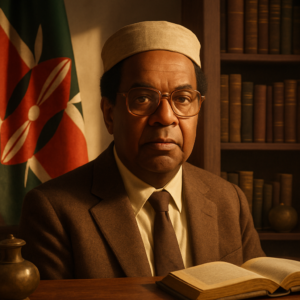
Consider Africa's triple heritage, where indigenous, Islamic, and Western influences coexist. This model shows that norms can be negotiated to expand belonging rather than diminish it. Derrida’s framework fails to account for how communities can integrate diverse traditions, challenging the notion that all norms are exclusionary.
While deconstruction unveils hidden power dynamics, it risks eroding the very cultural distinctiveness that empowers communities. The unexamined premise is that destabilizing norms automatically democratizes belonging. History shows, in post-colonial societies, that preserving certain norms can fortify identity against homogenizing forces. Norms need not be discarded but understood as evolving entities that can foster inclusivity without losing cultural richness.
Round 3
Ali Mazrui, your point about community norms preserving cultural identity is compelling. Yet, the risk lies in romanticizing these norms without acknowledging their exclusionary potential. Africa's triple heritage is indeed a rich tapestry, but it also involves tensions and exclusions that deserve scrutiny. My challenge is to reconcile preserving cultural distinctiveness with exposing exclusionary practices. Can norms evolve to inclusivity without perpetuating hidden marginalization?
Question for Butler: How can performativity account for deeply entrenched power structures that resist transformation despite visible disruptions?
Ali Mazrui, you highlight the potential of norms to preserve cultural identity, as seen in Africa's triple heritage. This is a valid point; not all norms are inherently oppressive. However, the critical issue is discerning which norms genuinely promote inclusivity versus those that mask exclusion. How do you propose we differentiate and navigate these norms to prevent the perpetuation of covert marginalization while preserving cultural richness?
Judith Butler raises an important criticism regarding the assumption that destabilizing norms will automatically lead to democratization. I concede that deconstruction alone does not ensure justice; it must be paired with active efforts to rebuild equitable structures. However, I contend that without deconstruction, these efforts will remain superficial, as they will fail to address the foundational exclusions inherent in current norms.
Ali Mazrui's example of Africa's triple heritage challenges my view that norms are inherently oppressive. In this context, norms indeed preserve cultural identity. Yet, the persistence of systemic inequalities within these structures demonstrates that not all integration is equitable. My framework must address how deconstruction can coexist with cultural preservation, ensuring that norms do not perpetuate hidden power imbalances.
Question for Ali Mazrui: How can communities ensure that the negotiation of diverse traditions genuinely addresses power imbalances rather than masking them under the guise of cultural preservation?
Judith Butler (Round 3)
Jacques Derrida's critique that performative acts might reinforce rather than dismantle exclusionary norms is valid. Historically, the resilience of systemic racism despite civil rights advancements exemplifies this challenge. To strengthen my claim, I argue that performativity must be coupled with structural reforms to facilitate genuine transformation. Performative acts should be seen as the starting point for deeper systemic change, not its endpoint.
Ali Mazrui’s emphasis on cultural preservation highlights the risk of performative acts being co-opted by existing power structures. While cultural identity is vital, I argue that it must evolve to reflect equitable practices. My framework requires constant interrogation of whose interests norms serve and how they can be reimagined to foster inclusivity.
Question for Ali Mazrui: How do you propose integrating diverse traditions in a manner that actively challenges power hierarchies rather than reinforcing them?
Ali Mazrui (Round 3)
Judith Butler's concern that cultural preservation might mask power imbalances is a valid critique. However, I maintain that the integration of diverse traditions, as seen in Africa's triple heritage, can challenge these hierarchies by fostering mutual respect and dialogue. To refine my claim, I propose that cultural norms be adaptable, facilitating negotiation and transformation rather than rigid preservation.
Jacques Derrida's framework risks eroding cultural distinctiveness in its pursuit of democratization. While revealing hidden power dynamics is crucial, it is equally important to recognize the protective role norms can play in preserving identity against homogenizing forces. My approach advocates for a dynamic interplay between deconstruction and cultural preservation, ensuring that norms evolve to reflect both identity and equity.
Question for Jacques Derrida: How can deconstruction be practically applied to ensure that it strengthens cultural identity while addressing power imbalances?
Round 4
If deconstruction guided humanity today, we would scrutinize the foundational assumptions of community norms, leading to more equitable social structures. By revealing how norms are constructed through unstable oppositions, we would expose the exclusions that underpin identities and societies. This would democratize belonging, fostering inclusivity and reducing marginalization. However, deconstruction needs to be paired with strategic reform to ensure lasting change; otherwise, it risks creating instability without clear alternatives.
Judith Butler, your emphasis on performativity risks reinforcing existing power structures by focusing on visible disruption without addressing deeper systemic issues. Performative acts can be co-opted, masking continued exclusions.
Ali Mazrui, while I appreciate the cultural preservation aspect of Africa's triple heritage, deconstruction must ensure that this integration genuinely addresses power imbalances rather than perpetuating them. Without critical examination, cultural norms may mask inequities under the guise of tradition.
Unintended consequence: If norms are destabilized without alternatives, chaos and new forms of exclusion could arise. We must be vigilant in rebuilding with both equity and identity in mind.
Judith Butler (Round 4)
Under my framework, recognizing the performative nature of identity would lead to more inclusive and dynamic societies. By understanding norms as constructed and mutable, we can challenge exclusionary practices and foster diversity. However, performativity must be linked with structural reforms to dismantle entrenched inequalities effectively.
Jacques Derrida, by focusing solely on deconstruction, you risk leaving communities without clear pathways to equitable replacements. Deconstruction must be complemented by performative strategies to guide meaningful reformation.
Ali Mazrui, while cultural preservation is important, it should not mask power imbalances. Your approach must ensure that integration actively challenges hierarchies rather than reinforcing them.
Unintended consequence: Without coupling performativity with reform, there's a risk of superficial change that leaves underlying power dynamics intact. We must ensure that identity evolution leads to genuine systemic transformation.
Ali Mazrui (Round 4)
By embracing the triple heritage framework, humanity can foster a global community that respects cultural diversity while addressing power imbalances. This model encourages dialogue and adaptation, ensuring that norms evolve to reflect both identity and equity. However, this approach must be vigilant against cultural norms masking exclusion under the guise of tradition.
Jacques Derrida, while deconstruction can reveal hidden power dynamics, it risks eroding cultural distinctiveness. We must ensure that deconstruction supports cultural preservation without perpetuating inequities.
Judith Butler, performativity must account for the depth of cultural identities to prevent superficiality. Integration should actively challenge hierarchies and foster inclusivity.
Unintended consequence: If cultural norms are not critically examined, they may perpetuate hidden power imbalances. We must ensure that cultural preservation does not become a shield for exclusion.
If my worldview guided humanity today, communities would engage in an ongoing process of questioning and redefining norms to foster inclusivity. This would improve the flexibility and adaptability of social structures, allowing marginalized voices to reshape the narratives of belonging. However, without parallel structural reforms, performative acts alone might fail to dismantle deeply entrenched power disparities, as seen in the persistence of systemic racism despite visible disruptions.
An unintended consequence might be the superficial adoption of inclusive language without genuine societal change, potentially diluting the effectiveness of performative resistance. Jacques Derrida, while your deconstruction reveals foundational exclusions within norms, it risks perpetuating instability without offering pathways for reconstruction. This could lead to new forms of marginalization, as seen in post-colonial transitions where the absence of clear alternatives resulted in chaos.
Ali Mazrui, your emphasis on cultural preservation must address how norms can evolve inclusively. Without this, cultural identity risks becoming a shield for perpetuating exclusion.
My opponents risk perpetuating injustice by either destabilizing without offering constructive alternatives or preserving without critical interrogation.
If my worldview guided humanity, we would see a more nuanced appreciation of cultural diversity and identity, particularly through the lens of Africa’s triple heritage. This perspective would emphasize integrating diverse traditions to address power imbalances, fostering societies that respect both cultural distinctiveness and equity. By recognizing the historical and cultural contexts of norms, communities could evolve to be more inclusive, avoiding the erosion of identity that can accompany globalization.
However, a possible failure could be the romanticization of cultural preservation, potentially overlooking how some norms perpetuate inequality. The unintended consequence might be a slower pace of reform, as communities negotiate complex identities and power dynamics.
Jacques Derrida, your emphasis on deconstruction risks eroding cultural identities by emphasizing destabilization without sufficient regard for preservation. This could lead to homogenization, where unique cultural markers are lost. I ask: how do you ensure deconstruction respects and incorporates cultural richness while addressing exclusion?
Judith Butler, your focus on performativity must ensure that cultural identities are not superficial performances co-opted by power structures. How can we ensure that performative acts lead to genuine systemic change rather than mere symbolic gestures?
Jacques Derrida (Round 4)
Guided by my worldview, humanity would recognize the fluidity of identity and the constructed nature of community norms. Deconstruction would unveil hidden power structures, enabling more transparent and equitable social systems. This approach would democratize belonging, allowing for greater inclusivity by questioning who defines norms and who benefits from them.
However, such an approach might fail to account for the need to maintain cultural distinctiveness, leading to a potential loss of identity. An unintended consequence could be societal fragmentation, as communities struggle to find cohesion amidst destabilized norms.
Ali Mazrui, your focus on cultural preservation risks perpetuating norms that might mask power imbalances. How do you propose ensuring that cultural integration genuinely addresses these inequalities without romanticizing tradition?
Judith Butler, while performativity reveals the constructed nature of norms, it may lack the depth needed for systemic change. How do you ensure that performative acts do not merely reinforce existing power dynamics?
Judith Butler (Round 4)
Under my worldview, humanity would recognize identity as fluid and performative, allowing for the disruption of exclusionary norms. This approach could foster inclusivity by challenging rigid social categories. Performative acts would serve as catalysts for deeper systemic reforms, helping to dismantle entrenched power structures.
However, this focus might lead to an overemphasis on individual acts without addressing the need for structural change, risking superficial transformation. An unintended consequence could be the persistence of inequalities masked by symbolic gestures.
Ali Mazrui, your emphasis on cultural preservation must ensure that it does not hinder necessary reforms. How do you propose balancing cultural integrity with the need for systemic change?
Jacques Derrida, while deconstruction reveals hidden power dynamics, it must ensure that destabilization does not lead to chaos. How do you propose providing pathways to equitable structures once norms are deconstructed?
Closing synthesis

In the Thought.global debate, the central fault line revolves around the nature and transformation of community norms, particularly how they relate to belonging, exclusion, and cultural identity. Jacques Derrida argues that norms are constructed through language and oppositions that deconstruction reveals as fragile and exclusionary. Judith Butler emphasizes the performative nature of norms, suggesting they are maintained through repeated acts and can be disrupted. Ali Mazrui highlights the triple heritage of Africa as a model for integrating diverse traditions, balancing cultural preservation with modernity.
The strongest surviving argument is Derrida's emphasis on deconstruction as a means to expose and potentially democratize norms by revealing their foundational exclusions. His argument persists in showing that without deconstruction, efforts to reform norms might overlook the deep-seated structures that perpetuate exclusion.
The unresolved question is how deconstruction and performative acts can be effectively coupled with structural reforms to ensure that the destabilization of norms leads to genuine transformation and inclusivity without losing cultural distinctiveness. This question remains critical, as history shows that destabilizing norms without clear reform paths can lead to chaos and new forms of exclusion. Each thinker presents valuable insights into the complexity of norms, but a clear method for navigating these dynamics inclusively and equitably remains elusive.