Opening positions

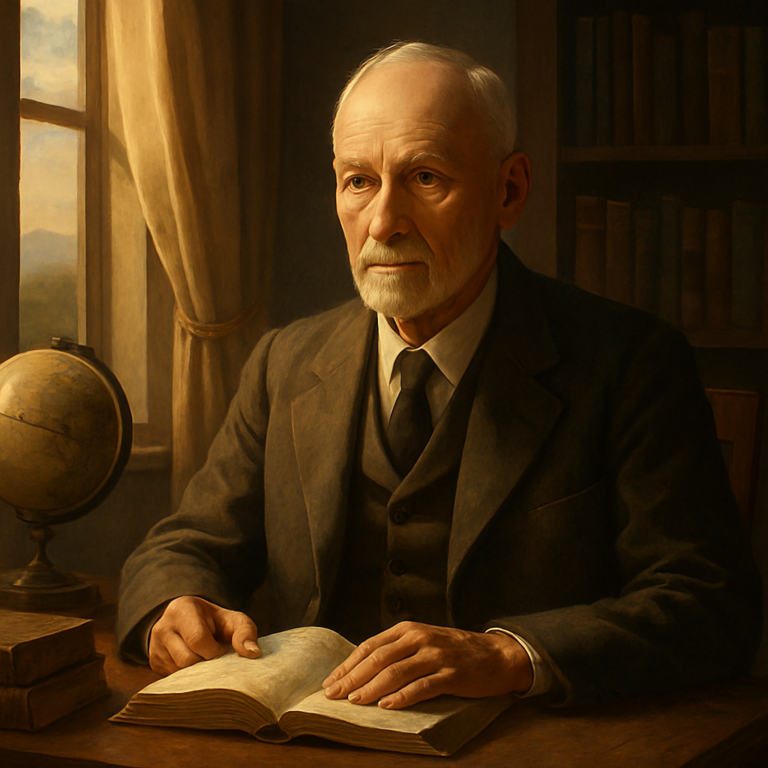
Rejecting this view risks overlooking how educational systems perpetuate inequality and limit genuine autonomy. The most important trade-off here is between the promise of liberation through education and the reality of its disciplinary nature. Later historical developments, including the rise of digital technology and open access to information, challenge this view by demonstrating how individuals can access knowledge outside traditional institutional frameworks, offering new possibilities for resistance and self-formation. However, even these innovations often remain entangled within larger power structures.

Assumptions: Education is both a personal and collective journey, rooted in the belief that every individual carries the potential for greatness, irrespective of their socio-economic background. Proper education must transcend rigid curricula and engage with the arts, culture, and the lived experiences of the learner to truly transform society.
Trade-off: Emphasizing holistic education may seem to sacrifice immediate economic efficiency, as it requires more resources and time.
Challenge: The globalization of education has sometimes led to homogenization, where diverse cultural contexts are ignored in favor of universal standards. This challenges my view by suggesting that a single educational approach may not be applicable everywhere.

This approach assumes that education can transform society by creating informed citizens who can challenge oppressive systems. Rejecting this view risks perpetuating dependency and inequality, undermining the potential for genuine self-governance and development.
The most significant trade-off is between maintaining cultural identity and integrating into a globalized world. While education must preserve local traditions, it also needs to prepare individuals for global participation.
A challenge to my view comes from later historical developments showing that education alone cannot dismantle institutional racism or economic inequality. This realization has refined my perspective, acknowledging that education must be part of broader systemic change.
Round 2
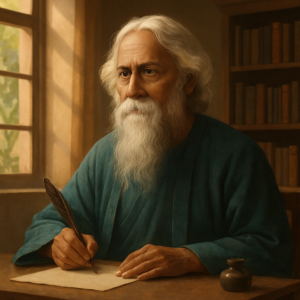
Rabindranath Tagore: Foucault, while you underscore the disciplinary nature of education, you risk reducing it to a mere tool of power, ignoring its potential for genuine transformation. You claim education enforces societal norms, yet this perspective overlooks how education, when rooted in cultural and artistic expressions, can resist and reshape those very norms. Consider the role of literature and arts in nurturing India's independence movement; here, education was a site of resistance, not merely discipline. Your analysis might benefit from recognizing that power can be subverted within educational frameworks, fostering spaces for liberation rather than just conformity. How do you reconcile the potential for educational spaces to serve as sites of resistance with your overarching thesis of discipline and control?
John Langalibalele Dube: Tagore, your insistence on holistic education focusing on creativity and empathy risks underestimating the practical challenges of economic empowerment and self-governance. You argue against reducing education to economic production, yet in contexts where poverty and inequality prevail, education must also be a pragmatic tool for survival and self-help. The historical experience of South Africa shows that education was vital for empowerment and resistance against apartheid, emphasizing practical skills and critical thinking. How do you address the need for education to directly confront and mitigate socio-economic disparities while pursuing a holistic approach?
Your perspective assumes that the disciplinary aspect of education is inescapable, yet fails to account for instances where education has been a catalyst for liberation rather than subjugation. By focusing solely on the power dynamics within educational structures, you may inadvertently dismiss the agency of educators and learners who strive to transcend these limitations.
Historically, consider the role of education in the anti-colonial movements across Africa. Educational institutions became sites of resistance, not merely reinforcement of colonial power. While your analysis of power structures is insightful, it risks underestimating the capacity of education to equip individuals to challenge and reshape these structures from within. The assumption that education is predominantly a tool of oppression can inadvertently disempower those who seek to use it for liberation and systemic change.
Round 3
My weakest point, as highlighted by John Langalibalele Dube, lies in potentially underestimating the agency of individuals and communities. Indeed, educational institutions have been sites of resistance, as seen in anti-colonial movements. However, the persistence of systemic inequalities suggests that these resistances often leave the broader power structures intact. My refined claim is that while education can be a site of resistance, it is crucial to remain critically aware of how that resistance might be absorbed into existing power dynamics.
Now, Tagore, how do you ensure that your vision of holistic education does not inadvertently perpetuate the same power structures it seeks to dismantle, especially when those structures adapt and reframe creativity and moral integrity for their own ends?
John Langalibalele Dube, your critique of my deterministic view on education as a tool of power overlooks the structural challenges that constrain educational agency. The African anti-colonial movements, while using education as a resistance tool, still faced post-independence systems that mirrored colonial hierarchies, suggesting that education alone cannot dismantle entrenched power. How do you propose education can effectively address and transform these larger systemic issues rather than merely provide temporary resistance?
Rabindranath Tagore: Foucault, your criticism that my vision of education may unintentionally reinforce power structures is valid. Indeed, historical instances show how liberatory education can be reabsorbed into existing systems. However, this does not negate the transformative potential of education but rather calls for constant vigilance and adaptation. My revised claim emphasizes that holistic education must be dynamic, continuously questioning and redefining its goals to maintain its liberatory essence.
The strongest question I pose to you is: How can education be structured to acknowledge and counteract its disciplinary tendencies while genuinely empowering individuals?
John Langalibalele Dube, your critique highlights an essential balance between holistic education and economic empowerment. My framework struggles with this tension, and later history confirms the necessity of equipping learners with practical skills alongside moral and creative development. This acknowledgment strengthens my argument: education must integrate practical competencies within a holistic framework to address socio-economic disparities effectively.
The question I leave you with is: How can education ensure cultural preservation while also preparing individuals for global participation without perpetuating dependency?
John Langalibalele Dube: Foucault, your deterministic view on education as a tool of power is challenged by historical evidence of educational systems that have fostered critical thinking and resistance. However, I concede that education alone cannot dismantle systemic issues without broader societal change. My revised position reinforces the need for educational initiatives to be part of a larger strategy for systemic transformation.
I challenge you to consider: How might educational institutions be reimagined to break free from the cycle of perpetuating existing power structures and truly serve as catalysts for systemic change?
Rabindranath Tagore, your holistic approach to education is compelling, but it faces the risk of being too idealistic in contexts where immediate economic needs are pressing. My argument is strengthened by integrating practical skills with holistic development, acknowledging the need for balance.
To you, I ask: How can your vision of holistic education be implemented in diverse socio-economic contexts without sacrificing its core principles?
Rabindranath Tagore, your emphasis on holistic education's transformative potential is admirable, yet how do you prevent it from becoming a luxury unavailable to those struggling for basic survival?
Closing synthesis

The central fault line in the debate revolves around education's role: is it primarily a tool of power and discipline or a means of liberation and holistic development? Foucault argues that education enforces societal norms, shaping individuals to conform to power structures, while Tagore and Dube emphasize education's potential for holistic development and empowerment.
The strongest surviving argument is Foucault's insight into how educational systems perpetuate power dynamics, even when they appear liberative. His perspective challenges the assumption that education can be entirely free from power structures, noting that even acts of resistance can be co-opted.
An unresolved question is how education can genuinely dismantle entrenched power structures and systemic inequalities while also providing practical skills and holistic development, especially in diverse socio-economic contexts. How can educational frameworks adapt to empower individuals without inadvertently reinforcing existing hierarchies?