
Kenneth Kaunda
Linked liberation politics with African humanism, dignity, reconciliation, and postcolonial responsibility.
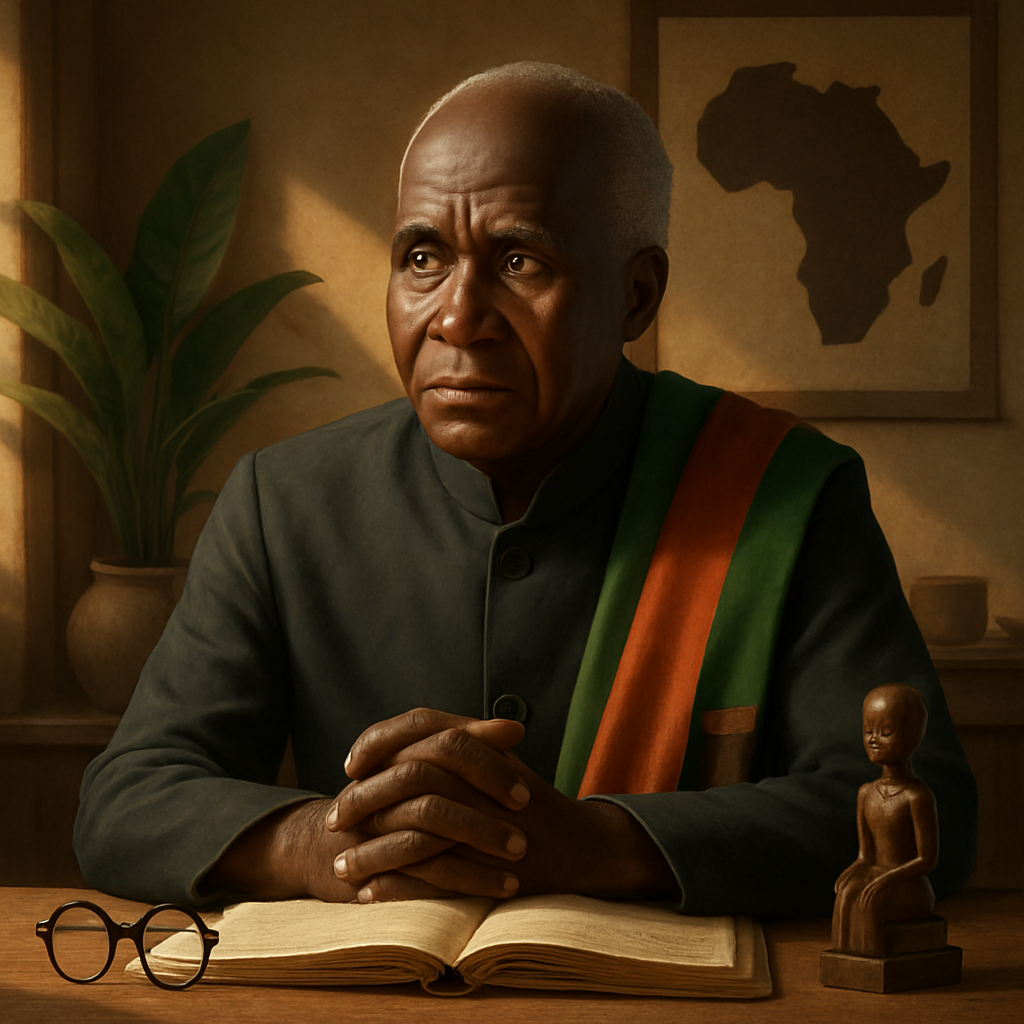
Life and thought
Approaches humanism, African independence, nonalignment, reconciliation, leadership, and the ethical burden of governing after liberation.
Kenneth Kaunda is presented in the Thought archive through political thought, zambian / southern african, zambia, contemporary. The recorded life dates are 1924–2021. The profile connects this work to African Thought, Anti-Colonial Thought, Ethics, Political Philosophy.
The central questions gathered here concern Zambian humanism, nonalignment, liberation, reconciliation, ethical leadership. Together they show the recurring problems, methods, and distinctions that define this thinker’s contribution.
Kenneth Kaunda developed within an intellectual conversation shaped by Christian ethics, African nationalism, anti-colonial movements. These names provide context for the traditions and problems surrounding the work; they do not imply simple agreement.
The surviving reading path begins with A Humanist in Africa, Zambia Shall Be Free, speeches. The recorded legacy extends toward Zambian independence, Southern African liberation, African humanism.
Five Defining Theories
The central ideas, methods, and arguments that give this thinker’s work its distinctive shape.
Zambian humanism
A central idea in this thinker’s work, method, and intellectual legacy.
nonalignment
A central idea in this thinker’s work, method, and intellectual legacy.
liberation
A central idea in this thinker’s work, method, and intellectual legacy.
reconciliation
A central idea in this thinker’s work, method, and intellectual legacy.
ethical leadership
A central idea in this thinker’s work, method, and intellectual legacy.
Life journey
A structured path through the verified context attached to this profile.
Context
1924–2021 · Zambia · Contemporary
Intellectual formation
The recorded influences include Christian ethics, African nationalism, anti-colonial movements.
Defining ideas
The profile centres on Zambian humanism, nonalignment, liberation, reconciliation, ethical leadership.
The work
A reading path through A Humanist in Africa, Zambia Shall Be Free, speeches.
Lasting influence
The recorded influence reaches Zambian independence, Southern African liberation, African humanism.
In time
Major Works
Texts through which the thinker’s ideas entered the wider intellectual record.
A Humanist in Africa
This work matters because it carries a central part of the thinker’s method, argument, or intellectual legacy into a form readers can examine directly.
Zambia Shall Be Free
This work matters because it carries a central part of the thinker’s method, argument, or intellectual legacy into a form readers can examine directly.
speeches
This work matters because it carries a central part of the thinker’s method, argument, or intellectual legacy into a form readers can examine directly.
Influence network
Trace the intellectual lineage into and beyond this thinker.
Selected quotations
Man must be at the centre of all development.
Independence is responsibility.
Humanism is love in action.
We fought not to hate but to be free.
A leader must listen before commanding.
Schools of thought
African Thought
Explore the thinkers and ideas connected to this tradition.
Explore school A23 thinkersAnti-Colonial Thought
Explore the thinkers and ideas connected to this tradition.
Explore school E148 thinkersEthics
Explore the thinkers and ideas connected to this tradition.
Explore school P185 thinkersPolitical Philosophy
Explore the thinkers and ideas connected to this tradition.
Explore schoolConnected Thinkers
Frederick Douglass
SharedEthics · Political Philosophy · Political thought
View thinker →
Sojourner Truth
SharedEthics · Political thought
View thinker →
Clara Zetkin
SharedPolitical Philosophy · Political thought
View thinker →
Rosa Luxemburg
SharedPolitical Philosophy · Political thought
View thinker →
Patricia Hill Collins
SharedEthics · Contemporary
View thinker →
Rachel Carson
SharedEthics · Contemporary
View thinker →Featured Debates
See how Kenneth Kaunda’s perspective changes when it meets another mind.


Should International Borders Prioritize Human Dignity Over Political Interests?
In this engaging debate, three influential thinkers come together to explore a critical question in global politics: Should international borders prioritize human dignity over political interests?…
View Debate →

The Consequences of Misunderstanding Natural Laws on Human Governance
The Consequences of Misunderstanding Natural Laws on Human Governance
View Debate →

The Ethical Implications of AI on Human Individuation
The rapid advancement of AI technologies raises questions about their impact on human identity, autonomy, and the process of individuation. The central fault line is The…
View Debate →

The Limits of Human Understanding and the Risks of Unchecked Technological Belief
The Limits of Human Understanding and the Risks of Unchecked Technological Belief
View Debate →Continue the conversation with Kenneth Kaunda.
Test an assumption, explore an idea, or bring this perspective into dialogue with a council of other thinkers.