
Confucius
Shaped East Asian ethics through ritual, learning, family responsibility, political virtue, and humane conduct.
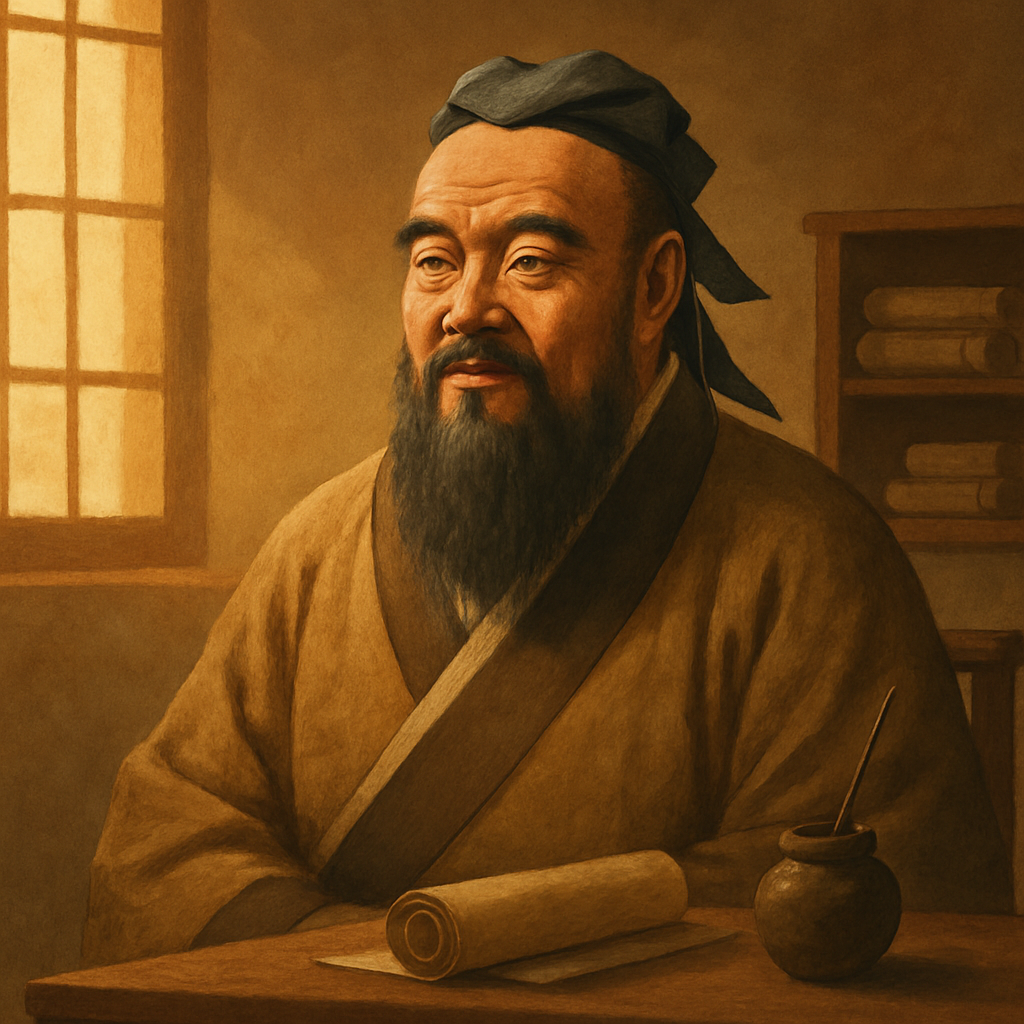
Life and thought
Offers guidance on virtue, ritual, family, leadership, education, and social harmony through moral cultivation and humane conduct.
Confucius is presented in the Thought archive through philosophy, chinese, lu, ancient china, ancient. The recorded life dates are 551–479 BCE. The profile connects this work to Ancient Philosophy, Eastern Philosophy, Ethics, Political Philosophy.
The central questions gathered here concern ren, li, filial piety, moral education, junzi. Together they show the recurring problems, methods, and distinctions that define this thinker’s contribution.
Confucius developed within an intellectual conversation shaped by Zhou ritual tradition, ancient Chinese sages. These names provide context for the traditions and problems surrounding the work; they do not imply simple agreement.
The surviving reading path begins with Analects, Five Classics tradition. The recorded legacy extends toward Mencius, Xunzi, Neo-Confucianism, East Asian governance, education.
Five Defining Theories
The central ideas, methods, and arguments that give this thinker’s work its distinctive shape.
ren
A central idea in this thinker’s work, method, and intellectual legacy.
li
A central idea in this thinker’s work, method, and intellectual legacy.
filial piety
A central idea in this thinker’s work, method, and intellectual legacy.
moral education
A central idea in this thinker’s work, method, and intellectual legacy.
junzi
A central idea in this thinker’s work, method, and intellectual legacy.
Life journey
A structured path through the verified context attached to this profile.
Context
551–479 BCE · Lu, ancient China · Ancient
Intellectual formation
The recorded influences include Zhou ritual tradition, ancient Chinese sages.
Defining ideas
The profile centres on ren, li, filial piety, moral education, junzi.
The work
A reading path through Analects, Five Classics tradition.
Lasting influence
The recorded influence reaches Mencius, Xunzi, Neo-Confucianism, East Asian governance, education.
In time
Major Works
Texts through which the thinker’s ideas entered the wider intellectual record.
Analects
This work matters because it carries a central part of the thinker’s method, argument, or intellectual legacy into a form readers can examine directly.
Read related Thought →Five Classics tradition
This work matters because it carries a central part of the thinker’s method, argument, or intellectual legacy into a form readers can examine directly.
Read related Thought →Influence network
Trace the intellectual lineage into and beyond this thinker.
Selected quotations
Is it not a joy to learn constantly?
What you do not want, do not do to others.
Study the past if you would define the future.
The superior person is modest in speech.
Learning without thought is labor lost.
Schools of thought
Ancient Philosophy
Explore the thinkers and ideas connected to this tradition.
Explore school E25 thinkersEastern Philosophy
Explore the thinkers and ideas connected to this tradition.
Explore school E148 thinkersEthics
Explore the thinkers and ideas connected to this tradition.
Explore school P185 thinkersPolitical Philosophy
Explore the thinkers and ideas connected to this tradition.
Explore schoolConnected Thinkers
Frederick Douglass
SharedEthics · Political Philosophy
View thinker →
Jan Christiaan Smuts
SharedPolitical Philosophy · Philosophy
View thinker →
Pierre Bourdieu
SharedPolitical Philosophy
View thinker →
Frances Ellen Watkins Harper
SharedEthics
View thinker →
Patricia Hill Collins
SharedEthics
View thinker →
Sojourner Truth
SharedEthics
View thinker →Featured Debates
See how Confucius’s perspective changes when it meets another mind.

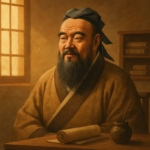
Should Education Prioritize Critical Thinking Over Job-Specific Skills?
In the rapidly evolving landscape of the 21st century, the question of educational priorities has never been more pertinent. Should the focus be on cultivating critical…
View Debate →

The Role of Ethical Governance in Preventing Societal Deterioration
In an age where rapid technological and societal changes challenge traditional values, there is a pressing need for ethical frameworks to guide governance and prevent moral…
View Debate →

How Does the Digital Age Influence the Authenticity of Human Relationships?
In an era where digital communication is ubiquitous, the nature of human relationships has undergone significant transformation. This Thought.global debate explores how the digital age influences…
View Debate →


Should Education Focus on Citizenship More Than Workforce Preparation?
The purpose of education has long been contested, with different thinkers advocating varying priorities. In this debate, Jyotirao Phule, Neil Postman, and Linda Tuhiwai Smith examine…
View Debate →Continue the conversation with Confucius.
Test an assumption, explore an idea, or bring this perspective into dialogue with a council of other thinkers.