
Mary Wollstonecraft
Argued that women’s equality depends on education, reason, dignity, and equal moral agency.
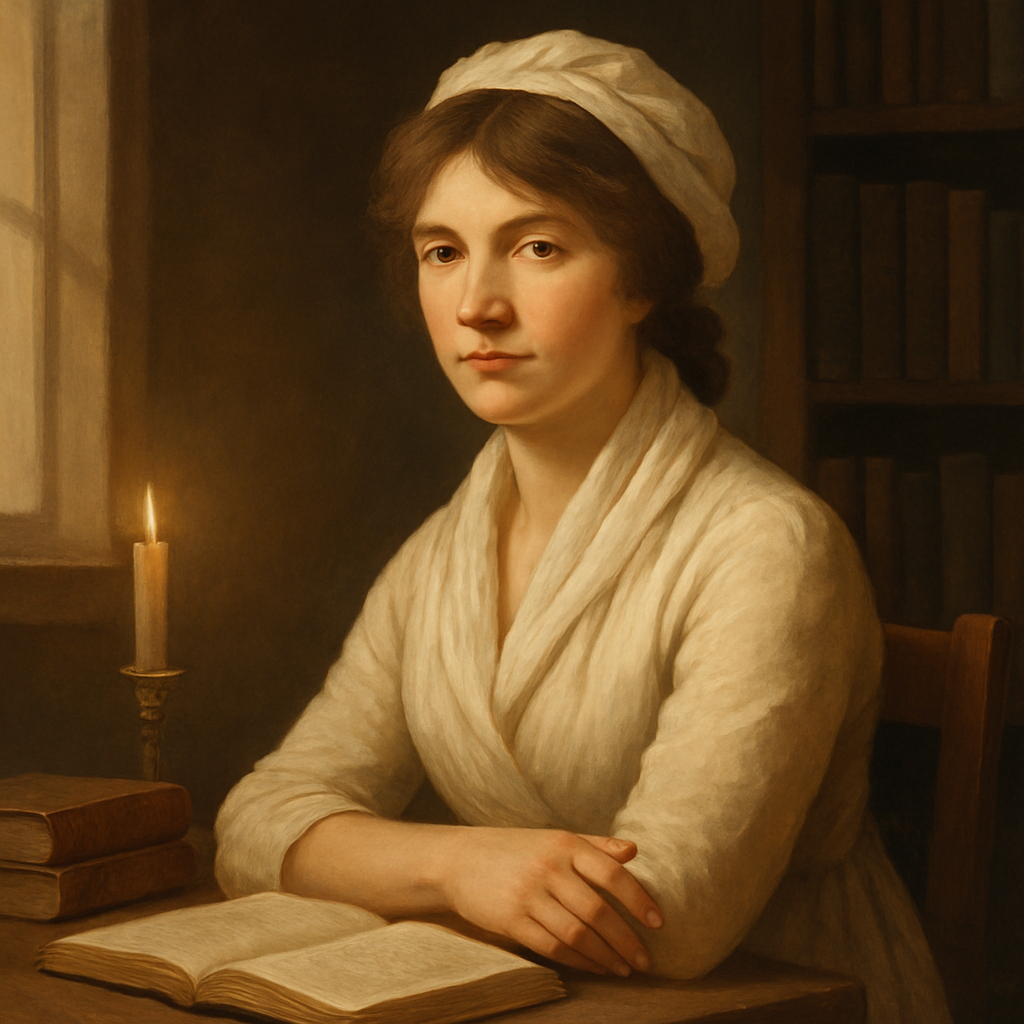
Life and thought
Advances equality, education, reason, dignity, and women’s rights through Enlightenment moral and political critique.
Mary Wollstonecraft is presented in the Thought archive through philosophy, english, england, enlightenment. The recorded life dates are 1759–1797. The profile connects this work to Ethics, Feminist Thought, Political Philosophy, Western Philosophy.
The central questions gathered here concern women’s education, equal dignity, rights, reason, social reform. Together they show the recurring problems, methods, and distinctions that define this thinker’s contribution.
Mary Wollstonecraft developed within an intellectual conversation shaped by Rousseau, Enlightenment rights discourse, revolutionary politics. These names provide context for the traditions and problems surrounding the work; they do not imply simple agreement.
The surviving reading path begins with A Vindication of the Rights of Woman, A Vindication of the Rights of Men, Letters Written in Sweden. The recorded legacy extends toward feminism, liberal education, political reform.
Five Defining Theories
The central ideas, methods, and arguments that give this thinker’s work its distinctive shape.
women’s education
A central idea in this thinker’s work, method, and intellectual legacy.
equal dignity
A central idea in this thinker’s work, method, and intellectual legacy.
rights
A central idea in this thinker’s work, method, and intellectual legacy.
reason
A central idea in this thinker’s work, method, and intellectual legacy.
social reform
A central idea in this thinker’s work, method, and intellectual legacy.
Life journey
A structured path through the verified context attached to this profile.
Context
1759–1797 · England · Enlightenment
Intellectual formation
The recorded influences include Rousseau, Enlightenment rights discourse, revolutionary politics.
Defining ideas
The profile centres on women’s education, equal dignity, rights, reason, social reform.
The work
A reading path through A Vindication of the Rights of Woman, A Vindication of the Rights of Men, Letters Written in Sweden.
Lasting influence
The recorded influence reaches feminism, liberal education, political reform.
In time
Major Works
Texts through which the thinker’s ideas entered the wider intellectual record.
A Vindication of the Rights of Woman
This work matters because it carries a central part of the thinker’s method, argument, or intellectual legacy into a form readers can examine directly.
Read related Thought →A Vindication of the Rights of Men
This work matters because it carries a central part of the thinker’s method, argument, or intellectual legacy into a form readers can examine directly.
Read related Thought →Letters Written in Sweden
This work matters because it carries a central part of the thinker’s method, argument, or intellectual legacy into a form readers can examine directly.
Read related Thought →Influence network
Trace the intellectual lineage into and beyond this thinker.
Selected quotations
I do not wish women to have power over men.
I wish them to have power over themselves.
Strengthen the female mind by enlarging it.
Virtue can only flourish among equals.
Taught from infancy that beauty is woman’s sceptre.
Schools of thought
Ethics
Explore the thinkers and ideas connected to this tradition.
Explore school F68 thinkersFeminist Thought
Explore the thinkers and ideas connected to this tradition.
Explore school P185 thinkersPolitical Philosophy
Explore the thinkers and ideas connected to this tradition.
Explore school W91 thinkersWestern Philosophy
Explore the thinkers and ideas connected to this tradition.
Explore schoolConnected Thinkers
Sojourner Truth
SharedEthics · Feminist Thought
View thinker →
Frances Ellen Watkins Harper
SharedEthics · Feminist Thought
View thinker →
Patricia Hill Collins
SharedEthics · Feminist Thought
View thinker →
Frederick Douglass
SharedEthics · Political Philosophy
View thinker →
Clara Zetkin
SharedFeminist Thought · Political Philosophy
View thinker →
Rosa Luxemburg
SharedFeminist Thought · Political Philosophy
View thinker →Featured Debates
See how Mary Wollstonecraft’s perspective changes when it meets another mind.



How Should Animals Be Treated Ethically: Do They Have Rights Comparable to Humans?
In this compelling debate, three intellectual luminaries from different eras come together to explore the ethical treatment of animals. Mary Wollstonecraft, an advocate for human rights…
View Debate →
The Role of Women’s Education in Preventing Societal Missteps
The Role of Women's Education in Preventing Societal Missteps
View Debate →

The Role of Reason and Revelation in Preventing Misguided Technological Advancements
As technology rapidly advances, there is a pressing need to ensure its development aligns with ethical principles and does not undermine human values. The central fault…
View Debate →
The Indispensable Role of Women’s Education in Avoiding Societal Mistakes
Growing global challenges demand diverse perspectives and equal participation, yet women's education and representation remain inconsistent. The central fault line is Balancing the long-standing societal norms…
View Debate →Continue the conversation with Mary Wollstonecraft.
Test an assumption, explore an idea, or bring this perspective into dialogue with a council of other thinkers.