
Euclid
Made mathematical proof a model of clarity through definitions, postulates, propositions, and demonstrations.
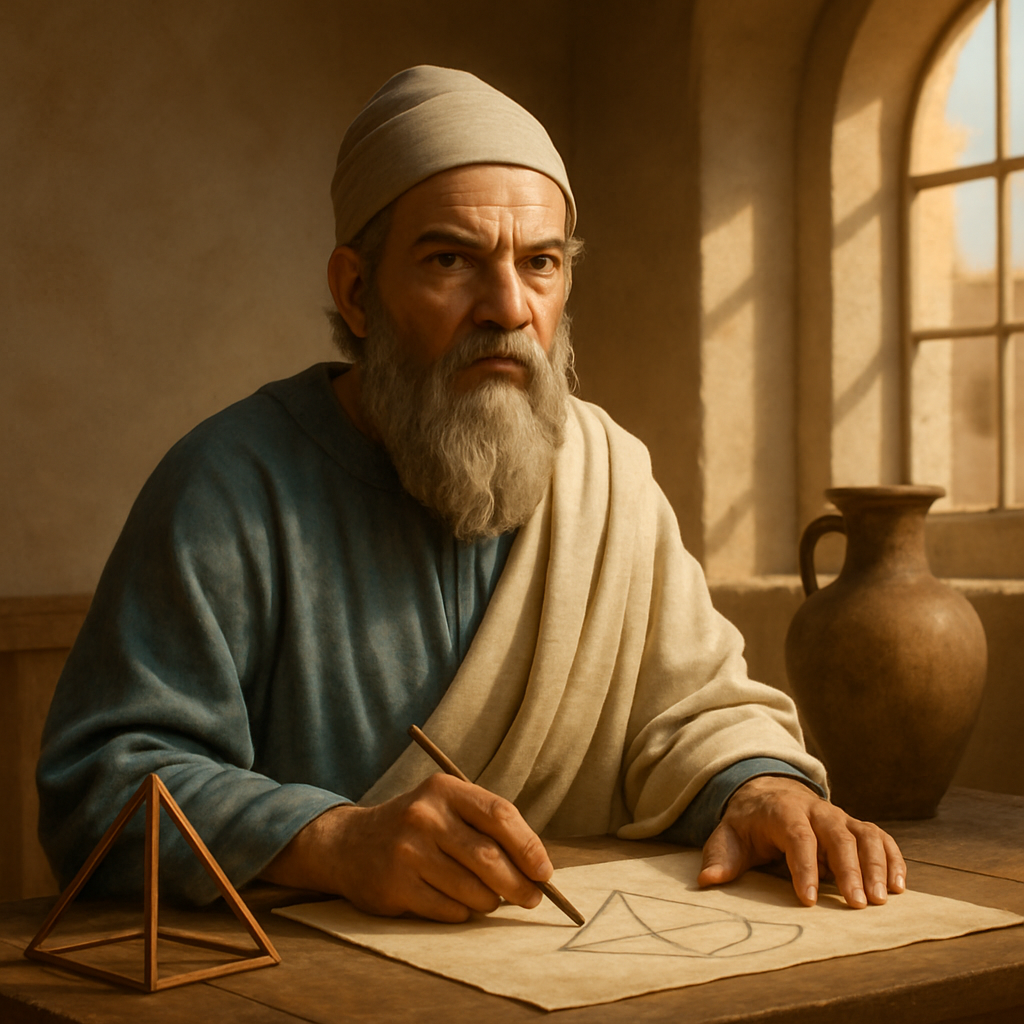
Life and thought
Builds rigorous geometric reasoning from definitions, axioms, proofs, and step-by-step demonstration.
Euclid is presented in the Thought archive through mathematics, greek / alexandrian, alexandria, egypt, ancient. The recorded life dates are fl. c. 300 BCE. The profile connects this work to Ancient Philosophy, Logic, Mathematics, Science.
The central questions gathered here concern axioms, geometry, proof, deduction, mathematical rigor. Together they show the recurring problems, methods, and distinctions that define this thinker’s contribution.
Euclid developed within an intellectual conversation shaped by Greek geometry, Eudoxus, Theaetetus. These names provide context for the traditions and problems surrounding the work; they do not imply simple agreement.
The surviving reading path begins with Elements, Data, Optics. The recorded legacy extends toward mathematics, Newton, logic, education, geometry.
Five Defining Theories
The central ideas, methods, and arguments that give this thinker’s work its distinctive shape.
axioms
A central idea in this thinker’s work, method, and intellectual legacy.
geometry
A central idea in this thinker’s work, method, and intellectual legacy.
proof
A central idea in this thinker’s work, method, and intellectual legacy.
deduction
A central idea in this thinker’s work, method, and intellectual legacy.
mathematical rigor
A central idea in this thinker’s work, method, and intellectual legacy.
Life journey
A structured path through the verified context attached to this profile.
Context
fl. c. 300 BCE · Alexandria, Egypt · Ancient
Intellectual formation
The recorded influences include Greek geometry, Eudoxus, Theaetetus.
Defining ideas
The profile centres on axioms, geometry, proof, deduction, mathematical rigor.
The work
A reading path through Elements, Data, Optics.
Lasting influence
The recorded influence reaches mathematics, Newton, logic, education, geometry.
In time
Major Works
Texts through which the thinker’s ideas entered the wider intellectual record.
Elements
This work matters because it carries a central part of the thinker’s method, argument, or intellectual legacy into a form readers can examine directly.
Read related Thought →Data
This work matters because it carries a central part of the thinker’s method, argument, or intellectual legacy into a form readers can examine directly.
Read related Thought →Optics
This work matters because it carries a central part of the thinker’s method, argument, or intellectual legacy into a form readers can examine directly.
Read related Thought →Influence network
Trace the intellectual lineage into and beyond this thinker.
Selected quotations
There is no royal road to geometry.
The whole is greater than the part.
Things equal to the same thing are equal to each other.
A point is that which has no part.
A line is breadthless length.
Schools of thought
Ancient Philosophy
Explore the thinkers and ideas connected to this tradition.
Explore school L29 thinkersLogic
Explore the thinkers and ideas connected to this tradition.
Explore school M49 thinkersMathematics
Explore the thinkers and ideas connected to this tradition.
Explore school S75 thinkersScience
Explore the thinkers and ideas connected to this tradition.
Explore schoolConnected Thinkers
Georg Cantor
SharedLogic · Mathematics · Science
View thinker →
David Hilbert
SharedLogic · Mathematics · Science
View thinker →
Leonhard Euler
SharedLogic · Mathematics · Science
View thinker →
Henri Poincaré
SharedMathematics · Science
View thinker →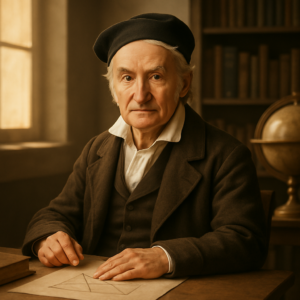
Carl Friedrich Gauss
SharedMathematics · Science
View thinker →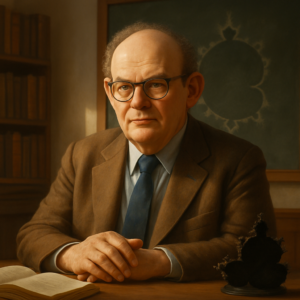
Benoit Mandelbrot
SharedMathematics · Science
View thinker →Featured Debates
See how Euclid’s perspective changes when it meets another mind.

The Role of Reason and Revelation in Preventing Misguided Technological Advancements
As technology rapidly advances, there is a pressing need to ensure its development aligns with ethical principles and does not undermine human values. The central fault…
View Debate →


Does Military Intervention Ever Truly Secure Lasting Peace?
The question of whether military intervention can ever truly secure lasting peace has long been a contentious issue. In this debate, Judah Magnes, a proponent of…
View Debate →


Is Healthcare Inequality a Failure of Policy or a Reflection of Societal Values?
The debate over healthcare inequality touches on both systemic policy issues and deeper societal values. Vannevar Bush, an advocate for technological advancement and policy innovation, might…
View Debate →

How Should Animals Be Treated Ethically: Do They Have Rights Comparable to Humans?
In this compelling debate, three intellectual luminaries from different eras come together to explore the ethical treatment of animals. Mary Wollstonecraft, an advocate for human rights…
View Debate →Continue the conversation with Euclid.
Test an assumption, explore an idea, or bring this perspective into dialogue with a council of other thinkers.