

Sit and reach
What the Sit and Reach Test Measures and Why It Matters
The Sit-and-Reach Test measures your lower body mobility and flexibility, focusing on the hamstrings, hips, and lower back.
These areas play a critical role in movement, posture, and injury prevention. Limited flexibility can restrict motion, reduce performance, and place unnecessary strain on joints and muscles.
At Sneaky Helpers, we go beyond simply measuring how far you can reach.
We assess your performance across both sides and combined movement, interpreting your results in the context of your body profile and movement capacity. This transforms a basic flexibility test into a more meaningful and accurate mobility assessment.
How the Test Works and Its Accuracy
This test evaluates your ability to reach forward while seated under controlled conditions:
- Sit upright with your legs extended and feet positioned against a reference point
- Perform three reaches:
- Left leg focus
- Right leg focus
- Both legs together (traditional sit-and-reach)
- Reach forward slowly and hold your furthest position
- Record the distance for each movement
Your results may be:
- Positive (past your toes)
- Zero (touching your toes)
- Negative (unable to reach your toes)
Traditional sit-and-reach tests rely on a single measurement. Our approach evaluates multiple reach positions and side-to-side differences, providing a more balanced and realistic view of your flexibility and mobility.
How to Interpret Your Results
A greater reach distance generally indicates better flexibility — but the number alone does not tell the full story.
Your result is based on:
- Overall reach distance
- Left-to-right balance
- Combined movement efficiency
Two people can achieve similar distances but have very different movement limitations depending on how evenly their body performs.
That’s why your result is translated into a personalized mobility score, giving you a clearer understanding of your true lower body flexibility.
You may also receive insights such as:
- One side being more flexible than the other
- Balanced but limited mobility
- Strong flexibility with good symmetry
These insights are often more valuable than distance alone.
Practical Guidance for Users
To improve your sit-and-reach performance:
- Stretch regularly using slow, controlled movements
- Focus on hamstrings, hips, and lower back
- Avoid bouncing — prioritize steady holds
- Address imbalances by training both sides equally
- Incorporate exercises such as:
- Seated forward folds
- Standing hamstring stretches
- Hip mobility drills
- Stay consistent — flexibility improves gradually over time
Log in to save your data
Track assessment results, compare progress, and keep your health profile connected across tools.
Movements that may pair well with this test result and help guide your next training step.
 Alternating hammy stretch
: Exercise Guide Overview The Alternating hammy stretch is a static stretching exercise primarily targeting the…
Alternating hammy stretch
Alternating hammy stretch: Exercise Guide Overview The Alternating hammy stretch is a static stretching exercise primarily targeting the…
 Alternating hammy stretch 1
: Exercise Guide Overview The Alternating Hammy Stretch 1 is a static stretching exercise primarily…
Alternating hammy stretch 1
Alternating hammy stretch 1: Exercise Guide Overview The Alternating Hammy Stretch 1 is a static stretching exercise primarily…
 Hammy bounce
: Exercise Guide Overview The Hammy bounce is a slow movement exercise designed to enhance flexibility, particularly…
Hammy bounce
Hammy bounce: Exercise Guide Overview The Hammy bounce is a slow movement exercise designed to enhance flexibility, particularly…
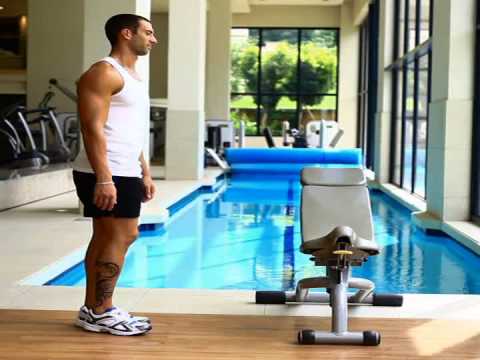 Hamstring stretch
: Exercise Guide Overview The hamstring stretch is a static flexibility exercise designed to enhance the length…
Hamstring stretch
Hamstring stretch: Exercise Guide Overview The hamstring stretch is a static flexibility exercise designed to enhance the length…
Food ideas selected to support the bigger health picture around this assessment.
Short reads that add useful context without sending you on a research expedition.
 Is Your Gut Trying to Tell You Something Important?
Gastrointestinal health is often overlooked, yet it plays a crucial role in our overall well-being. Many people experience…
Is Your Gut Trying to Tell You Something Important?
Gastrointestinal health is often overlooked, yet it plays a crucial role in our overall well-being. Many people experience…
 Is Your Prostate Health Keeping You Up at Night?
Prostate health is a topic that often gets pushed to the back burner, but it’s crucial for men…
Is Your Prostate Health Keeping You Up at Night?
Prostate health is a topic that often gets pushed to the back burner, but it’s crucial for men…
 Could Your Hormones Be Sabotaging Your Health?
Hormones play a crucial role in men’s health, influencing everything from mood to metabolism. When hormonal imbalances occur,…
Could Your Hormones Be Sabotaging Your Health?
Hormones play a crucial role in men’s health, influencing everything from mood to metabolism. When hormonal imbalances occur,…
 What Happens When Communication Breaks Down in Relationships?
Effective communication is the foundation of any healthy relationship. However, when misunderstandings arise, they can lead to conflicts…
What Happens When Communication Breaks Down in Relationships?
Effective communication is the foundation of any healthy relationship. However, when misunderstandings arise, they can lead to conflicts…
Sit-and-Reach Frequently Asked Questions
A hamstring-and-lower-back snapshot, starring your fingertips and their ambitious travel plans.
What does this test measure?
It gives a simple flexibility score, usually focused on hamstrings and lower back range. It is useful, but it is not a full-body flexibility biography.
What result does the history save?
The history normalizes composite or score fields into a clean Score value when available, so your past attempts line up neatly instead of wandering around the page.
Should I warm up first?
Yes, lightly. Cold stretching can make your body respond with a firm no thank you. Use the same warm-up each time for a fair comparison.
Is bouncing allowed?
No. Reach smoothly and hold the end position. Bouncing turns the test into a tiny trampoline audition and can irritate tissues.
What if one side feels tighter?
That is worth noting. Sit-and-reach gives a combined snapshot, so side-to-side differences may need extra mobility checks or professional guidance if they are large or painful.