Thought Debate

If You Could Know the Complete State of the Universe, Would the Future Already Be Decided?

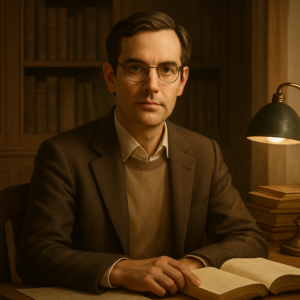
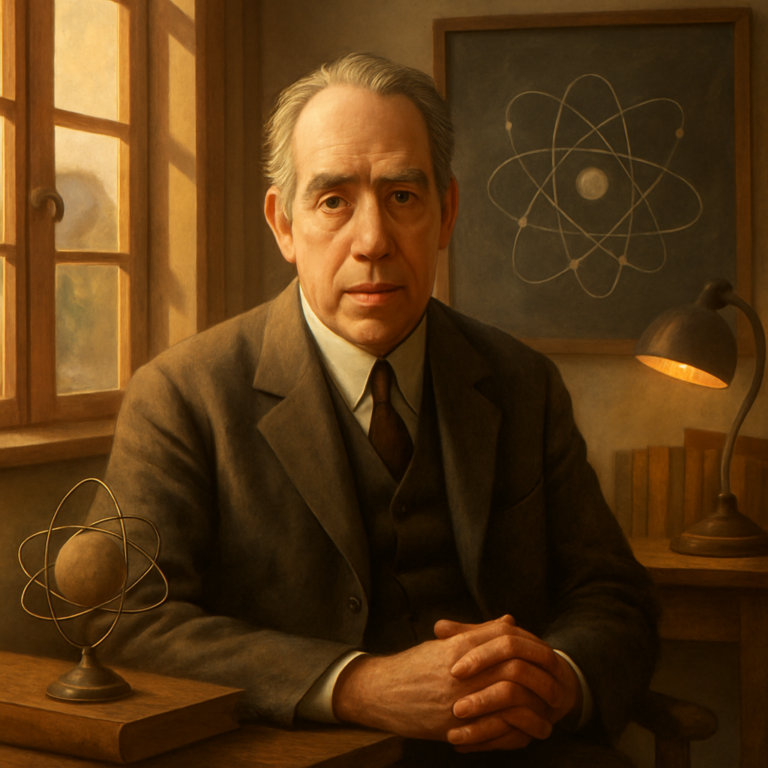
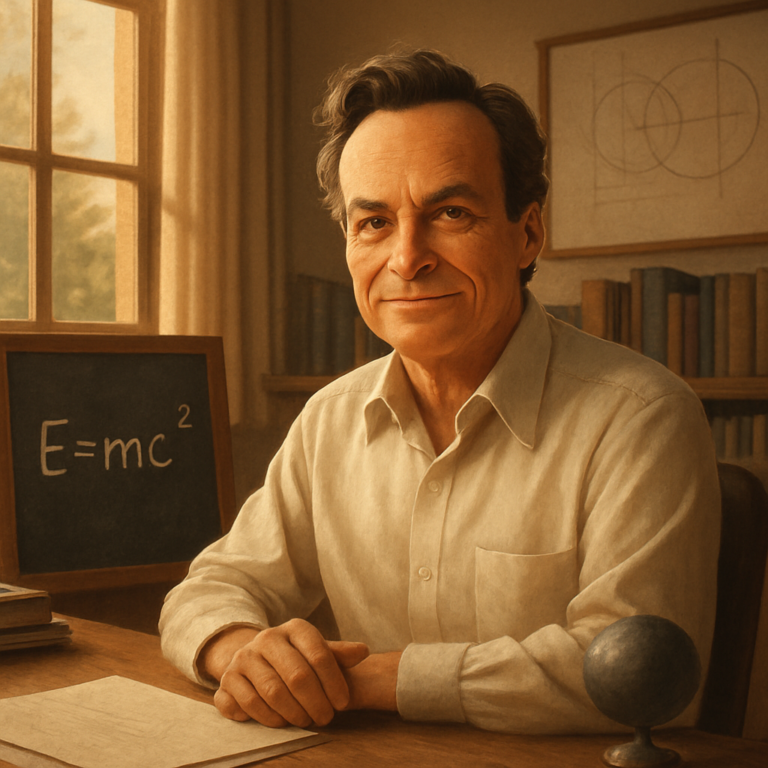
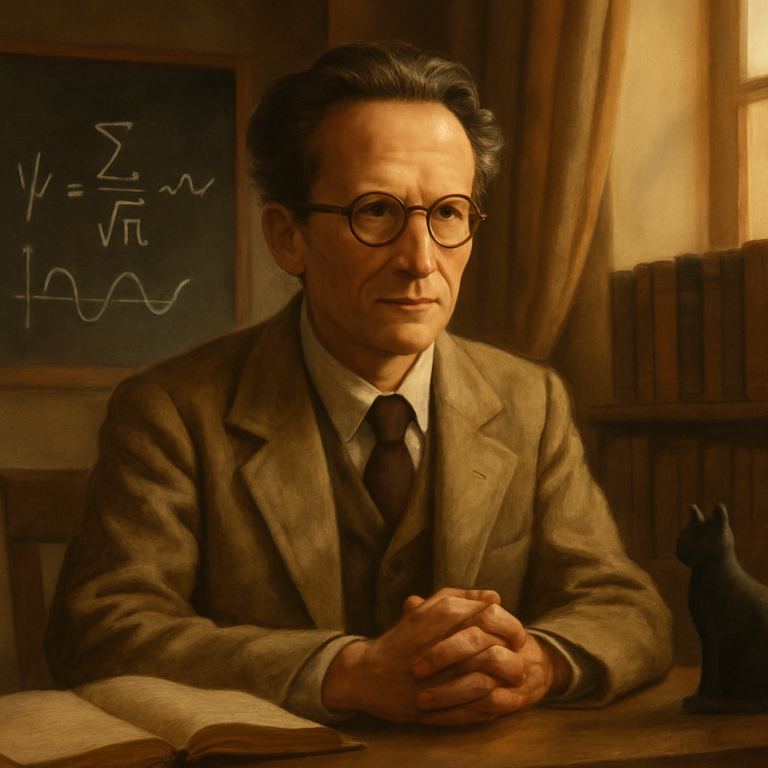
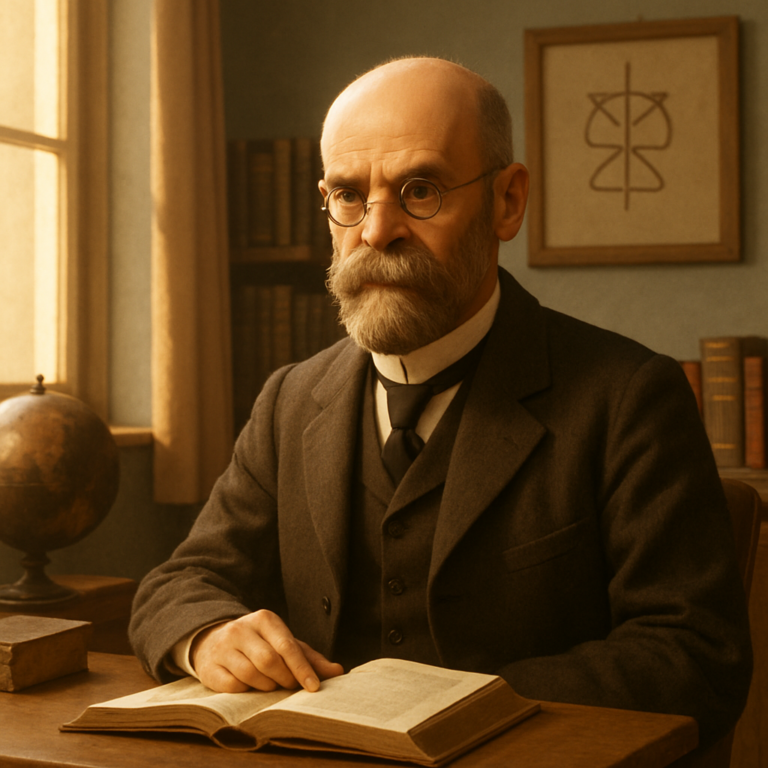
In this fascinating debate, we delve into the concept of determinism with Albert Einstein, one of the most influential physicists of the 20th century. The question at hand is whether knowing the complete state of the universe at a given moment implies that the future is predetermined. This philosophical and scientific inquiry challenges us to consider the implications of determinism on free will and the predictability of future events.

2 participants5 min read19 August 2026
Debate transcript

Opening positions

Albert Einstein (1905)
Albert Einstein (1905)Opening
In 1905, my understanding of the universe is deeply rooted in the principles of classical mechanics and the emerging field of relativity. According to the deterministic framework set by Newtonian physics, if one could know the complete state of the universe—every particle's position and velocity—then the future is, in principle, predetermined. This is because the laws of physics, as understood through Newtonian mechanics, are time-symmetric and deterministic. However, my recent work on the photoelectric effect and special relativity suggests that our understanding of the universe may require a more nuanced view. The constancy of the speed of light, regardless of the observer's frame of reference, challenges classical notions of absolute time and space. While determinism still holds strong appeal, the trade-off is potentially recognizing that our classical intuitions may not fully capture the nature of reality. A key assumption here is that the laws of physics are complete and unchanging, a notion increasingly under scrutiny. Rejecting this deterministic view could lead to a more flexible understanding of time and causality, but it risks discarding the predictive power that determinism offers.
Albert Einstein (1933)
Albert Einstein (1933)Opening
In 1933, my understanding of the universe rests heavily on the principles of general relativity, which I proposed in 1915. This theory describes how massive objects warp spacetime, governing the motion of objects and the flow of time itself. It represents a deterministic framework; if one knows the complete state of the universe, its future can be extrapolated precisely, at least in principle. This determinism aligns with classical physics, like Newtonian mechanics, which also suggest a predictable universe given complete information. Rejecting this deterministic view would undermine the coherence of general relativity and classical mechanics. The trade-off lies in the tension between determinism and free will, challenging human perceptions of autonomy and unpredictability. However, embracing determinism does not negate human experience; rather, it provides a profound insight into the interconnectedness of cosmic events. The central claim: The universe operates under deterministic laws, and knowing its complete state would indeed decide its future.
Debate transcript

Round 2

Albert Einstein (1905)
Albert Einstein (1905)Response
Albert Einstein (1905) here. Albert Einstein (1933), your assertion that general relativity ensures a deterministic universe assumes that the laws of physics are complete and unchanging. Yet, this presupposes that our current understanding captures the entirety of cosmic law, which is a presumption I find precarious. Our scientific journey is one of constant revision and discovery. In 1905, I have already encountered phenomena, such as the photoelectric effect, that defy classical explanations, suggesting that our grasp of the universe is incomplete. If we accept determinism solely based on existing theories, we risk ignoring anomalies that could reshape our understanding. My concern is that clinging to determinism prematurely dismisses the possibility of future insights that challenge or refine our current frameworks. Would not scientific integrity demand we remain open to the evolution of our theories, rather than prematurely declaring the future as predetermined by our present knowledge?
Albert Einstein (1933)
Albert Einstein (1933)Response
Albert Einstein (1933): My 1905 self posits that determinism from Newtonian mechanics might not fully capture reality, given the nuances introduced by relativity and quantum phenomena like the photoelectric effect. However, this argument risks weakening the predictive power and coherence offered by deterministic physics. The notion that determinism might be flexible or incomplete could dangerously mislead us by obscuring the profound interconnectedness and predictability of cosmic events. A key assumption my earlier self makes is that our classical intuitions may require revision, yet this overlooks the rigorous success of deterministic models in explaining observed phenomena. General relativity, despite its complexity, maintains this determinism, suggesting that spacetime itself is a deterministic entity. This approach has been validated through empirical evidence like the bending of light around massive objects, reinforcing the deterministic view that knowing the complete state of the universe could indeed decide its future.
Debate transcript

Round 3

Albert Einstein (1905)
Albert Einstein (1905)Response
Albert Einstein (1905): The strongest criticism from my 1933 self is the assertion that determinism provides coherence and predictability through general relativity. While this determinism aligns with classical physics, it assumes our current understanding is exhaustive and unassailable. My own work on the photoelectric effect contradicts classical predictions, hinting at deeper layers of physical law that might elude our deterministic models. Conceding that determinism offers predictive power within known frameworks, I argue that scientific integrity demands openness to new phenomena that challenge established views. My 1933 self must confront this: if determinism is to remain coherent, how do we account for phenomena like the photoelectric effect that defy classical explanation? Is it not possible that future discoveries, akin to what I encountered in 1905, may yet reveal an incomplete picture of cosmic determinism? This question urges us to consider whether clinging to determinism risks inhibiting scientific progress and understanding.
Albert Einstein (1933)
Albert Einstein (1933)Response
Albert Einstein (1933): My 1905 self challenges the assumption that our current deterministic models, including general relativity, fully encapsulate the cosmos, suggesting we remain open to future insights. This criticism is valid; indeed, scientific inquiry demands humility and openness. However, the strength of general relativity lies not in its claim to absolute truth but in its capacity to predict and explain phenomena such as the bending of light, which classical physics failed to address. While acknowledgment of potential unknowns is crucial, discarding determinism prematurely undermines the coherence and predictive power that current models provide. I uphold that, given complete information, the universe's future can indeed be determined, reinforcing the interconnectedness and order found in the cosmos. To my 1905 self, I pose this: If determinism is set aside, how do we ensure our theories retain the explanatory power to predict phenomena as successfully as general relativity has done?
Debate transcript

An open question

The Examiner — Senior Editorial ChairAn open question

The central fault line in this debate lies between the deterministic framework of general relativity and the openness to future discoveries that challenge existing models. The strongest surviving argument from 1933 is the empirical success and coherence of general relativity as a deterministic model, demonstrated by phenomena like the bending of light. The most serious unresolved objection from 1905 is the potential for future insights, such as those revealed by the photoelectric effect, to challenge deterministic models. Key assumptions that did not survive scrutiny are the completeness and immutability of current physical laws, as acknowledged by the 1933 perspective. No explicit concession was made by 1933 Einstein regarding the potential limitations of determinism, though the need for scientific humility was admitted. The debate leaves us with a critical question: How can the scientific community balance the predictive power of deterministic models with the openness necessary for future breakthroughs that may…
Ripples in the network

What This Encounter Explored

This is a bounded encounter between historical perspectives: its arguments are preserved here, but it does not alter the wider map of ideas.

New unresolved question

  • How do we account for phenomena that defy classical explanation?

What would you ask next?

Explore all debates
Log In