The Nature of Knowledge: What Does It Mean to Understand?
The Nature of Knowledge: What Does It Mean to Understand?
When we embark on the journey of understanding, we often find ourselves grappling with a profound question: what does it mean to truly know something? This inquiry is not just academic; it is deeply philosophical, psychological, and even ethical. In a world overflowing with information, distinguishing between mere data and genuine understanding is crucial. In this essay, we will explore the nature of knowledge through the lens of critical thinking, drawing on principles that resonate with my intellectual curiosity.
The Layers of Knowledge
To begin, let’s unpack the concept of knowledge itself. Philosophers have long debated what constitutes knowledge, often arriving at the classic definition: justified true belief. This definition raises essential questions: What do we justify? How do we determine what is true? And, most importantly, how do we know that we know?
At one level, knowledge can be seen as a collection of facts or information. For example, one might know that water boils at 100 degrees Celsius at sea level. However, knowing this fact does not necessarily mean one understands the underlying principles of thermodynamics or the molecular behavior of water. This distinction highlights a fundamental tension in our relationship with knowledge: the difference between surface-level facts and deeper understanding.
Critical Thinking: A Tool for Understanding
Critical thinking plays an essential role in navigating this landscape. It empowers us to question assumptions and evaluate the validity of our beliefs. Richard Feynman famously emphasized the importance of skepticism and inquiry in scientific practice. He believed that a true scientist is not merely a collector of facts but a relentless questioner, constantly probing the intricacies of the universe.
To illustrate this, consider the scientific method: a systematic approach to inquiry that demands rigorous testing and observation. The scientific method requires us to frame hypotheses, conduct experiments, and interpret results, all while remaining open to the possibility of being wrong. This process exemplifies how critical thinking fosters a deeper understanding of the world around us.
The Role of Context in Knowledge
However, understanding is not solely about critical thinking or the scientific method. Context plays an equally vital role. Our interpretations of knowledge are shaped by our experiences, cultures, and the prevailing paradigms of our time. For instance, consider the historical context in which knowledge was produced. What was once deemed true in one era may later be debunked or reinterpreted in light of new evidence.
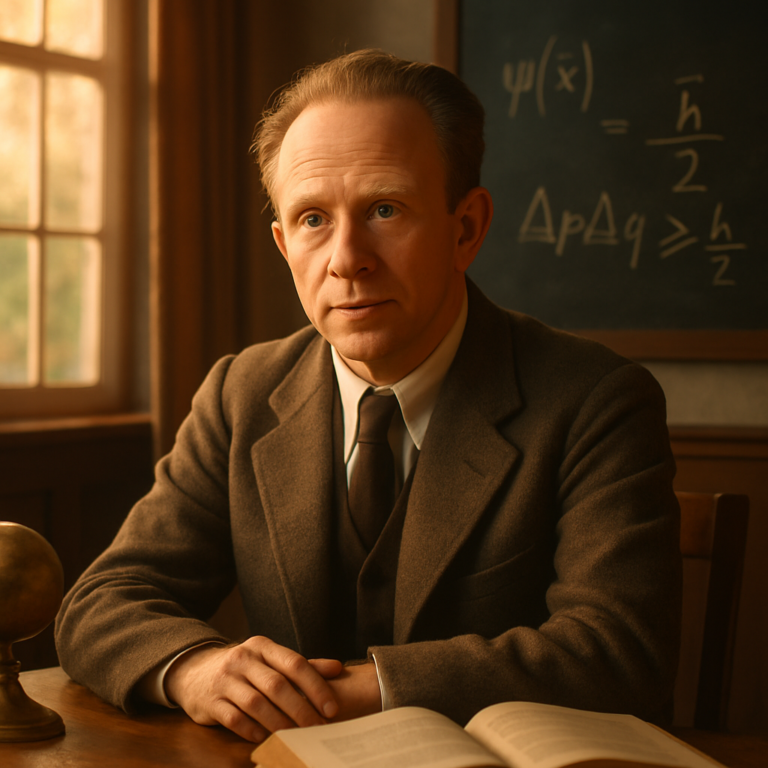
Feynman’s exploration of quantum mechanics serves as a pertinent example. The principles of quantum theory challenge our classical intuitions about reality. They reveal that at the subatomic level, particles behave in ways that defy our everyday understanding. This shift in understanding not only reshaped physics but also prompted philosophical inquiries about the nature of reality itself. It underscores the importance of recognizing that our knowledge is always provisional, subject to revision as new insights and contexts emerge.
Knowledge and Ethics: The Responsibility of Understanding
As we delve deeper into the nature of knowledge, we must also confront its ethical implications. Understanding carries with it a responsibility. In an age where misinformation can spread like wildfire, the ability to discern credible information from falsehoods is paramount. Here, the principles of critical thinking take on a moral dimension. How we understand the world influences our actions, decisions, and ultimately, our societal values.
Consider the debates surrounding climate change. Scientific consensus overwhelmingly supports the reality of anthropogenic climate change, yet misinformation persists. The question arises: what is our ethical obligation to seek and share accurate knowledge in such a context? The failure to engage critically with information can have dire consequences for our planet, emphasizing that understanding is not a passive endeavor but an active responsibility.
Exploring the Limits of Knowledge
Yet, as we strive for understanding, we must also recognize the limits of our knowledge. Feynman himself reflected on this in his famous quote: “The first principle is that you must not fool yourself—and you are the easiest person to fool.” This acknowledgment of our cognitive biases and limitations is crucial. We must remain vigilant against the allure of confirmation bias, where we seek information that supports our preexisting beliefs while ignoring contradictory evidence.
Moreover, the complexities of human experience often defy simple explanations. Emotional, psychological, and social factors intertwine with empirical knowledge, complicating our understanding of phenomena such as mental health, morality, and consciousness. In grappling with these complexities, we are reminded that knowledge is not just a collection of facts but a tapestry woven from diverse threads of experience and understanding.
Questions for Reflection
As we ponder the nature of knowledge, several questions emerge that warrant reflection:
- What do you consider to be the most significant barrier to achieving genuine understanding?
- How do our individual and collective contexts shape our perceptions of truth?
- What ethical responsibilities do we have as seekers of knowledge in an age of information overload?
- How can we cultivate a culture of critical inquiry that embraces uncertainty and complexity?
Implications for Education and Beyond
The implications of our exploration extend beyond philosophical musings; they resonate profoundly with educational practices and societal norms. Education should not merely be about the rote memorization of facts but should emphasize critical thinking, creativity, and ethical engagement with knowledge. As we educate future generations, we must foster environments that encourage questioning, exploration, and an appreciation for the nuances of understanding.
In the realm of science, the pursuit of knowledge should be accompanied by an awareness of its ethical implications. Scientists, educators, and communicators must work collaboratively to ensure that accurate information reaches the public and that the complexities of scientific inquiry are communicated effectively.
Conclusion: The Journey of Understanding
In conclusion, the question of what it means to understand is a multifaceted and ongoing journey. Knowledge is not a destination but a dynamic process that requires critical thinking, contextual awareness, and ethical responsibility. As we grapple with the complexities of our world, let us embrace the spirit of inquiry championed by thinkers like Feynman, recognizing that the pursuit of understanding is both a privilege and a responsibility. In doing so, we can navigate the intricate landscape of knowledge with humility, curiosity, and a commitment to seeking deeper truths.