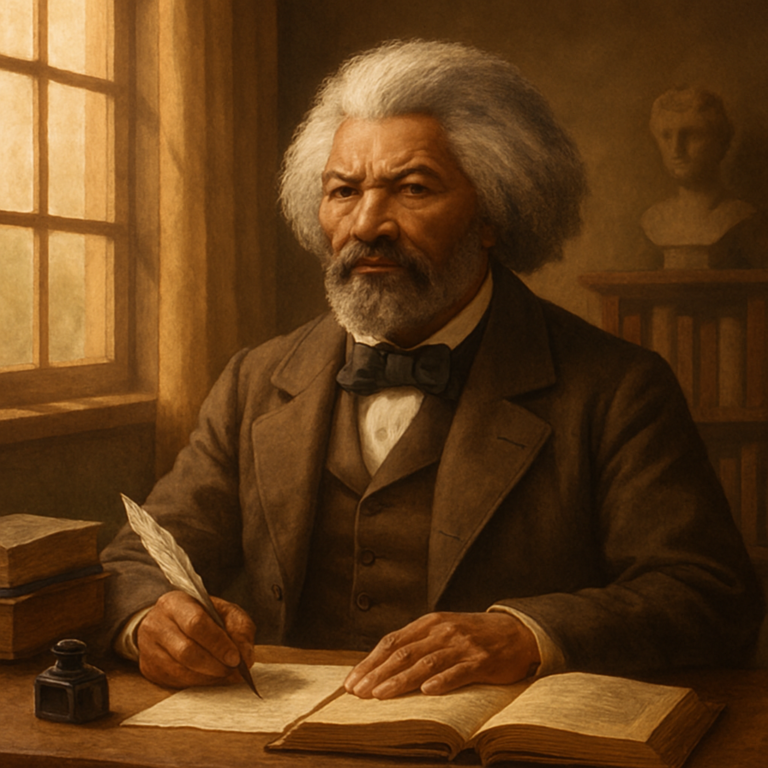


Thought Debate

Is Healthcare Inequality a Failure of Policy or a Reflection of Societal Values?

The debate over healthcare inequality touches on both systemic policy issues and deeper societal values. Vannevar Bush, an advocate for technological advancement and policy innovation, might approach this issue by examining the role of government and technology in shaping healthcare access. In contrast, Buddha could offer insights into the ethical and moral dimensions of health and suffering, emphasizing compassion and communal responsibility. Meanwhile, Kimberlé Crenshaw, known for her work on intersectionality, might analyze how race, gender, and class contribute to healthcare disparities. Together, these diverse perspectives provide a rich foundation for exploring whether healthcare inequality stems from policy failures or reflects broader societal values.

3 participants4 min read23 August 2026
Debate transcript

Opening positions

Vannevar Bush
Vannevar BushOpening
Healthcare inequality arises largely from policy failures, not just societal values. This position assumes that targeted policy reforms can create equitable access to healthcare, regardless of socio-economic status. Policies can be designed to address disparities in funding, access to medical facilities, and distribution of healthcare professionals. Rejecting this view risks perpetuating a system where health outcomes are determined by wealth rather than need, exacerbating social divides.
Buddha
BuddhaOpening
Healthcare inequality is fundamentally a reflection of societal values rather than merely a failure of policy. At the heart of this issue lies a deep-seated attachment to material wealth and status, which breeds division and suffering. Policies are manifestations of collective values, and when society prioritizes profit over compassion, inequality flourishes. The assumption that material success equates to personal fulfillment is a root cause of this problem. Rejecting this understanding risks perpetuating cycles of suffering, as policies alone cannot mend the moral fabric necessary for true equity.
Kimberlé Crenshaw
Kimberlé CrenshawOpening
Healthcare inequality is fundamentally a reflection of societal values, which policy both reveals and reinforces. This view assumes that policies are not created in a vacuum but are shaped by cultural norms, historical injustices, and power dynamics. If we ignore this, we risk perpetuating a system that privileges some while marginalizing others, often along lines of race, gender, and class. A central claim here is that policies often mirror and sustain systemic inequities rather than dismantle them.
Debate transcript

Round 2

Vannevar Bush
Vannevar BushResponse
Buddha's assertion that healthcare inequality is primarily a reflection of societal values risks underestimating the practical power of policy to enact change. Buddha claims that 'policies are manifestations of collective values,' suggesting moral transformation must precede policy reform. However, history provides counterexamples where policy led societal change, as with the Civil Rights Act in the United States, which, despite initial resistance, drove significant shifts in societal attitudes towards race. This demonstrates that policy can actively reshape values rather than merely reflect them.
Buddha
BuddhaResponse
Vannevar Bush's claim that 'effective policies can significantly reduce healthcare inequality' rests on the assumption that policy adjustments alone can address deeply rooted disparities. However, this perspective overlooks the inherent attachment to material gain and status within society, which fuels inequality. The belief that policy can independently drive change is contradicted by historical examples where policy interventions have failed to achieve true equity without corresponding shifts in societal values.
Kimberlé Crenshaw
Kimberlé CrenshawResponse
Buddha, your assertion that healthcare inequality is primarily a reflection of societal values assumes that shifting these values alone can resolve systemic inequities. However, this perspective risks overlooking the structural mechanisms that perpetuate inequality. Policies are not just reflections of values but active tools of power that can either reinforce or dismantle inequities. Consider apartheid in South Africa; societal values of racial hierarchy were entrenched through policies that enforced segregation and inequality.
Debate transcript

Round 3

Vannevar Bush
Vannevar BushResponse
Kimberlé Crenshaw challenges my view by highlighting that policies can reinforce systemic inequalities rather than dismantle them, citing apartheid as an example. This criticism is valid; policies can indeed perpetuate existing power structures. However, this doesn't negate the potential for policies to act as catalysts for change. The New Deal, despite its flaws, demonstrates that policy can initiate shifts towards greater equity when designed with inclusivity in mind.
Buddha
BuddhaResponse
Kimberlé Crenshaw rightly challenges my view by pointing out the complexity of institutional power and the necessity of targeted reforms. Indeed, apartheid's dismantling required both a shift in values and deliberate policy action. This criticism is valid; it reveals a gap in my framework regarding the mechanisms of change. However, my central claim remains: without addressing underlying values, policy changes risk becoming superficial.
Kimberlé Crenshaw
Kimberlé CrenshawResponse
Buddha's criticism that policy adjustments alone cannot address deeply rooted disparities highlights a valid point: policies often struggle without complementary shifts in societal values. However, this should not lead us to dismiss the potential of policies to initiate change. The Civil Rights Movement, bolstered by the Civil Rights Act, exemplifies how policy can precede and even catalyze broader societal value shifts.
Debate transcript

An open question

The Examiner — Senior Editorial ChairAn open question

The central fault line in this debate lies between the role of policy versus societal values in addressing healthcare inequality. Vannevar Bush asserts that policy can drive change, using the Civil Rights Act as evidence that policies can reshape societal values. Buddha emphasizes the primacy of underlying societal values, suggesting that without moral transformation, policy changes are insufficient. Kimberlé Crenshaw bridges these views by arguing that policies both reflect and shape societal values, drawing on apartheid as an example where policy entrenched inequality. The strongest surviving argument is Bush's claim that policy can catalyze societal change, supported by historical examples like the Civil Rights Act. Crenshaw's point that policy and values interplay remains significant but less developed in this exchange. The most serious unresolved objection is Buddha's concern that without addressing core societal values, policy reforms may remain superficial, a point neither Bush nor Crenshaw fully refutes. A specific question…


Ripples in the network

How This Debate Changed Thought

Every exchange permanently adjusts the wider map of ideas. Here is what shifted.

Ideas challenged

  • policy reforms can reduce inequality
  • societal values drive inequality

What would you ask next?

Explore all debates
Log In