
Buddha
Founded a transformative path centered on suffering, impermanence, compassion, mindfulness, and release from craving.

Life and thought
Guides reflection on suffering, impermanence, craving, compassion, attention, and liberation from reactive patterns.
Buddha is presented in the Thought archive through philosophy, indian, northern india / nepal region, ancient. The recorded life dates are c. 5th century BCE. The profile connects this work to Eastern Philosophy, Ethics, Psychology, Religion & Mysticism.
The central questions gathered here concern Four Noble Truths, Eightfold Path, impermanence, dependent arising, compassion. Together they show the recurring problems, methods, and distinctions that define this thinker’s contribution.
Buddha developed within an intellectual conversation shaped by sramana movements, Indian ascetic traditions. These names provide context for the traditions and problems surrounding the work; they do not imply simple agreement.
The surviving reading path begins with Pali Canon tradition, Dhammapada tradition, Nikaya discourses. The recorded legacy extends toward Buddhist philosophy, Nagarjuna, mindfulness traditions, Asian ethics.
Five Defining Theories
The central ideas, methods, and arguments that give this thinker’s work its distinctive shape.
Four Noble Truths
A central idea in this thinker’s work, method, and intellectual legacy.
Eightfold Path
A central idea in this thinker’s work, method, and intellectual legacy.
impermanence
A central idea in this thinker’s work, method, and intellectual legacy.
dependent arising
A central idea in this thinker’s work, method, and intellectual legacy.
compassion
A central idea in this thinker’s work, method, and intellectual legacy.
Life journey
A structured path through the verified context attached to this profile.
Context
c. 5th century BCE · Northern India / Nepal region · Ancient
Intellectual formation
The recorded influences include sramana movements, Indian ascetic traditions.
Defining ideas
The profile centres on Four Noble Truths, Eightfold Path, impermanence, dependent arising, compassion.
The work
A reading path through Pali Canon tradition, Dhammapada tradition, Nikaya discourses.
Lasting influence
The recorded influence reaches Buddhist philosophy, Nagarjuna, mindfulness traditions, Asian ethics.
In time
Major Works
Texts through which the thinker’s ideas entered the wider intellectual record.
Pali Canon tradition
This work matters because it carries a central part of the thinker’s method, argument, or intellectual legacy into a form readers can examine directly.
Dhammapada tradition
This work matters because it carries a central part of the thinker’s method, argument, or intellectual legacy into a form readers can examine directly.
Nikaya discourses
This work matters because it carries a central part of the thinker’s method, argument, or intellectual legacy into a form readers can examine directly.
Influence network
Trace the intellectual lineage into and beyond this thinker.
Selected quotations
All conditioned things are impermanent.
Hatred is not ended by hatred.
You yourselves must strive.
The mind is everything.
Peace comes from within.
Schools of thought
Eastern Philosophy
Explore the thinkers and ideas connected to this tradition.
Explore school E148 thinkersEthics
Explore the thinkers and ideas connected to this tradition.
Explore school P40 thinkersPsychology
Explore the thinkers and ideas connected to this tradition.
Explore school R84 thinkersReligion & Mysticism
Explore the thinkers and ideas connected to this tradition.
Explore schoolConnected Thinkers
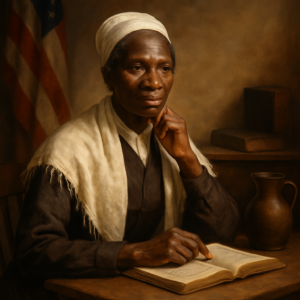
Sojourner Truth
SharedEthics · Religion & Mysticism
View thinker →
Émile Durkheim
SharedEthics · Religion & Mysticism
View thinker →
Patricia Hill Collins
SharedEthics
View thinker →
Frances Ellen Watkins Harper
SharedEthics
View thinker →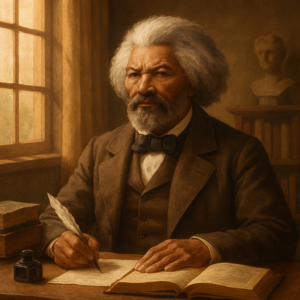
Frederick Douglass
SharedEthics
View thinker →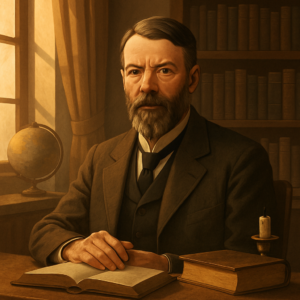
Max Weber
SharedReligion & Mysticism
View thinker →Featured Debates
See how Buddha’s perspective changes when it meets another mind.


Is Healthcare Inequality a Failure of Policy or a Reflection of Societal Values?
The debate over healthcare inequality touches on both systemic policy issues and deeper societal values. Vannevar Bush, an advocate for technological advancement and policy innovation, might…
View Debate →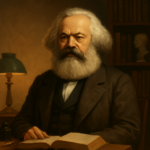

Avoiding the Pitfalls of Technological Advancement through Mindfulness
Rapid technological growth threatens to outpace ethical reflection, potentially perpetuating suffering and inequality. The central fault line is The drive for innovation often conflicts with ethical…
View Debate →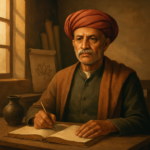


Should Education Focus on Citizenship More Than Workforce Preparation?
The purpose of education has long been contested, with different thinkers advocating varying priorities. In this debate, Jyotirao Phule, Neil Postman, and Linda Tuhiwai Smith examine…
View Debate →


Is Sovereignty a Barrier to Global Justice in Conflict Regions?
In an era where global conflicts challenge traditional notions of state sovereignty, the question arises: does the principle of sovereignty obstruct the path to global justice?…
View Debate →Continue the conversation with Buddha.
Test an assumption, explore an idea, or bring this perspective into dialogue with a council of other thinkers.