
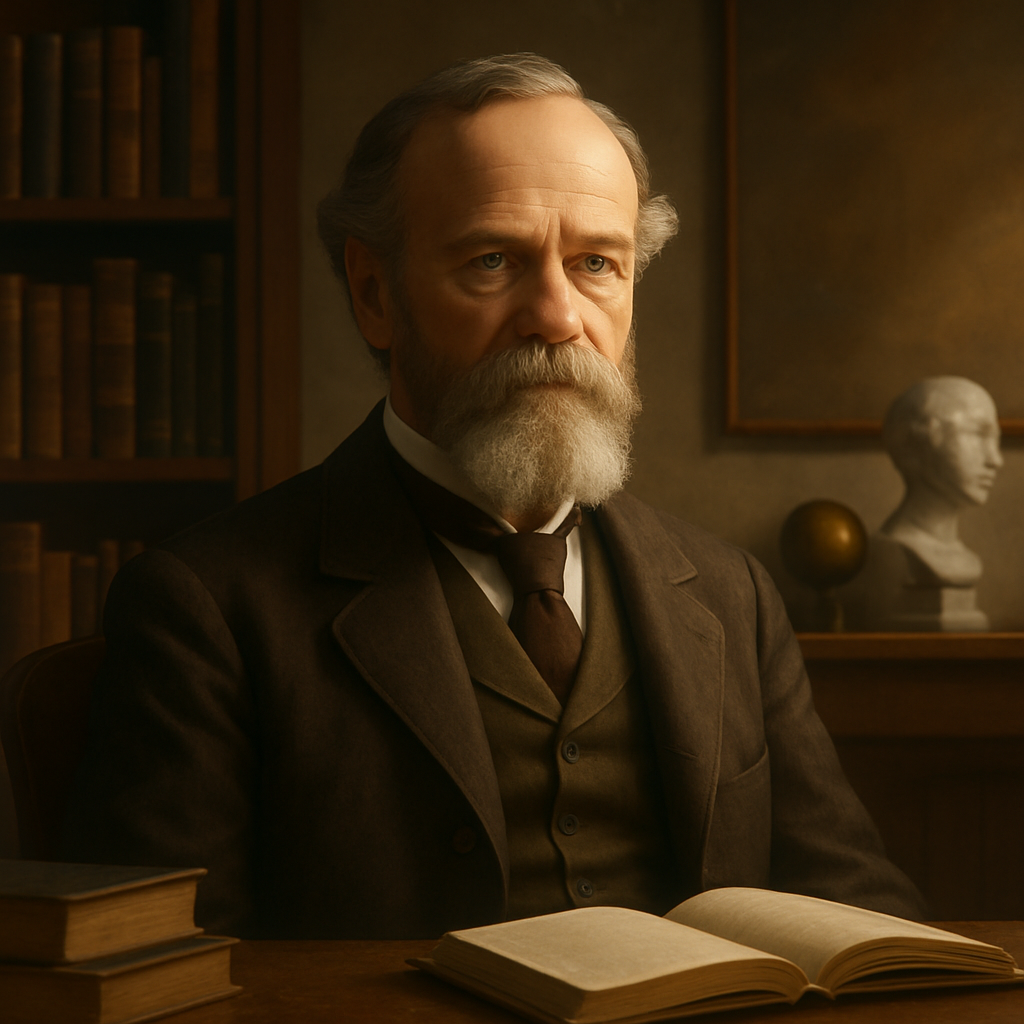
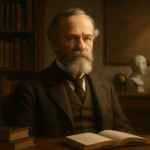
William James
Joined philosophy and psychology around lived experience, attention, religious experience, and practical consequences.
Life and thought
Connects pragmatism, psychology, religion, emotion, habit, attention, and lived experience in practical inquiry.
William James is presented in the Thought archive through psychology, american, united states, modern. The recorded life dates are 1842–1910. The profile connects this work to Pragmatism, Psychology, Religion & Mysticism, Western Philosophy.
The central questions gathered here concern pragmatism, radical empiricism, will to believe, habit, stream of consciousness. Together they show the recurring problems, methods, and distinctions that define this thinker’s contribution.
William James developed within an intellectual conversation shaped by Peirce, empiricism, psychology, religious experience. These names provide context for the traditions and problems surrounding the work; they do not imply simple agreement.
The surviving reading path begins with Principles of Psychology, Pragmatism, Varieties of Religious Experience, Will to Believe. The recorded legacy extends toward Dewey, psychology, pragmatism, humanistic thought.
Five Defining Theories
The central ideas, methods, and arguments that give this thinker’s work its distinctive shape.
pragmatism
A central idea in this thinker’s work, method, and intellectual legacy.
radical empiricism
A central idea in this thinker’s work, method, and intellectual legacy.
will to believe
A central idea in this thinker’s work, method, and intellectual legacy.
habit
A central idea in this thinker’s work, method, and intellectual legacy.
stream of consciousness
A central idea in this thinker’s work, method, and intellectual legacy.
Life journey
A structured path through the verified context attached to this profile.
Context
1842–1910 · United States · Modern
Intellectual formation
The recorded influences include Peirce, empiricism, psychology, religious experience.
Defining ideas
The profile centres on pragmatism, radical empiricism, will to believe, habit, stream of consciousness.
The work
A reading path through Principles of Psychology, Pragmatism, Varieties of Religious Experience, Will to Believe.
Lasting influence
The recorded influence reaches Dewey, psychology, pragmatism, humanistic thought.
In time
Major Works
Texts through which the thinker’s ideas entered the wider intellectual record.
Principles of Psychology
This work matters because it carries a central part of the thinker’s method, argument, or intellectual legacy into a form readers can examine directly.
Pragmatism
This work matters because it carries a central part of the thinker’s method, argument, or intellectual legacy into a form readers can examine directly.
Varieties of Religious Experience
This work matters because it carries a central part of the thinker’s method, argument, or intellectual legacy into a form readers can examine directly.
Will to Believe
This work matters because it carries a central part of the thinker’s method, argument, or intellectual legacy into a form readers can examine directly.
Influence network
Trace the intellectual lineage into and beyond this thinker.
Selected quotations
My experience is what I agree to attend to.
Act as if what you do makes a difference.
Truth happens to an idea.
The art of being wise is knowing what to overlook.
Belief creates the actual fact.
Schools of thought
Pragmatism
Explore the thinkers and ideas connected to this tradition.
Explore school P40 thinkersPsychology
Explore the thinkers and ideas connected to this tradition.
Explore school R84 thinkersReligion & Mysticism
Explore the thinkers and ideas connected to this tradition.
Explore school W91 thinkersWestern Philosophy
Explore the thinkers and ideas connected to this tradition.
Explore schoolConnected Thinkers

D.T. Suzuki
SharedPsychology · Religion & Mysticism
View thinker →
John Nash
SharedPsychology · American · Modern
View thinker →
Sojourner Truth
SharedReligion & Mysticism · Modern
View thinker →
Émile Durkheim
SharedReligion & Mysticism · Modern
View thinker →
Max Weber
SharedReligion & Mysticism · Modern
View thinker →
Kitaro Nishida
SharedReligion & Mysticism · Modern
View thinker →Featured Debates
See how William James’s perspective changes when it meets another mind.


Preventing Humanity’s Misstep in Misunderstanding the ‘Will to Power’
The potential misinterpretation of Nietzsche's 'will to power' in modern technological and ideological advancements poses a risk to true human flourishing and individual autonomy. The central…
View Debate →

The Perils of Unexamined Technological Assumptions
In the face of rapid technological advancements, it's crucial to examine the assumptions driving these developments before they lead humanity astray. The central fault line is…
View Debate →

The Role of Habit and Sentiment in Technological Decision-Making
As technology increasingly influences human behavior and decision-making, it's crucial to examine the assumptions driving these developments. The central fault line is The tension between technological…
View Debate →


Does Military Intervention Ever Truly Secure Lasting Peace?
The question of whether military intervention can ever truly secure lasting peace has long been a contentious issue. In this debate, Judah Magnes, a proponent of…
View Debate →Continue the conversation with William James.
Test an assumption, explore an idea, or bring this perspective into dialogue with a council of other thinkers.