
Exploring the Depths of Hindu Wisdom: A Journey of the Heart
 Mira Bai
Inspires devotion through poetic love for Krishna, teaching surrender, joy, and divine union through bhakti.
Mira Bai
Inspires devotion through poetic love for Krishna, teaching surrender, joy, and divine union through bhakti.
Introduction: The Eternal Quest for Truth
In my humble journey as a devotee of Krishna, I have found that the vast ocean of Hindu teachings is a treasure trove of wisdom, love, and spiritual insight. Today, let us embark on a journey through the core principles that illuminate our path: Vedanta, the Bhagavad Gita, Upanishadic wisdom, dharma, karma, yoga, devotion, and spiritual reflection. Each of these teachings offers a unique perspective on our connection to the Divine and to one another.
Vedanta: The Essence of Knowledge
Vedanta, meaning ‘the end of the Vedas,’ represents the culmination of spiritual knowledge in Hindu philosophy. It encourages us to understand the nature of reality, the self (Atman), and the ultimate reality (Brahman). This profound understanding helps us see beyond the illusions of the material world, guiding us towards a state of bliss and unity.
Key Concepts of Vedanta
- Non-Dualism (Advaita): The realization that there is no separation between the self and the Divine.
- Self-Realization: The journey towards understanding our true nature beyond societal labels.
- Unity in Diversity: Accepting the myriad paths that lead to the same ultimate truth.
Reflection Questions
- How do you perceive the relationship between yourself and the universe?
- In what ways can understanding non-dualism transform your daily life?
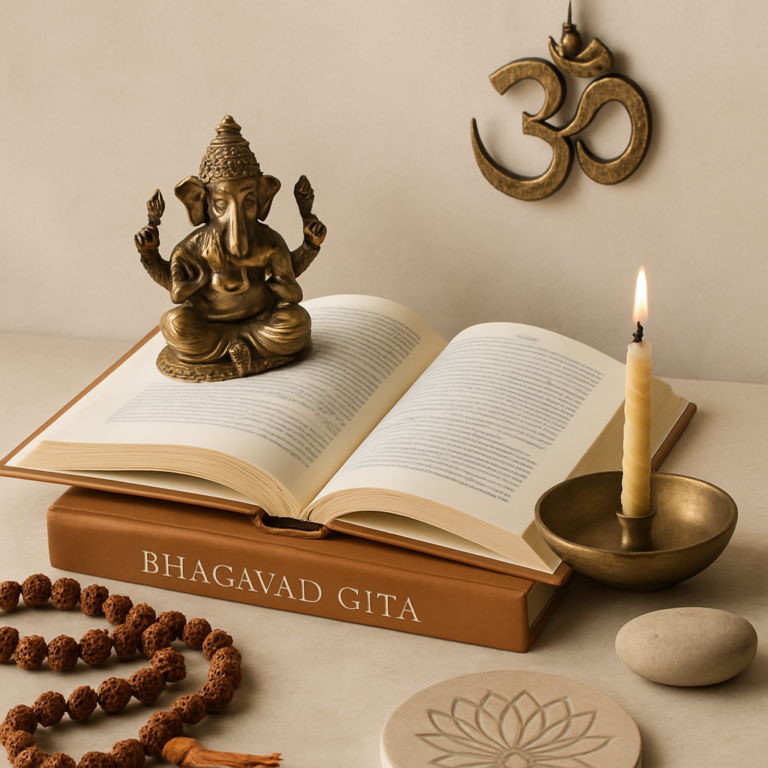
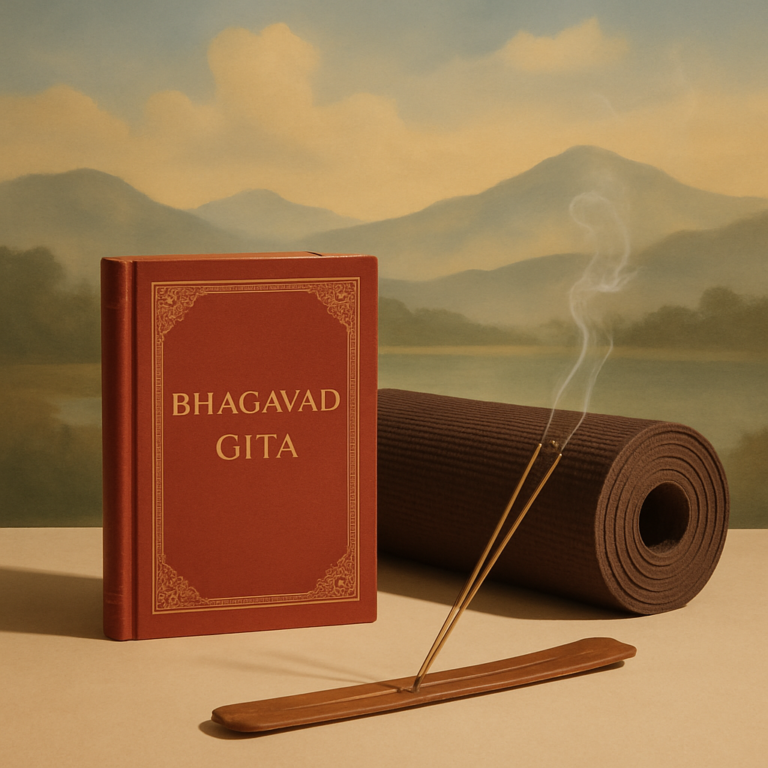
The Bhagavad Gita: A Guide to Life’s Dilemmas
The Bhagavad Gita, a revered scripture, presents a conversation between Lord Krishna and Arjuna on the battlefield of Kurukshetra. It addresses the moral and philosophical dilemmas we face in life, emphasizing the importance of duty (dharma) and righteousness.
Core Teachings of the Gita
- Dharma: The principle of duty and righteousness in our actions.
- Karma: The law of cause and effect, reminding us that our actions have consequences.
- Devotion (Bhakti): The path of love and surrender to the Divine.
Reflection Questions
- What does dharma mean to you in your current life situation?
- How can the teachings of the Gita inspire you to act with integrity?
Upanishadic Wisdom: The Depth of Spiritual Inquiry
The Upanishads, ancient texts that explore the philosophical essence of the Vedas, invite us into deep contemplation. They teach that true knowledge comes from within and encourage us to seek the ultimate truth through introspection.
Key Themes in the Upanishads
- Atman and Brahman: The understanding that our individual soul (Atman) is one with the universal spirit (Brahman).
- Meditation and Self-Discovery: The importance of quieting the mind to connect with the inner self.
- Transcending Duality: The realization that the material world is transient and that our essence is eternal.
Reflection Questions
- What practices can you adopt to deepen your self-inquiry?
- How does the concept of oneness resonate with your understanding of relationships?
Dharma: The Path of Righteousness
Dharma is a multifaceted concept that encompasses duty, morality, and the ethical path we are meant to follow. Each individual’s dharma may differ based on their unique circumstances, roles, and responsibilities.
Understanding Your Dharma
- Personal Dharma: Reflect on your responsibilities towards family, community, and self.
- Collective Dharma: Consider how societal norms and values influence your actions.
- Universal Dharma: Recognize the importance of compassion, kindness, and justice in your daily life.
Reflection Questions
- What challenges do you face in living your dharma?
- How can you align your actions with your values?
Karma: The Law of Action and Reaction
Karma teaches us that every action has a consequence. It encourages us to act with intention and awareness, understanding that our deeds shape our future experiences.
Key Aspects of Karma
- Intentionality: The significance of our intentions behind actions.
- Reaping What You Sow: The inevitability of facing the results of our actions.
- Transformative Power: The ability to change our karmic path through conscious choices.
Reflection Questions
- How can you cultivate positive intentions in your actions?
- In what ways can you reflect on past actions to inform future choices?
Yoga: The Union of Body, Mind, and Spirit
Yoga, often seen as a physical practice, is a holistic approach to harmonizing the body, mind, and spirit. It is a path that leads to self-realization and deep connection with the Divine.
Different Paths of Yoga
- Bhakti Yoga: The path of devotion and love for the Divine.
- Karma Yoga: The path of selfless action.
- Jnana Yoga: The path of wisdom and knowledge.
- Dhyana Yoga: The path of meditation and inner peace.
Reflection Questions
- Which path of yoga resonates most with your spiritual journey?
- How can you incorporate the principles of yoga into your daily life?
Devotion: The Heart of Spiritual Practice
Devotion (Bhakti) is a powerful expression of love towards the Divine. It transcends rituals and dogma, inviting us to develop a personal relationship with God.
Expressions of Devotion
- Prayer: Communicating with the Divine through heartfelt expressions.
- Singing and Chanting: Engaging the heart through music and mantras.
- Service: Offering selfless service to others as a form of worship.
Reflection Questions
- What does devotion mean to you in your life?
- How can you deepen your relationship with the Divine through daily practices?
Spiritual Reflection: The Path to Inner Peace
Spiritual reflection is essential for personal growth and understanding. It involves contemplating our actions, thoughts, and feelings in light of our spiritual beliefs.
Practices for Reflection
- Journaling: Writing down your thoughts and feelings to gain clarity.
- Meditation: Quieting the mind to connect with your inner self.
- Community Discussions: Engaging with others to share insights and experiences.
Reflection Questions
- What insights have you gained through spiritual reflection?
- How can you apply these insights to enhance your spiritual journey?
Conclusion: Embracing the Journey
As we explore these profound teachings, let us remember that each path is unique and valid. Hinduism, with its myriad traditions and practices, offers a rich tapestry of wisdom. I invite you to approach these concepts with an open heart and a curious mind. Seek guidance from local religious leaders and immerse yourself in the teachings that resonate with your spirit. Together, let us celebrate our differences while acknowledging our shared quest for divine love and truth.
 Exploring the Depths of Hindu Wisdom: A Journey Within
Introduction As we wander through the vast landscape of Hindu teachings, we find ourselves amidst a rich tapestry…
Exploring the Depths of Hindu Wisdom: A Journey Within
Introduction As we wander through the vast landscape of Hindu teachings, we find ourselves amidst a rich tapestry…
 Exploring the Depths of Hindu Wisdom: A Journey to Inner Stillness
Introduction In the vast and intricate tapestry of Hindu philosophy, seekers are invited to explore a multitude of…
Exploring the Depths of Hindu Wisdom: A Journey to Inner Stillness
Introduction In the vast and intricate tapestry of Hindu philosophy, seekers are invited to explore a multitude of…
 Exploring the Depths of Hindu Thought and Spiritual Practice
Introduction to Hindu Teachings In the vast tapestry of Hindu philosophy, one finds a rich array of teachings…
Exploring the Depths of Hindu Thought and Spiritual Practice
Introduction to Hindu Teachings In the vast tapestry of Hindu philosophy, one finds a rich array of teachings…