
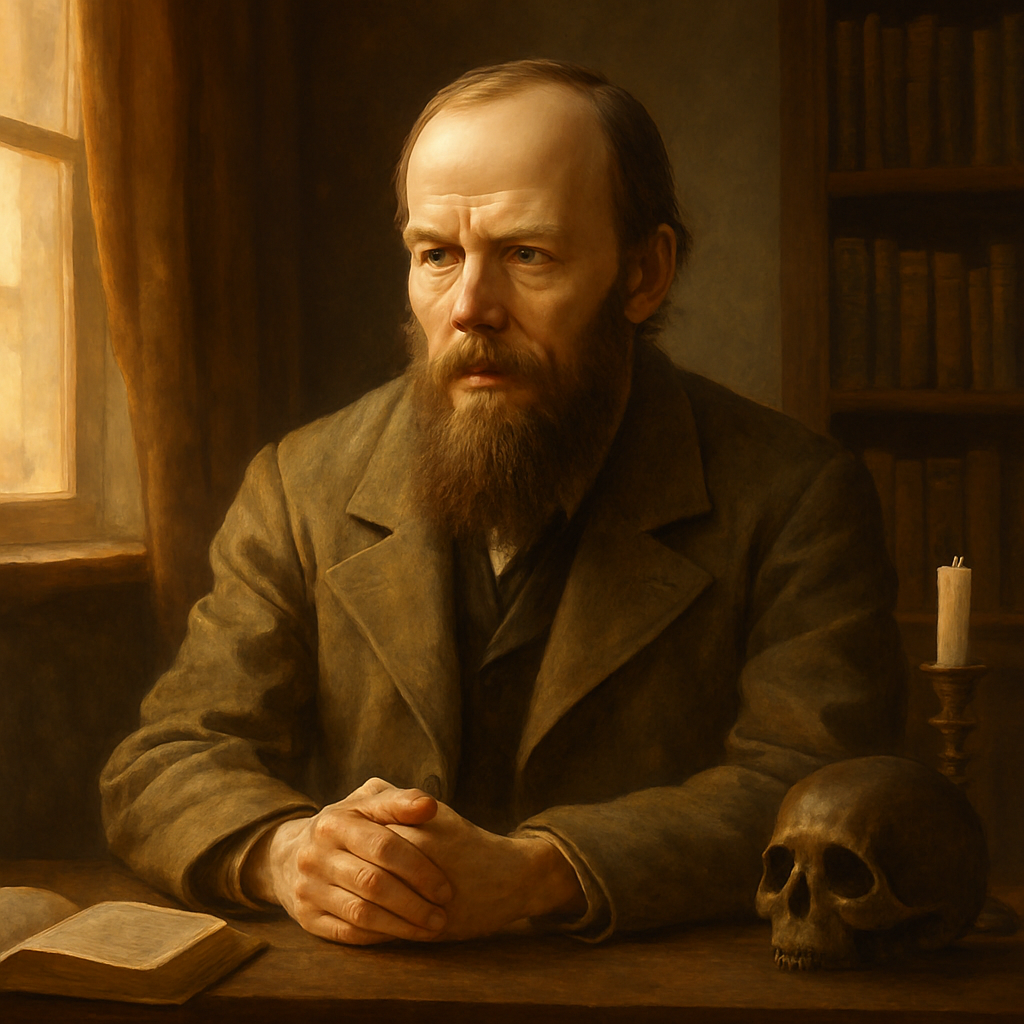
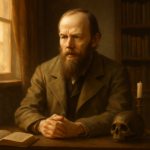
Fyodor Dostoevsky
Novelist of freedom, guilt, faith, and the underground self.
Life and thought
Interrogates guilt, freedom, suffering, faith, rebellion, and the dangerous depth of the human soul.
Fyodor Dostoevsky is presented in the Thought archive through literary thought, russian, russian, modern. The recorded life dates are 1821–1881. The profile connects this work to Existentialism, Literature, Psychology, Religion & Mysticism.
The central questions gathered here concern freedom, guilt, faith, nihilism, moral responsibility. Together they show the recurring problems, methods, and distinctions that define this thinker’s contribution.
Fyodor Dostoevsky developed within an intellectual conversation shaped by Russian Orthodoxy, European socialism, personal suffering. These names provide context for the traditions and problems surrounding the work; they do not imply simple agreement.
The surviving reading path begins with Crime and Punishment, The Brothers Karamazov, Notes from Underground. The recorded legacy extends toward existentialism, psychoanalysis, religious philosophy, literature.
Five Defining Theories
The central ideas, methods, and arguments that give this thinker’s work its distinctive shape.
freedom
A central idea in this thinker’s work, method, and intellectual legacy.
guilt
A central idea in this thinker’s work, method, and intellectual legacy.
faith
A central idea in this thinker’s work, method, and intellectual legacy.
nihilism
A central idea in this thinker’s work, method, and intellectual legacy.
moral responsibility
A central idea in this thinker’s work, method, and intellectual legacy.
Life journey
A structured path through the verified context attached to this profile.
Context
1821–1881 · Russian · Modern
Intellectual formation
The recorded influences include Russian Orthodoxy, European socialism, personal suffering.
Defining ideas
The profile centres on freedom, guilt, faith, nihilism, moral responsibility.
The work
A reading path through Crime and Punishment, The Brothers Karamazov, Notes from Underground.
Lasting influence
The recorded influence reaches existentialism, psychoanalysis, religious philosophy, literature.
In time
Major Works
Texts through which the thinker’s ideas entered the wider intellectual record.
Crime and Punishment
This work matters because it carries a central part of the thinker’s method, argument, or intellectual legacy into a form readers can examine directly.
The Brothers Karamazov
This work matters because it carries a central part of the thinker’s method, argument, or intellectual legacy into a form readers can examine directly.
Notes from Underground
This work matters because it carries a central part of the thinker’s method, argument, or intellectual legacy into a form readers can examine directly.
Influence network
Trace the intellectual lineage into and beyond this thinker.
Selected quotations
Freedom must be examined, not inherited.
Power becomes dangerous when it forgets dignity.
A society reveals itself by what it teaches people to notice.
Freedom without responsibility becomes another form of blindness.
The hardest questions are usually the most human ones.
Schools of thought
Existentialism
Explore the thinkers and ideas connected to this tradition.
Explore school L30 thinkersLiterature
Explore the thinkers and ideas connected to this tradition.
Explore school P40 thinkersPsychology
Explore the thinkers and ideas connected to this tradition.
Explore school R84 thinkersReligion & Mysticism
Explore the thinkers and ideas connected to this tradition.
Explore schoolConnected Thinkers

D.T. Suzuki
SharedPsychology · Religion & Mysticism
View thinker →
Frances Ellen Watkins Harper
SharedLiterature · Literary thought · Modern
View thinker →
Frederick Douglass
SharedLiterature · Modern
View thinker →
Sojourner Truth
SharedReligion & Mysticism · Modern
View thinker →
Max Weber
SharedReligion & Mysticism · Modern
View thinker →
Émile Durkheim
SharedReligion & Mysticism · Modern
View thinker →Featured Debates
See how Fyodor Dostoevsky’s perspective changes when it meets another mind.

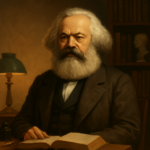
The Dialectical Nature of Freedom and Technology
Amidst the rapid technological advancements, humanity risks losing sight of freedom's essence by uncritically embracing new technologies. The central fault line is The tension between technological…
View Debate →


Is Homeschooling a Viable Alternative to Traditional Education Systems?
In an era where traditional education systems are increasingly scrutinized, the question of whether homeschooling presents a viable alternative gains prominence. This debate brings together the…
View Debate →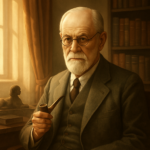


Exploring Common Grounds: The Intersection of Skinner’s Behaviorism and Freud’s Psychoanalytic Thought
The intellectual landscape of psychology is often marked by contrasting paradigms, yet intriguing intersections can be found between distinct schools of thought. This debate delves into…
View Debate →


Is Healthcare Inequality a Failure of Policy or a Reflection of Societal Values?
The debate over healthcare inequality touches on both systemic policy issues and deeper societal values. Vannevar Bush, an advocate for technological advancement and policy innovation, might…
View Debate →Continue the conversation with Fyodor Dostoevsky.
Test an assumption, explore an idea, or bring this perspective into dialogue with a council of other thinkers.