
Laozi
Gave the world a paradoxical philosophy of simplicity, humility, non-forcing, and alignment with the Dao.

Life and thought
Approaches life through Dao, simplicity, non-forcing, humility, paradox, and alignment with natural patterns.
Laozi is presented in the Thought archive through philosophy, chinese daoist, china, ancient. The recorded life dates are traditionally 6th century BCE. The profile connects this work to Ancient Philosophy, Eastern Philosophy, Metaphysics, Religion & Mysticism.
The central questions gathered here concern Dao, wu wei, simplicity, softness, paradox. Together they show the recurring problems, methods, and distinctions that define this thinker’s contribution.
Laozi developed within an intellectual conversation shaped by early Chinese cosmology, folk wisdom. These names provide context for the traditions and problems surrounding the work; they do not imply simple agreement.
The surviving reading path begins with Dao De Jing. The recorded legacy extends toward Daoism, Zen Buddhism, Chinese aesthetics, ecological thought.
Five Defining Theories
The central ideas, methods, and arguments that give this thinker’s work its distinctive shape.
Dao
A central idea in this thinker’s work, method, and intellectual legacy.
wu wei
A central idea in this thinker’s work, method, and intellectual legacy.
simplicity
A central idea in this thinker’s work, method, and intellectual legacy.
softness
A central idea in this thinker’s work, method, and intellectual legacy.
paradox
A central idea in this thinker’s work, method, and intellectual legacy.
Life journey
A structured path through the verified context attached to this profile.
Context
traditionally 6th century BCE · China · Ancient
Intellectual formation
The recorded influences include early Chinese cosmology, folk wisdom.
Defining ideas
The profile centres on Dao, wu wei, simplicity, softness, paradox.
The work
A reading path through Dao De Jing.
Lasting influence
The recorded influence reaches Daoism, Zen Buddhism, Chinese aesthetics, ecological thought.
Major Works
Texts through which the thinker’s ideas entered the wider intellectual record.
Dao De Jing
This work matters because it carries a central part of the thinker’s method, argument, or intellectual legacy into a form readers can examine directly.
Read related Thought →Influence network
Trace the intellectual lineage into and beyond this thinker.
Selected quotations
The journey of a thousand miles begins beneath one’s feet.
Knowing others is intelligence; knowing yourself is wisdom.
Nature does not hurry, yet everything is accomplished.
The soft overcomes the hard.
He who knows does not speak.
Schools of thought
Ancient Philosophy
Explore the thinkers and ideas connected to this tradition.
Explore school E25 thinkersEastern Philosophy
Explore the thinkers and ideas connected to this tradition.
Explore school M49 thinkersMetaphysics
Explore the thinkers and ideas connected to this tradition.
Explore school R84 thinkersReligion & Mysticism
Explore the thinkers and ideas connected to this tradition.
Explore schoolConnected Thinkers

Kitaro Nishida
SharedEastern Philosophy · Metaphysics · Religion & Mysticism
View thinker →
Xunzi
SharedAncient Philosophy · Eastern Philosophy · Philosophy
View thinker →
Mozi
SharedAncient Philosophy · Eastern Philosophy · Philosophy
View thinker →
The Dalai Lama
SharedEastern Philosophy · Religion & Mysticism
View thinker →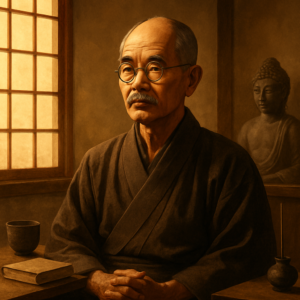
D.T. Suzuki
SharedEastern Philosophy · Religion & Mysticism
View thinker →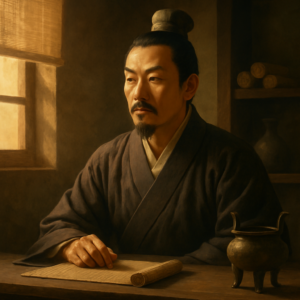
Han Feizi
SharedAncient Philosophy · Eastern Philosophy
View thinker →Featured Debates
See how Laozi’s perspective changes when it meets another mind.



Preventing Humanity’s Over-reliance on Control and Force
In an era where technology and political structures increasingly prioritize control and force, it is vital to revisit principles that emphasize natural harmony and non-coercive actions.…
View Debate →

The Role of Simplicity and Non-Action in Technological Development
In an era of rapid technological advancement, there is a risk of losing sight of fundamental principles of simplicity and balance. The central fault line is…
View Debate →

The Role of Non-Action in Technological Advancement
The Role of Non-Action in Technological Advancement
View Debate →


Is Homeschooling a Viable Alternative to Traditional Education Systems?
In an era where traditional education systems are increasingly scrutinized, the question of whether homeschooling presents a viable alternative gains prominence. This debate brings together the…
View Debate →Continue the conversation with Laozi.
Test an assumption, explore an idea, or bring this perspective into dialogue with a council of other thinkers.