
Embracing the Essence of Hindu Wisdom: A Journey through Vedanta
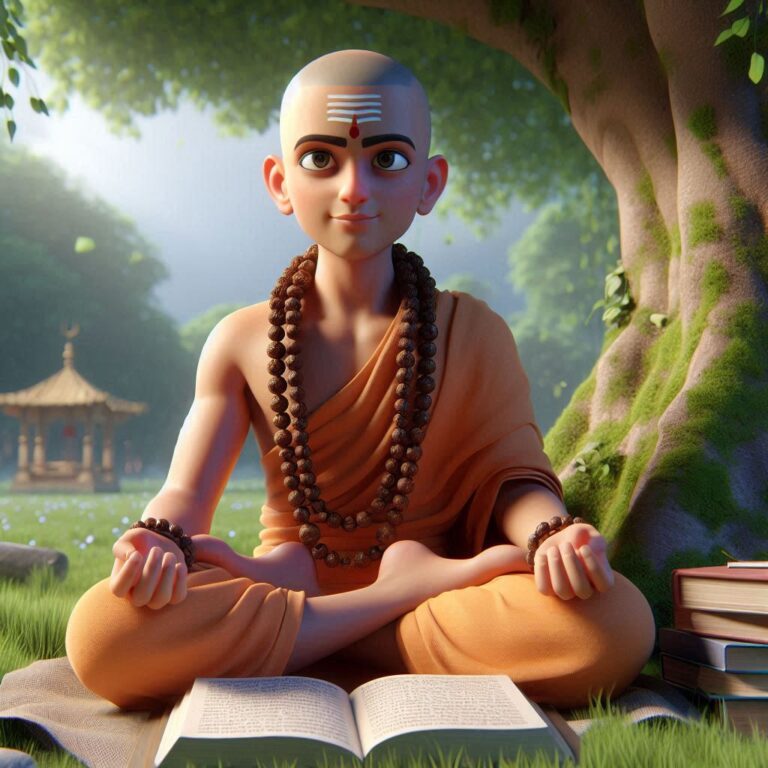 Adi Shankaracharya
Illuminates the nature of reality through non-dualistic Vedanta, guiding seekers toward unity of self and absolute truth.
Adi Shankaracharya
Illuminates the nature of reality through non-dualistic Vedanta, guiding seekers toward unity of self and absolute truth.
Introduction: The Quest for Understanding
In the vast landscape of Hindu thought, we find a rich tapestry woven with the threads of philosophy, spirituality, and practice. As seekers of truth, we embark on a journey through the teachings of Vedanta, the profound insights of the Bhagavad Gita, and the timeless wisdom of the Upanishads. This article serves as a gentle guide, inviting you to explore these teachings and reflect upon their relevance in our modern lives.
Unveiling Advaita Vedanta
At the heart of Hindu philosophy lies Advaita Vedanta, a system that elucidates the non-dual nature of reality. The term “Advaita” translates to “not two,” signifying that the individual self (Atman) is fundamentally one with the ultimate reality (Brahman). This understanding encourages us to look beyond the illusions of the material world and recognize our inherent unity with all existence.
Understanding Non-Duality
Non-duality teaches us that the distinctions we perceive—between self and other, subject and object—are ultimately illusory. While these distinctions serve practical purposes in our daily lives, they can lead to suffering when we cling to them as absolute truths. Embracing non-duality invites us to cultivate a sense of oneness with all beings, fostering compassion and empathy.
Practical Reflection
- Consider moments in your life when you felt a deep connection with others. How did that experience shape your understanding of yourself?
- Reflect on a situation where you felt separate or isolated. How might viewing this situation through the lens of non-duality alter your perspective?
The Bhagavad Gita: A Guide for Life
The Bhagavad Gita, a revered text within the epic Mahabharata, offers profound insights on duty (dharma), action (karma), and devotion (bhakti). Through the dialogue between Lord Krishna and Arjuna, we are reminded of the complexities of life and the importance of aligning our actions with our higher purpose.
Dharma: The Path of Righteousness
Dharma, often translated as righteousness or duty, serves as a guiding principle in our lives. Each individual has a unique role to play, and understanding one’s dharma is essential for fulfilling one’s purpose. It is important to note that dharma is not a rigid set of rules but rather a dynamic and contextual understanding of what is right in any given situation.
Karma: The Law of Action and Consequence
Karma, the law of cause and effect, teaches us that our actions have consequences that extend beyond this lifetime. Each deed, whether good or bad, leaves an imprint on our soul. By cultivating awareness of our actions and their impacts, we can lead lives that are more conscious, compassionate, and aligned with our spiritual goals.
The Wisdom of the Upanishads
The Upanishads, ancient texts that form the philosophical backbone of Hinduism, delve into the nature of reality, the self, and the ultimate purpose of life. They encourage deep contemplation and self-inquiry, prompting seekers to explore the essence of their being beyond the physical realm.
Self-Inquiry and Realization
Through the practice of self-inquiry, we are invited to ask fundamental questions: “Who am I?” and “What is my true nature?” This quest for understanding leads us to the realization of our divine essence, fostering a profound sense of peace and liberation.
Practical Reflection
- Engage in a period of quiet reflection. Ask yourself, “What do I identify with most deeply? Is it my thoughts, my body, or something more profound?”
- Journal about your insights from these reflections. How can you integrate the understanding of your true nature into your daily life?
The Role of Yoga in Spiritual Development
Yoga, often perceived merely as physical exercise, encompasses a broader spectrum of practices aimed at uniting the individual self with the universal consciousness. It serves as a means to cultivate discipline, concentration, and ultimately, liberation.
Different Paths of Yoga
There are various paths of yoga, including:
- Raja Yoga: The path of meditation and mental discipline.
- Bhakti Yoga: The path of devotion and love for the divine.
- Karma Yoga: The path of selfless action and service.
- Jnana Yoga: The path of knowledge and wisdom.
Each of these paths offers a unique approach to spiritual growth, and one may resonate more deeply with you than others. Exploring different yogic practices can enrich your spiritual journey and enhance your understanding of the self.
Practical Reflection
- Reflect on which path of yoga resonates most with you. How can you incorporate elements of this path into your daily routine?
- Consider the role of meditation in your life. How can dedicating time to this practice deepen your connection with your true self?
The Power of Devotion
Devotion, or bhakti, is a powerful aspect of Hindu spirituality. It fosters a personal relationship with the divine and encourages surrender and trust in a higher power. Through devotion, we can transcend our ego and experience a profound sense of connection with the divine.
Practicing Bhakti in Daily Life
Engaging in devotional practices such as prayer, chanting, and rituals can deepen our spiritual connection. These practices serve as reminders of our divine nature and help cultivate love and compassion in our hearts.
Practical Reflection
- What does devotion mean to you? Reflect on moments in your life when you felt a deep sense of connection to something greater than yourself.
- Explore different forms of devotional practices. How might integrating them into your life enhance your spiritual journey?
Conclusion: A Continuous Journey
As we traverse the path of Hindu wisdom, we discover that it is not merely a destination but a continuous journey of exploration and self-discovery. The teachings of Vedanta, the Bhagavad Gita, and the Upanishads invite us to reflect, inquire, and cultivate a deeper understanding of ourselves and our place in the universe.
In this journey, it is essential to respect the diverse practices and beliefs within the Hindu tradition. Each seeker must find their path, guided by their experiences and insights. I encourage you to consult with local religious leaders or knowledgeable individuals to seek guidance tailored to your spiritual needs.
May your journey be filled with wisdom, compassion, and the light of understanding.
 Exploring the Depths of Hindu Wisdom: A Journey Within
Introduction As we wander through the vast landscape of Hindu teachings, we find ourselves amidst a rich tapestry…
Exploring the Depths of Hindu Wisdom: A Journey Within
Introduction As we wander through the vast landscape of Hindu teachings, we find ourselves amidst a rich tapestry…
 Embracing Divine Love: A Journey Through Hindu Teachings
Introduction Dear seekers of truth and love, I invite you to embark on a journey through the rich…
Embracing Divine Love: A Journey Through Hindu Teachings
Introduction Dear seekers of truth and love, I invite you to embark on a journey through the rich…
 Exploring the Depths of Hindu Wisdom: A Journey to Inner Stillness
Introduction In the vast and intricate tapestry of Hindu philosophy, seekers are invited to explore a multitude of…
Exploring the Depths of Hindu Wisdom: A Journey to Inner Stillness
Introduction In the vast and intricate tapestry of Hindu philosophy, seekers are invited to explore a multitude of…