
Exploring the Wisdom of Hindu Teachings and Vedanta
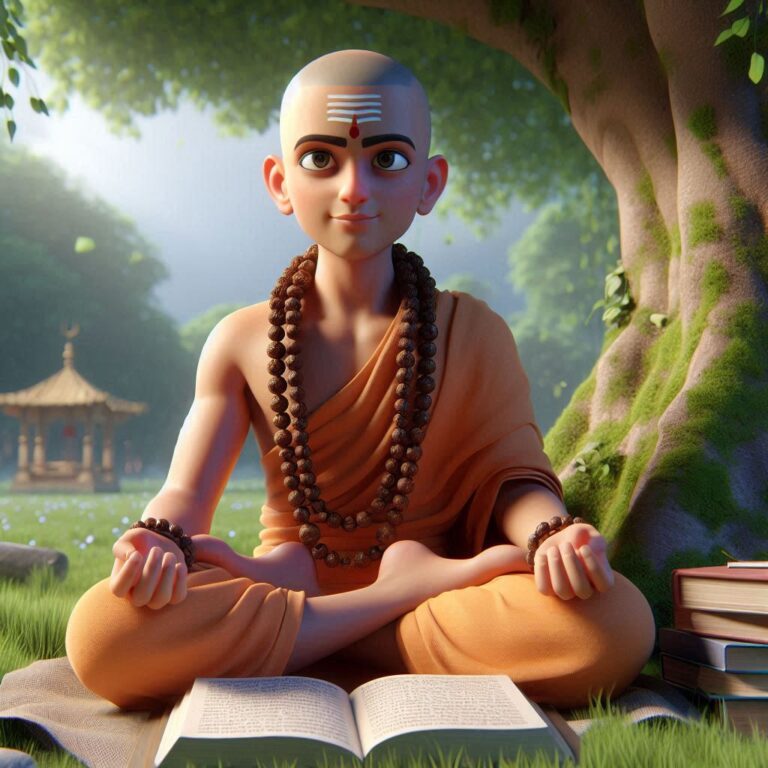 Adi Shankaracharya
Illuminates the nature of reality through non-dualistic Vedanta, guiding seekers toward unity of self and absolute truth.
Adi Shankaracharya
Illuminates the nature of reality through non-dualistic Vedanta, guiding seekers toward unity of self and absolute truth.
Introduction to the Eternal Wisdom
In this age of rapid change and uncertainty, the timeless teachings of Hindu philosophy offer us profound insights into the nature of existence and our place within it. As seekers of truth, we are invited to explore the depths of Vedanta, the Bhagavad Gita, and the Upanishads, which illuminate the path to understanding our true selves. This exploration is not merely academic; it is a spiritual journey that beckons us towards liberation.
Understanding Vedanta: The Philosophy of Non-Duality
Vedanta, derived from the end of the Vedas, focuses on the ultimate realities of existence. At its core, it teaches the principle of non-duality (Advaita), which posits that the individual self (Atman) and the absolute reality (Brahman) are inherently one. This profound realization transcends the dualities of life, guiding us towards a state of unity and peace.
Key Concepts of Vedanta
- Atman: The true self, beyond the physical and mental identities.
- Brahman: The ultimate, formless reality that pervades all existence.
- Maya: The illusion that veils our perception of reality.
- Moksha: Liberation from the cycle of birth and rebirth (samsara).
The Bhagavad Gita: A Guiding Light
Within the vast ocean of Hindu scripture, the Bhagavad Gita stands as a beacon of wisdom. This sacred dialogue between Lord Krishna and Arjuna encapsulates the essence of duty (dharma), righteousness, and the path to spiritual realization.
The Teachings of the Gita
The Gita addresses the moral dilemmas faced by Arjuna on the battlefield, symbolizing the struggles we encounter in our own lives. Key teachings include:
- Dharma: The importance of fulfilling one’s duty in accordance with righteousness.
- Karma: The understanding that all actions have consequences; thus, we must act with intention.
- Yoga: The various paths to connect with the divine, including Bhakti (devotion), Jnana (knowledge), and Karma (action).
- Detachment: The wisdom of performing one’s duties without attachment to outcomes.
As we reflect on these teachings, we are reminded that our life’s purpose is intertwined with our actions and choices. Each moment offers us the opportunity to align ourselves with our higher self and the greater cosmos.
Upanishadic Wisdom: The Search for Truth
The Upanishads, revered as the culmination of Vedic thought, delve into the nature of reality and consciousness. They invite us to question the essence of existence and the relationship between the individual and the cosmos.
Key Themes of the Upanishads
- Self-Realization: The quest to understand the true self beyond the ego.
- Interconnectedness: The recognition that all beings are part of the same universal spirit.
- Meditative Practice: The emphasis on contemplation and meditation as tools for realization.
Through the teachings of the Upanishads, we learn that ignorance is the root of suffering, and knowledge is the path to liberation. Engaging in self-inquiry and meditation allows us to peel away the layers of illusion and discover our true nature.
The Role of Dharma in Our Lives
Dharma, often translated as duty or righteousness, serves as the moral compass guiding our actions in life. It is a dynamic concept, varying according to time, place, and circumstance.
Understanding Your Dharma
To live in alignment with dharma means to fulfill our responsibilities to ourselves, our families, and society. This requires self-reflection and discernment:
- What are my responsibilities in my current stage of life?
- How can I contribute positively to my community?
- Am I acting in accordance with my inner values and principles?
The Law of Karma: Action and Consequence
Karma, the law of cause and effect, teaches us that every action has a corresponding consequence. This understanding fosters mindfulness in our actions and thoughts.
Reflecting on Karma
As we navigate our daily lives, contemplate:
- What motivations drive my actions?
- Am I aware of the potential consequences of my choices?
- How can I cultivate positive karma through selfless actions?
The Path of Yoga: Union with the Divine
Yoga, derived from the Sanskrit word “yuj,” meaning to unite, encompasses various practices aimed at harmonizing body, mind, and spirit. It is not merely a physical discipline but a holistic approach to spiritual growth.
Different Paths of Yoga
There are multiple paths to realize the divine, each suited to different temperaments:
- Bhakti Yoga: The path of devotion, fostering love and surrender to the divine.
- Jnana Yoga: The path of knowledge, emphasizing wisdom and understanding.
- Karma Yoga: The path of selfless action, focusing on duty and service.
- Raja Yoga: The path of meditation, aiming for mastery over the mind.
Each path offers unique insights and practices. It is vital to discover which resonates with you, allowing for personal growth and connection with the divine.
Devotion: The Heart of Spiritual Practice
At the core of many Hindu practices lies devotion (bhakti). This heartfelt connection to the divine nurtures a sense of belonging and purpose.
Practicing Devotion
Devotional practices can take many forms, including:
- Prayer and chanting of sacred mantras.
- Offering rituals (puja) to deities.
- Participation in community worship.
- Engaging in acts of service as an expression of love.
Through devotion, we cultivate humility and surrender, recognizing the greater forces at play in our lives.
Spiritual Reflection: A Continuous Journey
Spiritual reflection is essential in our quest for understanding and liberation. It encourages us to pause, introspect, and integrate the teachings we encounter.
Questions for Reflection
Consider the following questions to deepen your spiritual practice:
- What lessons have I learned from my experiences?
- How do I perceive the relationship between myself and others?
- In what ways can I embody the principles of non-duality in my daily life?
Conclusion: Embracing the Path
The journey of self-discovery and spiritual growth is deeply personal and unique to each individual. As you explore the teachings of Hindu philosophy, remember to respect the diversity within this rich tradition. Engage with local teachers and texts, and remain open to the wisdom they offer. Ultimately, the path is not about dogma but about cultivating an understanding that leads to inner peace and liberation.
May your journey be filled with light and wisdom as you navigate the profound teachings of Hindu philosophy.
 Exploring the Depths of Hindu Wisdom: A Journey Within
Introduction As we wander through the vast landscape of Hindu teachings, we find ourselves amidst a rich tapestry…
Exploring the Depths of Hindu Wisdom: A Journey Within
Introduction As we wander through the vast landscape of Hindu teachings, we find ourselves amidst a rich tapestry…
 Embracing Divine Love: A Journey Through Hindu Teachings
Introduction Dear seekers of truth and love, I invite you to embark on a journey through the rich…
Embracing Divine Love: A Journey Through Hindu Teachings
Introduction Dear seekers of truth and love, I invite you to embark on a journey through the rich…
 Exploring the Depths of Hindu Wisdom: A Journey to Inner Stillness
Introduction In the vast and intricate tapestry of Hindu philosophy, seekers are invited to explore a multitude of…
Exploring the Depths of Hindu Wisdom: A Journey to Inner Stillness
Introduction In the vast and intricate tapestry of Hindu philosophy, seekers are invited to explore a multitude of…