
Exploring the Depths of Hindu Teachings: A Journey Within
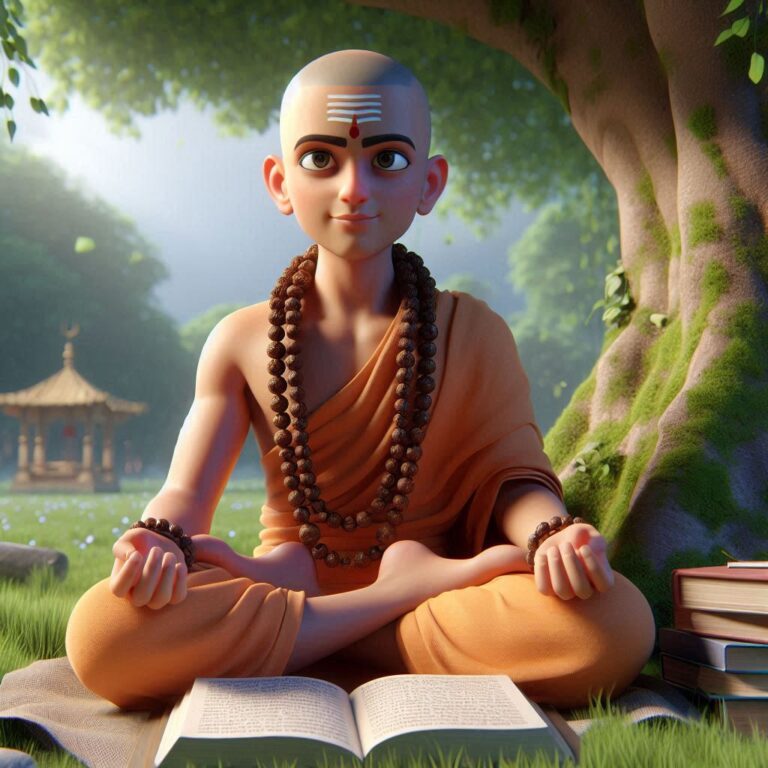 Adi Shankaracharya
Illuminates the nature of reality through non-dualistic Vedanta, guiding seekers toward unity of self and absolute truth.
Adi Shankaracharya
Illuminates the nature of reality through non-dualistic Vedanta, guiding seekers toward unity of self and absolute truth.
Introduction: The Quest for Understanding
In the vast and intricate tapestry of Hindu philosophy, seekers have long embarked on a profound journey toward understanding the nature of reality, the self, and the divine. Through the teachings of Vedanta, the wisdom found within the Upanishads, and the guiding verses of the Bhagavad Gita, we can explore the essence of dharma, karma, yoga, and devotion. In this exploration, we respect the rich diversity within our tradition while inviting each individual to engage in personal reflection.
Vedanta: The Philosophy of Non-Duality
Vedanta, the culmination of Vedic thought, invites us to contemplate the nature of the self (Atman) and its unity with the ultimate reality (Brahman). This non-dual perspective encourages us to transcend the illusions of separation and duality that often cloud our understanding. The core teaching of Advaita Vedanta emphasizes that the essence of every being is the same as that of the universe itself.
Key Concepts of Vedanta
- Atman: The true self, which is eternal and beyond physical existence.
- Brahman: The absolute reality, the source of all that exists.
- Maya: The illusion that creates a sense of duality and separation.
- Moksha: Liberation from the cycle of birth and death, achieved through self-realization.
The Bhagavad Gita: A Manual for Life
The Bhagavad Gita, a revered scripture, serves as a practical guide for navigating the complexities of life. Set on the battlefield of Kurukshetra, this dialogue between Lord Krishna and the warrior Arjuna addresses the moral dilemmas and existential questions that every individual faces.
Core Teachings of the Gita
- Dharma: The importance of duty and righteousness, urging individuals to fulfill their responsibilities without attachment to the results.
- Karma: The law of action and reaction, teaching us that every action has consequences that shape our future.
- Yoga: The various paths to realization, including Bhakti (devotion), Karma (action), Jnana (knowledge), and Dhyana (meditation).
- Detachment: The value of performing one’s duty without being attached to outcomes, fostering a sense of peace and equanimity.
Upanishadic Wisdom: The Search for Truth
The Upanishads, ancient texts that form the philosophical foundation of Hinduism, delve into the nature of existence and the relationship between the individual and the cosmos. They encourage deep introspection and inquiry into the self, leading to the realization of our true nature.
Reflection Questions on Upanishadic Wisdom
- What is the essence of my being beyond my physical form?
- How do my thoughts and actions align with the universal truth?
- In what ways do I experience the interconnectedness of all life?
Dharma: The Path of Righteousness
Dharma is often interpreted as duty or righteousness, but its meaning is far more profound. It encapsulates the moral and ethical principles that guide us in our interactions with others and the world around us. Each individual’s dharma may differ based on their age, stage of life, and personal circumstances.
Understanding Your Dharma
- Consider your roles in life: Are you fulfilling your responsibilities as a parent, teacher, or friend?
- Reflect on the values that guide your actions: Are they aligned with truth, compassion, and integrity?
- Recognize the larger purpose: How can your actions contribute to the well-being of others?
Karma: The Law of Cause and Effect
Karma, the principle of cause and effect, teaches us that our actions, whether good or bad, have consequences that extend beyond our immediate experience. This understanding encourages mindfulness in our thoughts and deeds, fostering a sense of responsibility.
Practicing Karma Yoga
Karma Yoga, the path of selfless action, emphasizes performing one’s duties without attachment to the results. This practice nurtures a spirit of service and dedication, allowing us to contribute positively to the world while remaining unattached to the fruits of our labor.
Yoga: The Union of Mind, Body, and Spirit
Yoga, often associated with physical postures, encompasses a broader philosophy of union with the divine and the integration of mind, body, and spirit. It is a vital practice for achieving balance and harmony in our lives.
Different Paths of Yoga
- Bhakti Yoga: The path of devotion, cultivating love and surrender to the divine.
- Karma Yoga: The path of selfless action, focusing on duty and service.
- Jnana Yoga: The path of knowledge, emphasizing wisdom and understanding.
- Dhyana Yoga: The path of meditation, fostering inner peace and clarity.
Devotion: The Heart of Spiritual Practice
Devotion (Bhakti) is a powerful aspect of spiritual practice that emphasizes surrender, love, and devotion to the divine. It transcends the intellect and resonates deeply within the heart, nurturing a connection with the divine presence.
Practicing Devotion in Daily Life
- Engage in daily prayers or chants that resonate with your spiritual beliefs.
- Participate in community service as an expression of love and compassion.
- Reflect on the qualities of the divine and how you can embody them in your actions.
Spiritual Reflection: A Personal Journey
Spiritual reflection is a vital practice that allows us to deepen our understanding of ourselves and our relationship with the divine. Taking time for introspection helps us align our thoughts and actions with our spiritual goals.
Questions for Personal Reflection
- What have I learned about myself through my spiritual practice?
- How do I respond to challenges and setbacks in my life?
- In what ways can I cultivate a deeper connection with the divine?
Conclusion: Embracing the Journey
The teachings of Hinduism, particularly through Vedanta, the Bhagavad Gita, and the Upanishads, offer a rich landscape for exploration and understanding. Each individual’s journey is unique, and while we share common principles, our experiences and interpretations may differ. As you engage with these teachings, I encourage you to reflect deeply, seek guidance from knowledgeable sources, and remain open to the wisdom that unfolds within you. Remember, the path to realization is not merely a destination but a continuous journey toward understanding the self and the universe.
 Exploring the Depths of Hindu Wisdom: A Journey Within
Introduction As we wander through the vast landscape of Hindu teachings, we find ourselves amidst a rich tapestry…
Exploring the Depths of Hindu Wisdom: A Journey Within
Introduction As we wander through the vast landscape of Hindu teachings, we find ourselves amidst a rich tapestry…
 Embracing Divine Love: A Journey Through Hindu Teachings
Introduction Dear seekers of truth and love, I invite you to embark on a journey through the rich…
Embracing Divine Love: A Journey Through Hindu Teachings
Introduction Dear seekers of truth and love, I invite you to embark on a journey through the rich…
 Exploring the Depths of Hindu Wisdom: A Journey to Inner Stillness
Introduction In the vast and intricate tapestry of Hindu philosophy, seekers are invited to explore a multitude of…
Exploring the Depths of Hindu Wisdom: A Journey to Inner Stillness
Introduction In the vast and intricate tapestry of Hindu philosophy, seekers are invited to explore a multitude of…