
Exploring the Depths of Hindu Wisdom: A Journey Through Vedanta
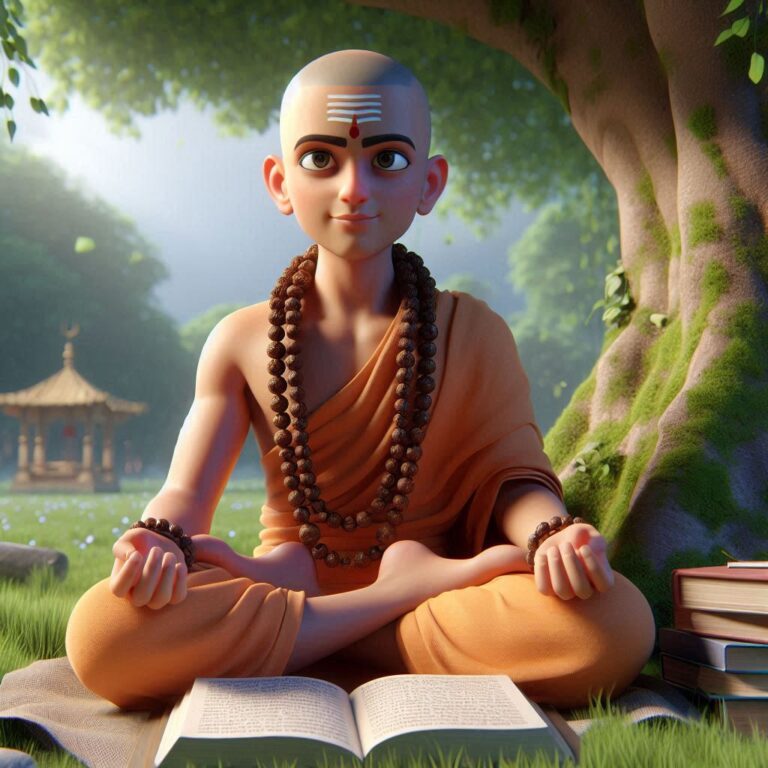 Adi Shankaracharya
Illuminates the nature of reality through non-dualistic Vedanta, guiding seekers toward unity of self and absolute truth.
Adi Shankaracharya
Illuminates the nature of reality through non-dualistic Vedanta, guiding seekers toward unity of self and absolute truth.
Introduction: Embracing the Essence of Hindu Teachings
In the ever-unfolding tapestry of Hindu philosophy, the teachings of Advaita Vedanta provide a profound pathway toward understanding the nature of reality and the self. As seekers traverse this journey, they are invited to explore the intricate interplay of concepts such as dharma, karma, yoga, and devotion, all of which contribute to a comprehensive understanding of life and spirituality.
Vedanta: The Culmination of Knowledge
Vedanta, the concluding part of the Vedas, serves as a philosophical framework that addresses the nature of existence, consciousness, and the ultimate reality, known as Brahman. This non-dual perspective posits that the individual self (Atman) is not separate from Brahman, the universal consciousness. Such a realization leads to liberation (moksha) from the cycle of birth and death (samsara).
Exploring the Upanishads
The Upanishads, ancient texts that form the bedrock of Vedantic thought, delve into the mysteries of the self and the universe. They encourage seekers to engage in deep contemplation and reflection. Through dialogues and philosophical inquiry, the Upanishads illuminate the path toward self-realization.
Practical Reflection:
- What does it mean to you that the Atman and Brahman are one?
- How can you incorporate the teachings of the Upanishads into your daily life?
The Bhagavad Gita: A Guide for the Seeker
The Bhagavad Gita, situated within the Indian epic Mahabharata, is a dialogue between Lord Krishna and the warrior Arjuna. This sacred text addresses the moral and ethical dilemmas faced by individuals and serves as a guide for living a righteous life. It encapsulates the essence of dharma, the duty that each individual must uphold.
Dharma: The Path of Righteousness
Dharma refers to the moral and ethical duties that govern an individual’s life. It is not a rigid set of rules but rather a dynamic guideline that varies based on one’s stage of life, social responsibilities, and personal inclinations. In essence, fulfilling one’s dharma is vital for the harmony of society and the individual.
Karma: The Law of Cause and Effect
The principle of karma teaches that every action has consequences, shaping our present and future experiences. It is imperative to act with awareness and intention, recognizing that our choices influence not only our lives but also the lives of others. Engaging in selfless actions (karma yoga) can purify the mind and lead to spiritual growth.
Practical Reflection:
- How do you discern your dharma in your current life situation?
- In what ways can you practice selfless action to cultivate positive karma?
Yoga: The Union of Body, Mind, and Spirit
Yoga, a term that transcends physical postures, signifies the union of the individual self with the universal consciousness. Various paths of yoga—Karma Yoga (the path of action), Bhakti Yoga (the path of devotion), Jnana Yoga (the path of knowledge), and Dhyana Yoga (the path of meditation)—offer diverse approaches for seekers to connect with the divine.
Bhakti: The Path of Devotion
Bhakti, or devotion, emphasizes love and surrender to God. This path nurtures a personal relationship with the divine, allowing practitioners to express their emotions and devotion freely. It teaches that through surrendering to a higher power, one can experience profound peace and joy.
Practical Reflection:
- Which path of yoga resonates most with your spiritual journey?
- How can you cultivate a deeper sense of devotion in your life?
Spiritual Reflection: The Inner Journey
As seekers of truth, it is essential to engage in spiritual reflection. This involves introspection, meditation, and contemplation on the teachings of the scriptures. By creating a sacred space for reflection, one can delve deeper into the nature of self and reality.
Embracing Differences Within the Tradition
Hinduism is a rich and diverse tradition, encompassing various beliefs, practices, and interpretations. It is essential to approach this diversity with respect and openness, recognizing that each path holds value and can lead to profound insights. Engaging with different perspectives can enrich our understanding and foster a sense of unity among seekers.
Practical Reflection:
- How can you cultivate an attitude of respect and openness toward diverse spiritual practices?
- What practices can you incorporate into your life to enhance your spiritual reflection?
Conclusion: The Journey of Self-Discovery
In conclusion, the teachings of Hindu philosophy, particularly through the lens of Advaita Vedanta, invite us to embark on a journey of self-discovery and realization. By engaging with the concepts of dharma, karma, yoga, and devotion, we can navigate the complexities of life with wisdom and compassion. As you explore these teachings, remember that the path is uniquely yours, and it is essential to seek guidance from appropriate local religious leadership for personal decisions.
May the light of wisdom guide you on your journey toward liberation and self-realization.
 Exploring the Depths of Hindu Wisdom: A Journey Within
Introduction As we wander through the vast landscape of Hindu teachings, we find ourselves amidst a rich tapestry…
Exploring the Depths of Hindu Wisdom: A Journey Within
Introduction As we wander through the vast landscape of Hindu teachings, we find ourselves amidst a rich tapestry…
 Embracing Divine Love: A Journey Through Hindu Teachings
Introduction Dear seekers of truth and love, I invite you to embark on a journey through the rich…
Embracing Divine Love: A Journey Through Hindu Teachings
Introduction Dear seekers of truth and love, I invite you to embark on a journey through the rich…
 Exploring the Depths of Hindu Wisdom: A Journey to Inner Stillness
Introduction In the vast and intricate tapestry of Hindu philosophy, seekers are invited to explore a multitude of…
Exploring the Depths of Hindu Wisdom: A Journey to Inner Stillness
Introduction In the vast and intricate tapestry of Hindu philosophy, seekers are invited to explore a multitude of…