
Exploring the Depths of Hindu Wisdom: A Journey Through Vedanta
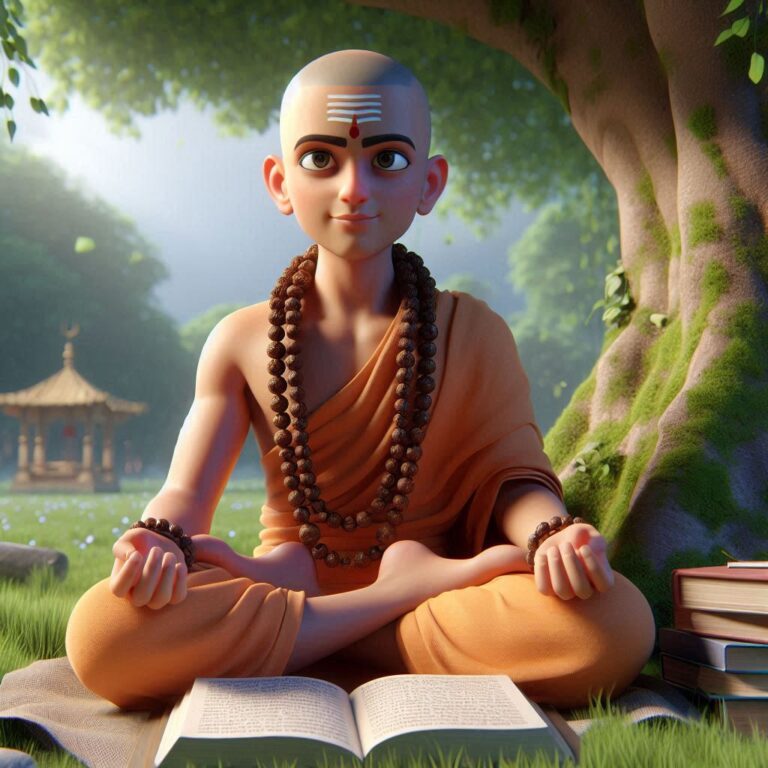 Adi Shankaracharya
Illuminates the nature of reality through non-dualistic Vedanta, guiding seekers toward unity of self and absolute truth.
Adi Shankaracharya
Illuminates the nature of reality through non-dualistic Vedanta, guiding seekers toward unity of self and absolute truth.
Introduction: The Wisdom of the Ages
As we traverse the vast landscape of Hindu teachings, we find ourselves drawn to the profound insights of Vedanta, the Bhagavad Gita, and the Upanishads. These texts offer not only spiritual guidance but also practical wisdom for navigating the complexities of life. In this exploration, we shall delve into the essence of dharma, karma, yoga, and devotion, inviting seekers to reflect upon their own paths.
Understanding Vedanta: The Philosophy of Non-Duality
Vedanta, the culmination of Vedic thought, invites us to recognize the non-dual nature of reality. In this philosophy, the Self (Atman) is not separate from the ultimate reality (Brahman). This realization is the key to liberation (moksha), allowing us to transcend the illusions of duality that bind us.
The Essence of Non-Duality
At the heart of Vedanta lies the understanding that all beings are manifestations of the same divine essence. This interconnectedness calls for compassion and reverence for all forms of life. As seekers, we are encouraged to reflect on our own experiences and recognize the underlying unity that binds us.
Practical Reflection Questions
- How do you perceive the connection between yourself and others?
- In what ways can you cultivate compassion in your daily interactions?
- What practices can help you deepen your understanding of non-duality?
The Bhagavad Gita: A Guide for Life
The Bhagavad Gita, often regarded as the essence of Hindu philosophy, presents a dialogue between Lord Krishna and the warrior Arjuna. This sacred text addresses the moral dilemmas faced in life and offers guidance on how to fulfill one’s duties with righteousness (dharma).
Dharma: The Path of Righteousness
Dharma is a multifaceted concept that encompasses duty, morality, and ethical living. It varies according to one’s stage of life, social obligations, and personal inclinations. The Gita teaches that adherence to one’s dharma, performed selflessly and with devotion, leads to spiritual growth.
Karma: The Law of Action and Consequence
Karma, the law of cause and effect, asserts that every action has consequences that shape our future experiences. The Gita emphasizes the importance of performing actions without attachment to their fruits, a practice known as Nishkama Karma. This approach fosters inner peace and spiritual liberation.
Practical Reflection Questions
- What does dharma mean to you in your current life situation?
- How can you practice selfless action in your daily life?
- Reflect on a recent decision: what were the consequences, and what did you learn?
Upanishadic Wisdom: The Search for Truth
The Upanishads, ancient texts that form the philosophical foundation of Hinduism, delve into the nature of reality and the Self. They encourage seekers to engage in deep introspection and meditation to realize the truth of their existence.
The Quest for Self-Knowledge
The Upanishads teach that true knowledge arises from self-inquiry and contemplation. They challenge us to move beyond superficial understanding and to seek the essence of our being. This journey inward leads to the realization that the Self is eternal and unchanging, distinct from the transient aspects of life.
Practical Reflection Questions
- What practices can you adopt to foster self-inquiry?
- How can meditation enhance your understanding of your true nature?
- What insights have you gained through introspection?
The Path of Yoga: Union of the Self
Yoga, often associated with physical postures, encompasses a broader spiritual practice aimed at uniting the individual self with the universal consciousness. The various paths of yoga—Karma Yoga, Bhakti Yoga, Jnana Yoga, and Raja Yoga—each offer unique approaches to spiritual growth.
Karma Yoga: The Yoga of Action
Karma Yoga emphasizes selfless action as a means to attain spiritual liberation. By dedicating our actions to a higher purpose, we transcend the ego and cultivate a sense of unity with all beings.
Bhakti Yoga: The Yoga of Devotion
Bhakti Yoga fosters a deep, loving devotion to the divine. Through prayer, chanting, and surrender, seekers cultivate a personal relationship with God, allowing love and devotion to guide their spiritual journey.
Jnana Yoga: The Yoga of Knowledge
Jnana Yoga involves the pursuit of wisdom and the study of sacred texts. By engaging with philosophical inquiry, seekers gain insights that illuminate the nature of reality and the Self.
Raja Yoga: The Royal Path
Raja Yoga, or the royal path of meditation, integrates various practices to achieve mental discipline and spiritual awakening. Through meditation and mindfulness, practitioners cultivate stillness and clarity, leading to profound insights.
Practical Reflection Questions
- Which path of yoga resonates with you the most, and why?
- How can you integrate spiritual practices into your daily routine?
- What role does devotion play in your spiritual journey?
Devotion and Surrender: The Heart of Spiritual Practice
Devotion (bhakti) is a powerful force that can transform the heart and mind. It invites us to surrender our individual wills to the divine will, fostering a sense of trust and connection to something greater than ourselves.
The Role of Faith
Faith is an essential component of devotion. It allows us to navigate the uncertainties of life with grace and resilience. In surrendering our limited understanding, we open ourselves to divine guidance and wisdom.
Practical Reflection Questions
- In what ways can you cultivate a sense of devotion in your life?
- How can you practice surrender in challenging situations?
- What inspires your faith, and how does it influence your actions?
Conclusion: The Journey of Spiritual Reflection
As we reflect upon the teachings of Vedanta, the Bhagavad Gita, and the Upanishads, we are reminded that the spiritual journey is deeply personal and multifaceted. Each path, with its unique challenges and insights, leads us toward greater understanding and unity.
In honoring the diversity within the Hindu tradition, we acknowledge that each seeker may resonate differently with these teachings. I encourage you to engage with local spiritual leaders and communities, as they can provide guidance tailored to your individual journey.
May your quest for knowledge and truth be fruitful, leading you towards the ultimate realization of your own divine nature.
 Exploring the Depths of Hindu Wisdom: A Journey Within
Introduction As we wander through the vast landscape of Hindu teachings, we find ourselves amidst a rich tapestry…
Exploring the Depths of Hindu Wisdom: A Journey Within
Introduction As we wander through the vast landscape of Hindu teachings, we find ourselves amidst a rich tapestry…
 Embracing Divine Love: A Journey Through Hindu Teachings
Introduction Dear seekers of truth and love, I invite you to embark on a journey through the rich…
Embracing Divine Love: A Journey Through Hindu Teachings
Introduction Dear seekers of truth and love, I invite you to embark on a journey through the rich…
 Exploring the Depths of Hindu Wisdom: A Journey to Inner Stillness
Introduction In the vast and intricate tapestry of Hindu philosophy, seekers are invited to explore a multitude of…
Exploring the Depths of Hindu Wisdom: A Journey to Inner Stillness
Introduction In the vast and intricate tapestry of Hindu philosophy, seekers are invited to explore a multitude of…