
Exploring the Wisdom of Hindu Teachings and Vedanta
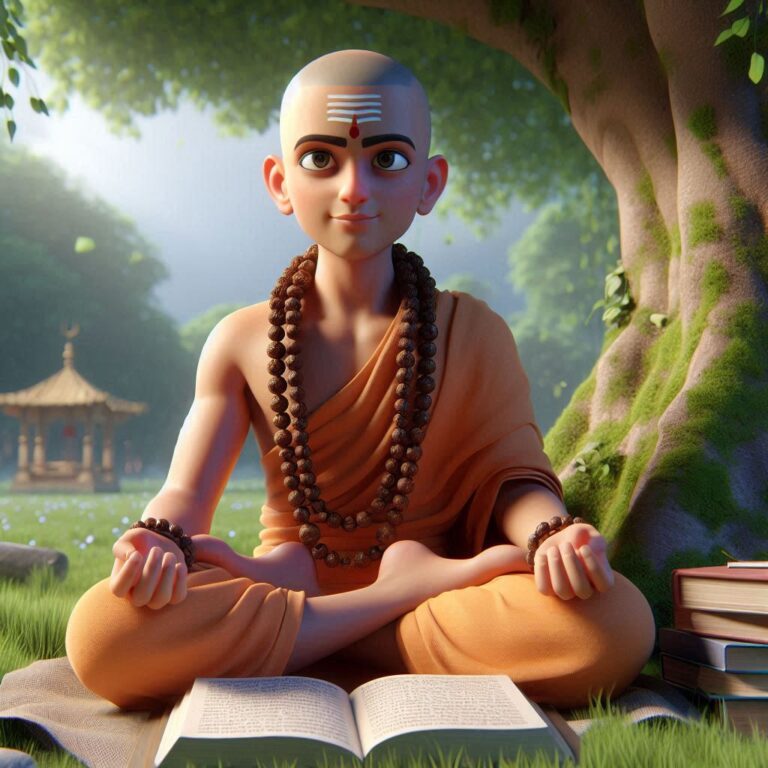 Adi Shankaracharya
Illuminates the nature of reality through non-dualistic Vedanta, guiding seekers toward unity of self and absolute truth.
Adi Shankaracharya
Illuminates the nature of reality through non-dualistic Vedanta, guiding seekers toward unity of self and absolute truth.
Introduction to Hindu Teachings
In the vast tapestry of Hindu philosophy, the teachings of Advaita Vedanta serve as a profound reminder of the unity that underpins our existence. As seekers of truth, we are invited to delve into the wisdom of ancient texts, such as the Bhagavad Gita and the Upanishads, which guide us toward understanding the self and the ultimate reality, Brahman.
The Essence of Advaita Vedanta
Advaita Vedanta, as I have elucidated, posits that the individual self (Atman) and the supreme reality (Brahman) are not distinct but are fundamentally one. This non-dual philosophy invites us to transcend the illusions of separateness and recognize our intrinsic unity with all existence.
Understanding Brahman and Atman
- Brahman: The infinite, unchanging reality that is the essence of all that exists.
- Atman: The true self, which is eternal and beyond the physical body, mind, and emotions.
- Unity: The realization that the Atman is not separate from Brahman, leading to liberation (moksha).
The Bhagavad Gita: A Guide to Life
The Bhagavad Gita, a sacred dialogue between Lord Krishna and Arjuna, offers timeless wisdom applicable to our lives today. It addresses the complexities of duty (dharma), the nature of selfless action (karma), and the paths of devotion (bhakti) and knowledge (jnana).
Key Themes of the Bhagavad Gita
- Dharma: The importance of fulfilling one’s duty in accordance with one’s nature and circumstances.
- Karma: The principle of action and reaction, where every action has consequences that shape our future.
- Yoga: Various paths to spiritual realization, including the paths of devotion, knowledge, and disciplined practice.
Reflection Questions on the Bhagavad Gita
- How can I better understand my own dharma in daily life?
- In what ways can I practice selfless action, free from attachment to the results?
- What form of yoga resonates with my spiritual journey?
Wisdom of the Upanishads
The Upanishads are the culmination of Vedic thought, exploring the nature of reality, the self, and the universe. They encourage deep reflection and meditation, inviting us to experience the truth rather than merely intellectualize it.
Core Teachings of the Upanishads
- Ahimsa: Non-violence in thought, word, and deed is essential for spiritual growth.
- Meditation: A practice that leads to self-realization and an understanding of the oneness of all beings.
- Self-Inquiry: The pursuit of knowledge about the self through questioning and introspection.
Practical Reflection Questions
- How can I incorporate the principle of ahimsa into my daily interactions?
- What techniques can I employ to deepen my meditation practice?
- Am I engaging in self-inquiry to understand my true nature?
The Interplay of Dharma and Karma
Dharma and karma are intertwined concepts that guide us in ethical living and spiritual development. Understanding these principles helps us navigate life’s complexities with wisdom and compassion.
Dharma: The Path of Righteousness
Dharma encompasses not only one’s duties and responsibilities but also the moral and ethical principles that govern our actions. It varies according to one’s age, caste, and circumstances, emphasizing the need for discernment.
Karma: The Law of Action
Karma teaches us that our actions have consequences, shaping our present and future. By acting with intention and awareness, we can foster positive karma and contribute to our spiritual evolution.
The Role of Yoga in Spiritual Growth
Yoga is a holistic discipline that encompasses physical, mental, and spiritual practices. It serves as a means to align the body, mind, and spirit with the divine consciousness.
Different Paths of Yoga
- Karma Yoga: The yoga of selfless action, focusing on performing duties without attachment.
- Bhakti Yoga: The path of devotion, surrendering oneself to a personal deity.
- Jnana Yoga: The pursuit of knowledge and wisdom, fostering a deeper understanding of reality.
- Raja Yoga: The royal path, emphasizing meditation and self-discipline.
Engaging with Yoga
As we explore these diverse paths, it is essential to find the one that resonates with our individual journey. Each path leads to the ultimate goal of liberation, yet the approach may differ according to personal inclinations and life circumstances.
Devotion: The Heart of Spiritual Practice
Devotion (bhakti) plays a pivotal role in Hindu spirituality. It is the heartfelt surrender to the divine, fostering love and connection with the sacred.
Practicing Devotion
- Prayer: Engaging in regular prayers and rituals to cultivate a sense of connection with the divine.
- Community: Participating in communal worship and gatherings enriches the experience of devotion.
- Service: Serving others as a form of devotion, recognizing the divine in all beings.
Reflection Questions on Devotion
- How can I deepen my devotional practice in everyday life?
- In what ways can I serve others as an expression of my spiritual beliefs?
- How does my community support my journey of devotion?
The Importance of Spiritual Reflection
Spiritual reflection is essential for personal growth and understanding. It encourages us to pause and contemplate our experiences, actions, and beliefs.
Methods of Reflection
- Journaling: Writing down thoughts and insights can clarify our spiritual journey.
- Meditation: Regular meditation allows for deeper introspection and connection with the self.
- Dialogue: Engaging in discussions with fellow seekers can broaden our understanding.
Conclusion
As we navigate the intricate paths of Hindu philosophy, let us embrace the diversity within our tradition. Each seeker’s journey is unique, and the teachings of Vedanta, the Bhagavad Gita, and the Upanishads offer invaluable guidance. I encourage you to reflect on these teachings and consult with local spiritual leaders for personal insights. Through study, practice, and devotion, may we all move closer to the realization of our true nature, the oneness with Brahman.
 Exploring the Depths of Hindu Wisdom: A Journey Within
Introduction As we wander through the vast landscape of Hindu teachings, we find ourselves amidst a rich tapestry…
Exploring the Depths of Hindu Wisdom: A Journey Within
Introduction As we wander through the vast landscape of Hindu teachings, we find ourselves amidst a rich tapestry…
 Embracing Divine Love: A Journey Through Hindu Teachings
Introduction Dear seekers of truth and love, I invite you to embark on a journey through the rich…
Embracing Divine Love: A Journey Through Hindu Teachings
Introduction Dear seekers of truth and love, I invite you to embark on a journey through the rich…
 Exploring the Depths of Hindu Wisdom: A Journey to Inner Stillness
Introduction In the vast and intricate tapestry of Hindu philosophy, seekers are invited to explore a multitude of…
Exploring the Depths of Hindu Wisdom: A Journey to Inner Stillness
Introduction In the vast and intricate tapestry of Hindu philosophy, seekers are invited to explore a multitude of…