
Carl Friedrich Gauss
Mathematician of number, geometry, statistics, and rigor.

Life and thought
Connects pure rigor to practical astronomy, statistics, geometry, and number theory.
Carl Friedrich Gauss is presented in the Thought archive through mathematics, german, german, modern. The recorded life dates are 1777–1855. The profile connects this work to Mathematics, Physics, Science, Statistics.
The central questions gathered here concern number theory, Gaussian distribution, non-Euclidean geometry, least squares, magnetism. Together they show the recurring problems, methods, and distinctions that define this thinker’s contribution.
Carl Friedrich Gauss developed within an intellectual conversation shaped by Euler, classical mathematics, astronomy. These names provide context for the traditions and problems surrounding the work; they do not imply simple agreement.
The surviving reading path begins with Disquisitiones Arithmeticae, Theoria Motus, mathematical papers. The recorded legacy extends toward number theory, statistics, physics, geometry.
Five Defining Theories
The central ideas, methods, and arguments that give this thinker’s work its distinctive shape.
number theory
A central idea in this thinker’s work, method, and intellectual legacy.
Gaussian distribution
A central idea in this thinker’s work, method, and intellectual legacy.
non-Euclidean geometry
A central idea in this thinker’s work, method, and intellectual legacy.
least squares
A central idea in this thinker’s work, method, and intellectual legacy.
magnetism
A central idea in this thinker’s work, method, and intellectual legacy.
Life journey
A structured path through the verified context attached to this profile.
Context
1777–1855 · German · Modern
Intellectual formation
The recorded influences include Euler, classical mathematics, astronomy.
Defining ideas
The profile centres on number theory, Gaussian distribution, non-Euclidean geometry, least squares, magnetism.
The work
A reading path through Disquisitiones Arithmeticae, Theoria Motus, mathematical papers.
Lasting influence
The recorded influence reaches number theory, statistics, physics, geometry.
In time
Major Works
Texts through which the thinker’s ideas entered the wider intellectual record.
Disquisitiones Arithmeticae
This work matters because it carries a central part of the thinker’s method, argument, or intellectual legacy into a form readers can examine directly.
Read related Thought →Theoria Motus
This work matters because it carries a central part of the thinker’s method, argument, or intellectual legacy into a form readers can examine directly.
Read related Thought →mathematical papers
This work matters because it carries a central part of the thinker’s method, argument, or intellectual legacy into a form readers can examine directly.
Read related Thought →Influence network
Trace the intellectual lineage into and beyond this thinker.
Selected quotations
Number theory must be examined, not inherited.
Power becomes dangerous when it forgets dignity.
A society reveals itself by what it teaches people to notice.
Freedom without responsibility becomes another form of blindness.
The hardest questions are usually the most human ones.
Schools of thought
Mathematics
Explore the thinkers and ideas connected to this tradition.
Explore school P23 thinkersPhysics
Explore the thinkers and ideas connected to this tradition.
Explore school S75 thinkersScience
Explore the thinkers and ideas connected to this tradition.
Explore school S2 thinkersStatistics
Explore the thinkers and ideas connected to this tradition.
Explore schoolConnected Thinkers
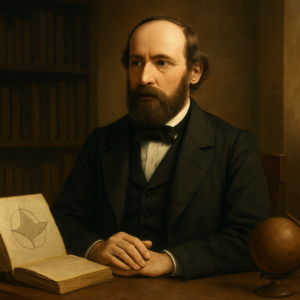
Bernhard Riemann
SharedMathematics · Physics · Science
View thinker →
Henri Poincaré
SharedMathematics · Physics · Science
View thinker →
Leonhard Euler
SharedMathematics · Physics · Science
View thinker →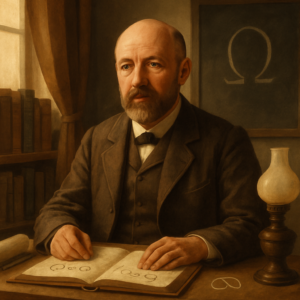
Georg Cantor
SharedMathematics · Science · German
View thinker →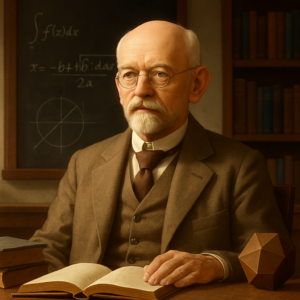
David Hilbert
SharedMathematics · Science · German
View thinker →
Benoit Mandelbrot
SharedMathematics · Science · Modern
View thinker →Featured Debates
See how Carl Friedrich Gauss’s perspective changes when it meets another mind.



Does Military Intervention Ever Truly Secure Lasting Peace?
The question of whether military intervention can ever truly secure lasting peace has long been a contentious issue. In this debate, Judah Magnes, a proponent of…
View Debate →


Is Healthcare Inequality a Failure of Policy or a Reflection of Societal Values?
The debate over healthcare inequality touches on both systemic policy issues and deeper societal values. Vannevar Bush, an advocate for technological advancement and policy innovation, might…
View Debate →


How Should Animals Be Treated Ethically: Do They Have Rights Comparable to Humans?
In this compelling debate, three intellectual luminaries from different eras come together to explore the ethical treatment of animals. Mary Wollstonecraft, an advocate for human rights…
View Debate →
If You Could Know the Complete State of the Universe, Would the Future Already Be Decided?
In this fascinating debate, we delve into the concept of determinism with Albert Einstein, one of the most influential physicists of the 20th century. The question…
View Debate →Continue the conversation with Carl Friedrich Gauss.
Test an assumption, explore an idea, or bring this perspective into dialogue with a council of other thinkers.