
Kurt Gödel
Showed that sufficiently powerful formal systems have deep internal limits of proof and completeness.

Life and thought
Explores incompleteness, formal systems, proof, limits of logic, and the boundaries of mathematical certainty.
Kurt Gödel is presented in the Thought archive through mathematics, austrian / american, austria / united states, modern. The recorded life dates are 1906–1978. The profile connects this work to Logic, Mathematics, Metaphysics, Western Philosophy.
The central questions gathered here concern incompleteness, formal systems, proof, mathematical Platonism, logic. Together they show the recurring problems, methods, and distinctions that define this thinker’s contribution.
Kurt Gödel developed within an intellectual conversation shaped by Hilbert, Russell, Leibniz, mathematical logic. These names provide context for the traditions and problems surrounding the work; they do not imply simple agreement.
The surviving reading path begins with Incompleteness theorems papers, Consistency of Continuum Hypothesis, Collected Works. The recorded legacy extends toward Turing, computer science, logic, philosophy of mathematics.
Five Defining Theories
The central ideas, methods, and arguments that give this thinker’s work its distinctive shape.
incompleteness
A central idea in this thinker’s work, method, and intellectual legacy.
formal systems
A central idea in this thinker’s work, method, and intellectual legacy.
proof
A central idea in this thinker’s work, method, and intellectual legacy.
mathematical Platonism
A central idea in this thinker’s work, method, and intellectual legacy.
logic
A central idea in this thinker’s work, method, and intellectual legacy.
Life journey
A structured path through the verified context attached to this profile.
Context
1906–1978 · Austria / United States · Modern
Intellectual formation
The recorded influences include Hilbert, Russell, Leibniz, mathematical logic.
Defining ideas
The profile centres on incompleteness, formal systems, proof, mathematical Platonism, logic.
The work
A reading path through Incompleteness theorems papers, Consistency of Continuum Hypothesis, Collected Works.
Lasting influence
The recorded influence reaches Turing, computer science, logic, philosophy of mathematics.
In time
Major Works
Texts through which the thinker’s ideas entered the wider intellectual record.
Incompleteness theorems papers
This work matters because it carries a central part of the thinker’s method, argument, or intellectual legacy into a form readers can examine directly.
Read related Thought →Consistency of Continuum Hypothesis
This work matters because it carries a central part of the thinker’s method, argument, or intellectual legacy into a form readers can examine directly.
Read related Thought →Collected Works
This work matters because it carries a central part of the thinker’s method, argument, or intellectual legacy into a form readers can examine directly.
Read related Thought →Influence network
Trace the intellectual lineage into and beyond this thinker.
Selected quotations
Either mathematics is too big for the human mind.
The meaning of world is the separation of wish and fact.
I do not believe in empirical science.
The more I think about language, the more it amazes me.
Mathematical objects and facts exist objectively.
Schools of thought
Logic
Explore the thinkers and ideas connected to this tradition.
Explore school M49 thinkersMathematics
Explore the thinkers and ideas connected to this tradition.
Explore school M49 thinkersMetaphysics
Explore the thinkers and ideas connected to this tradition.
Explore school W91 thinkersWestern Philosophy
Explore the thinkers and ideas connected to this tradition.
Explore schoolConnected Thinkers
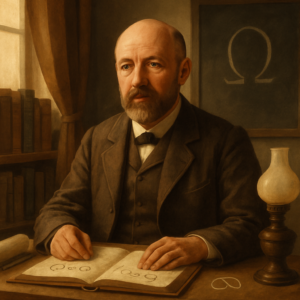
Georg Cantor
SharedLogic · Mathematics · Metaphysics
View thinker →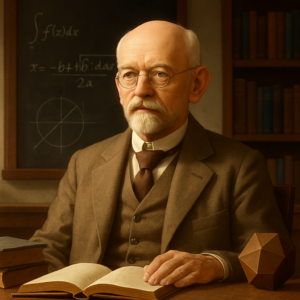
David Hilbert
SharedLogic · Mathematics · Modern
View thinker →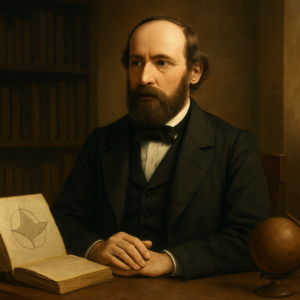
Bernhard Riemann
SharedMathematics · Metaphysics · Modern
View thinker →
Leonhard Euler
SharedLogic · Mathematics
View thinker →
Henri Poincaré
SharedMathematics · Modern
View thinker →
Benoit Mandelbrot
SharedMathematics · Modern
View thinker →Featured Debates
See how Kurt Gödel’s perspective changes when it meets another mind.



How Should Educational Systems Adapt to Prepare Students for a Future Shaped by Rapid Technological Change?
In an era marked by unprecedented technological advancements, education systems worldwide face the pressing challenge of adequately preparing students for a future brimming with uncertainty and…
View Debate →


Does Military Intervention Ever Truly Secure Lasting Peace?
The question of whether military intervention can ever truly secure lasting peace has long been a contentious issue. In this debate, Judah Magnes, a proponent of…
View Debate →


Exploring Common Grounds: The Intersection of Skinner’s Behaviorism and Freud’s Psychoanalytic Thought
The intellectual landscape of psychology is often marked by contrasting paradigms, yet intriguing intersections can be found between distinct schools of thought. This debate delves into…
View Debate →


How Should Animals Be Treated Ethically: Do They Have Rights Comparable to Humans?
In this compelling debate, three intellectual luminaries from different eras come together to explore the ethical treatment of animals. Mary Wollstonecraft, an advocate for human rights…
View Debate →Continue the conversation with Kurt Gödel.
Test an assumption, explore an idea, or bring this perspective into dialogue with a council of other thinkers.